Manufacturing guy-at-large.

Progressive die

Added on by Spencer Wright.

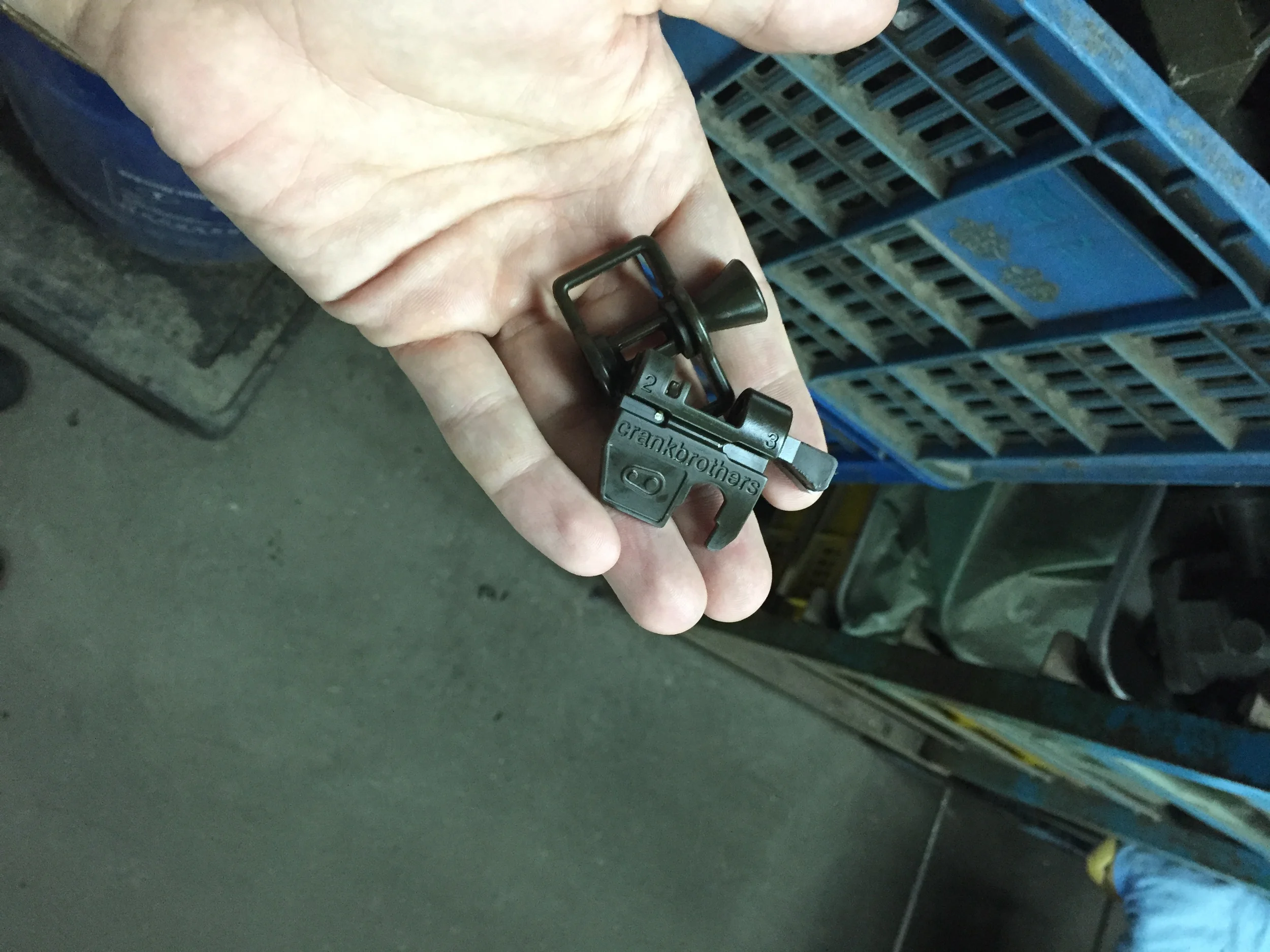
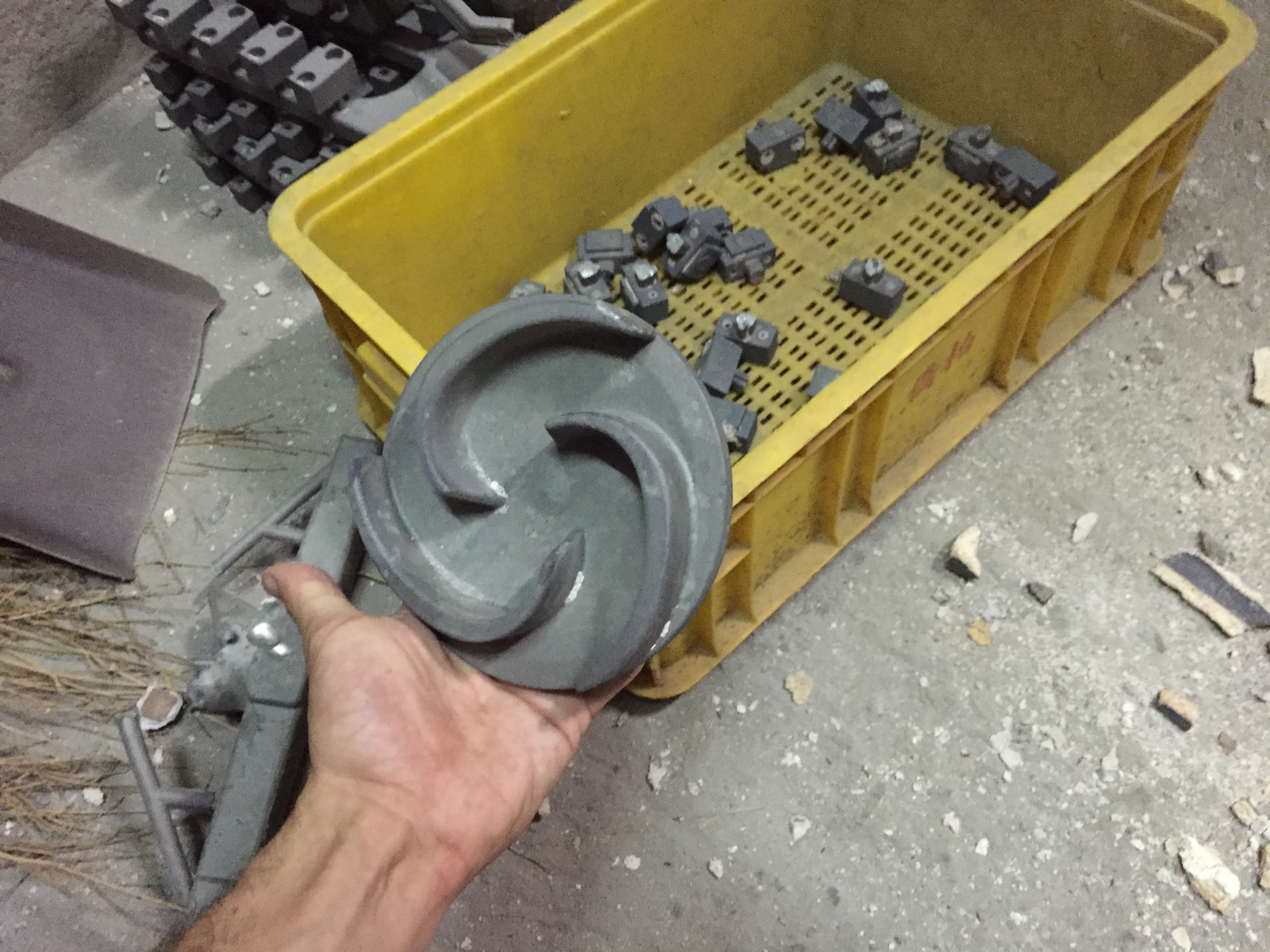
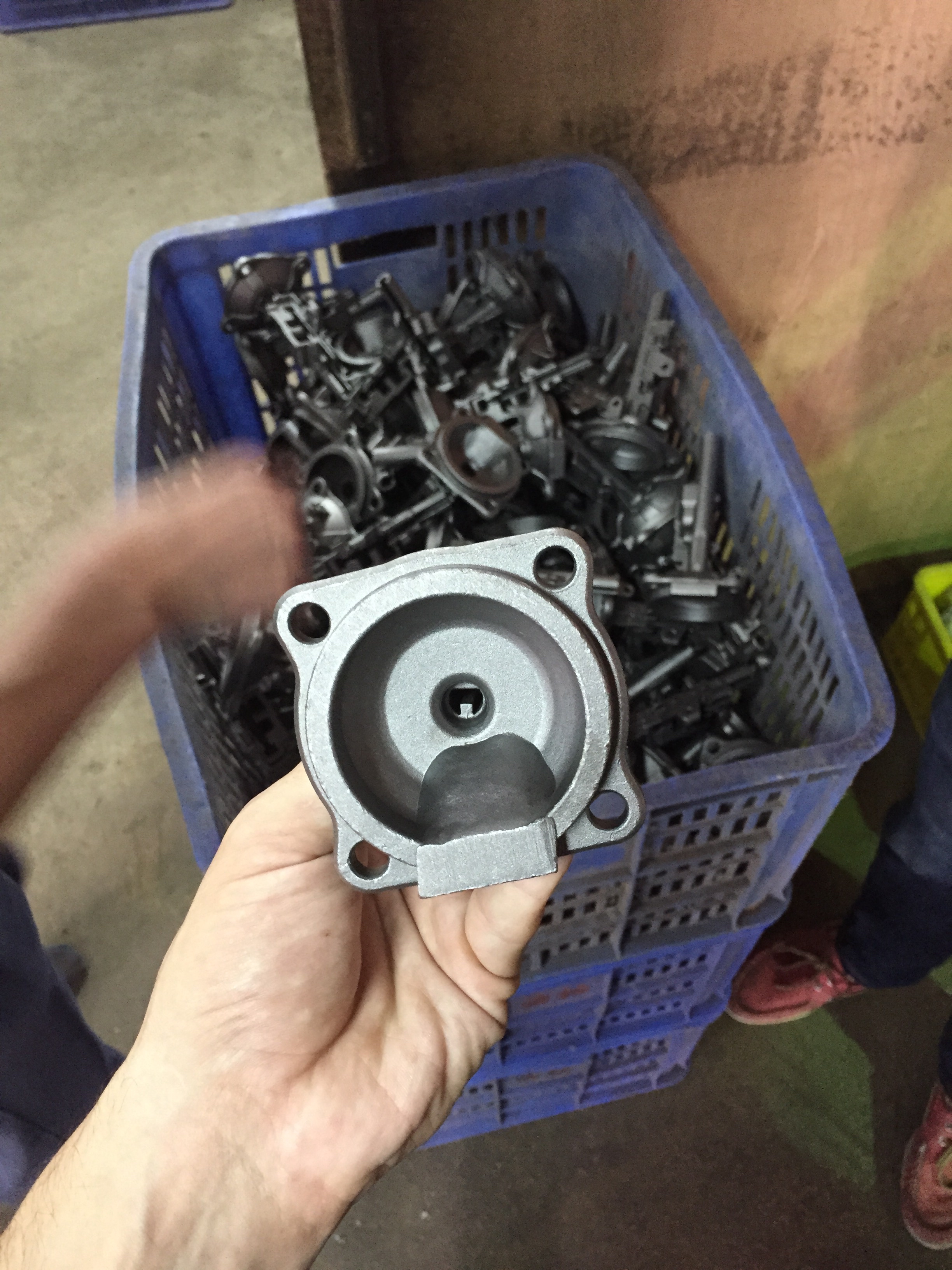
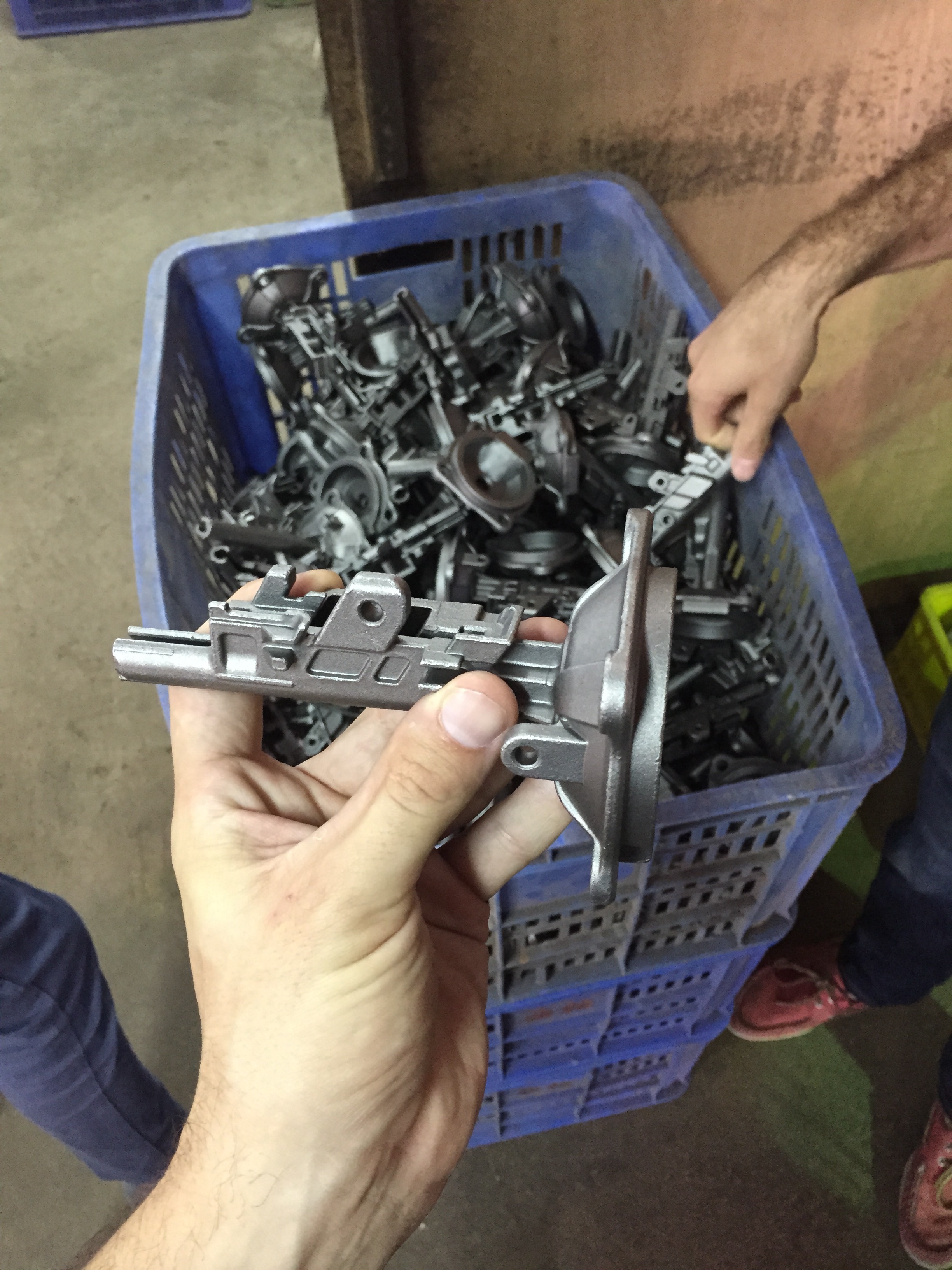
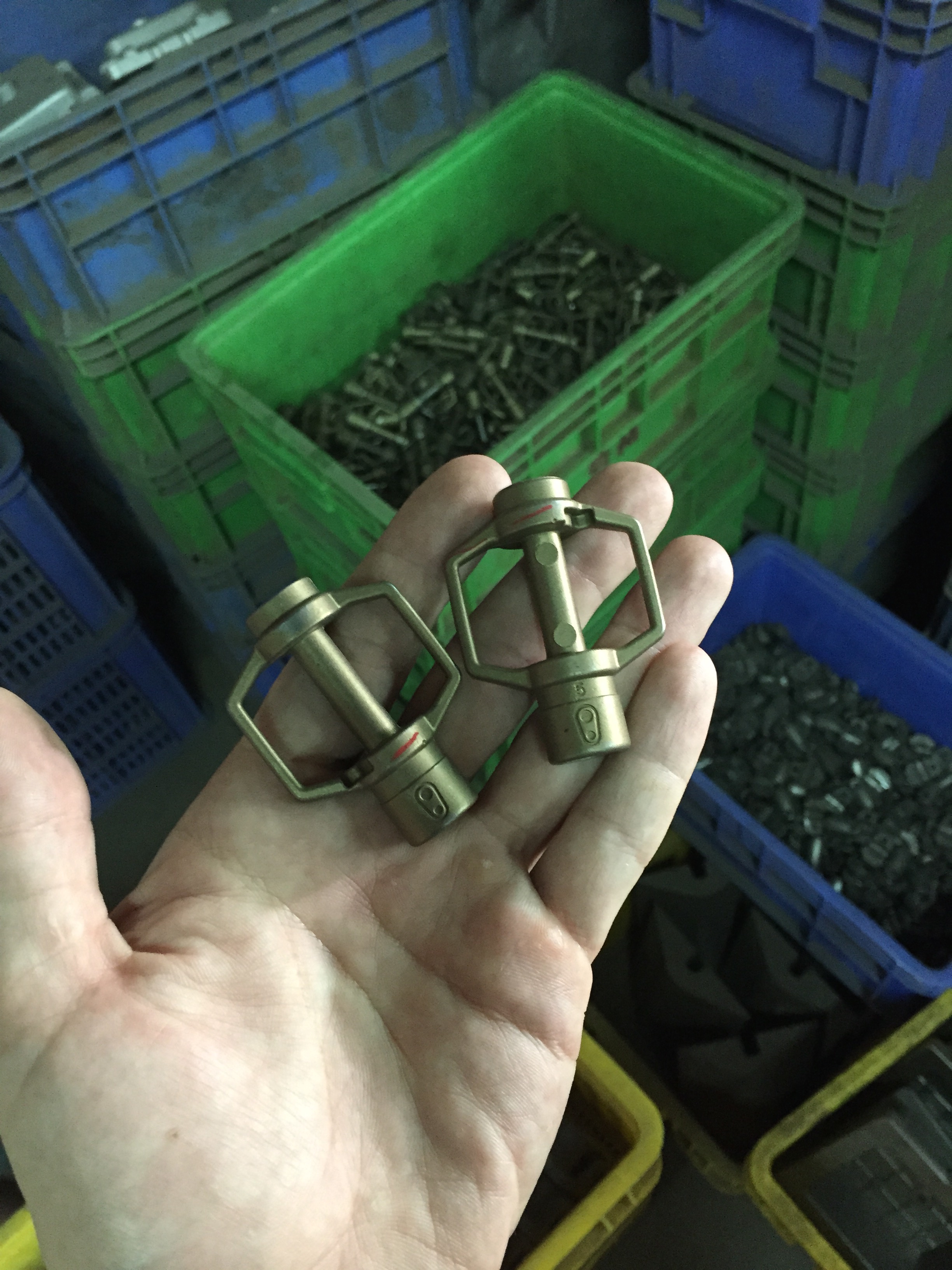
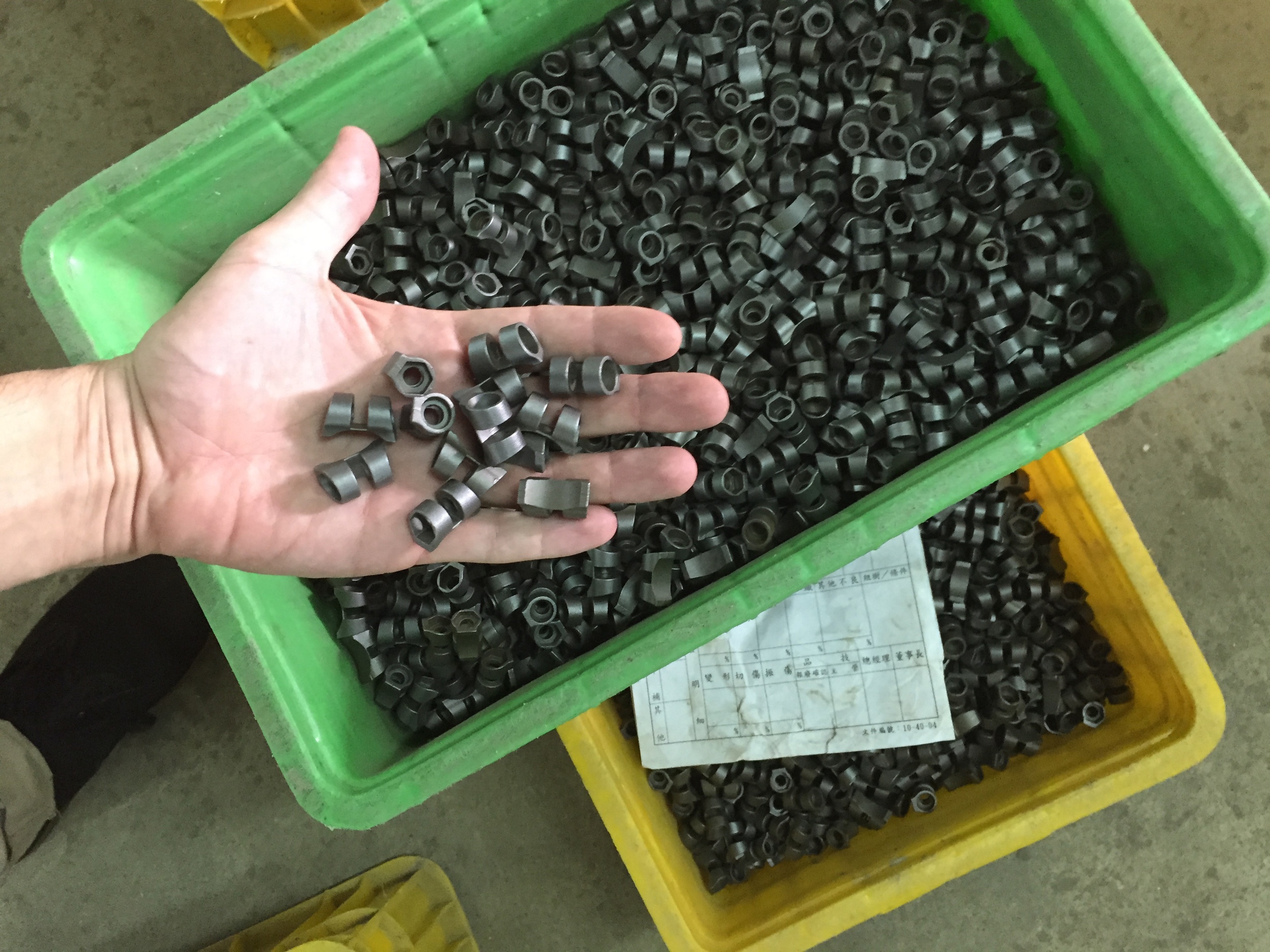
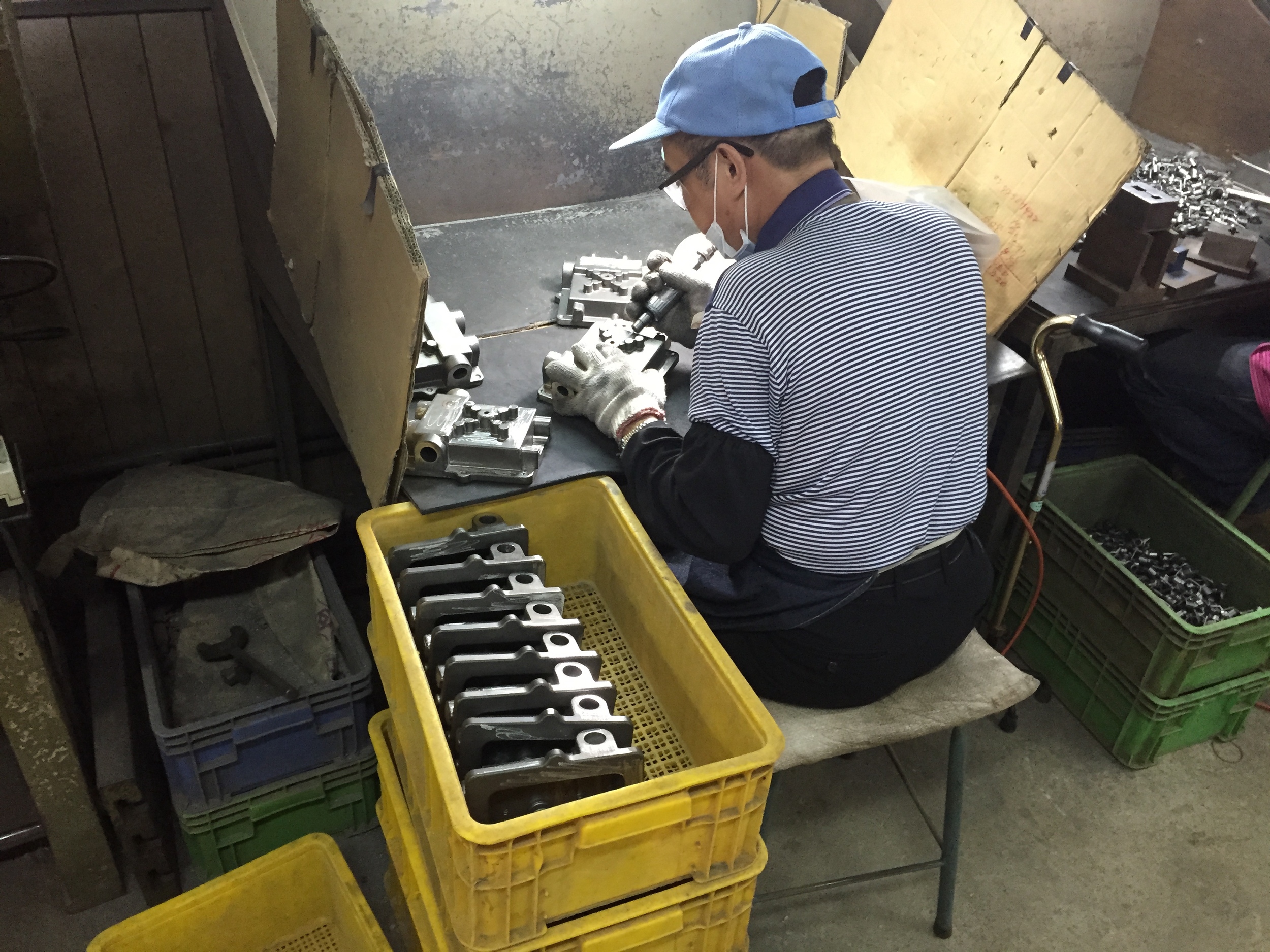
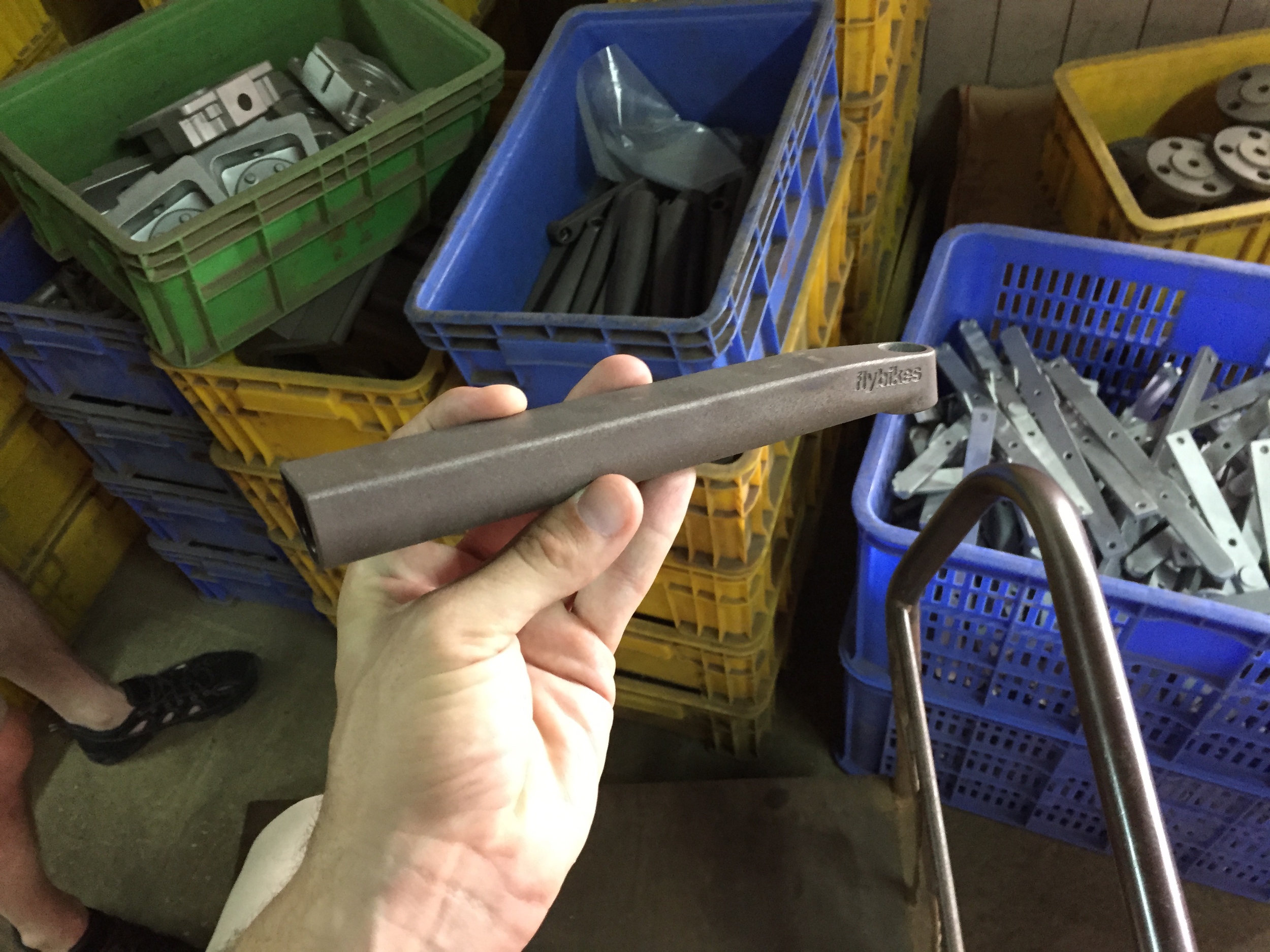
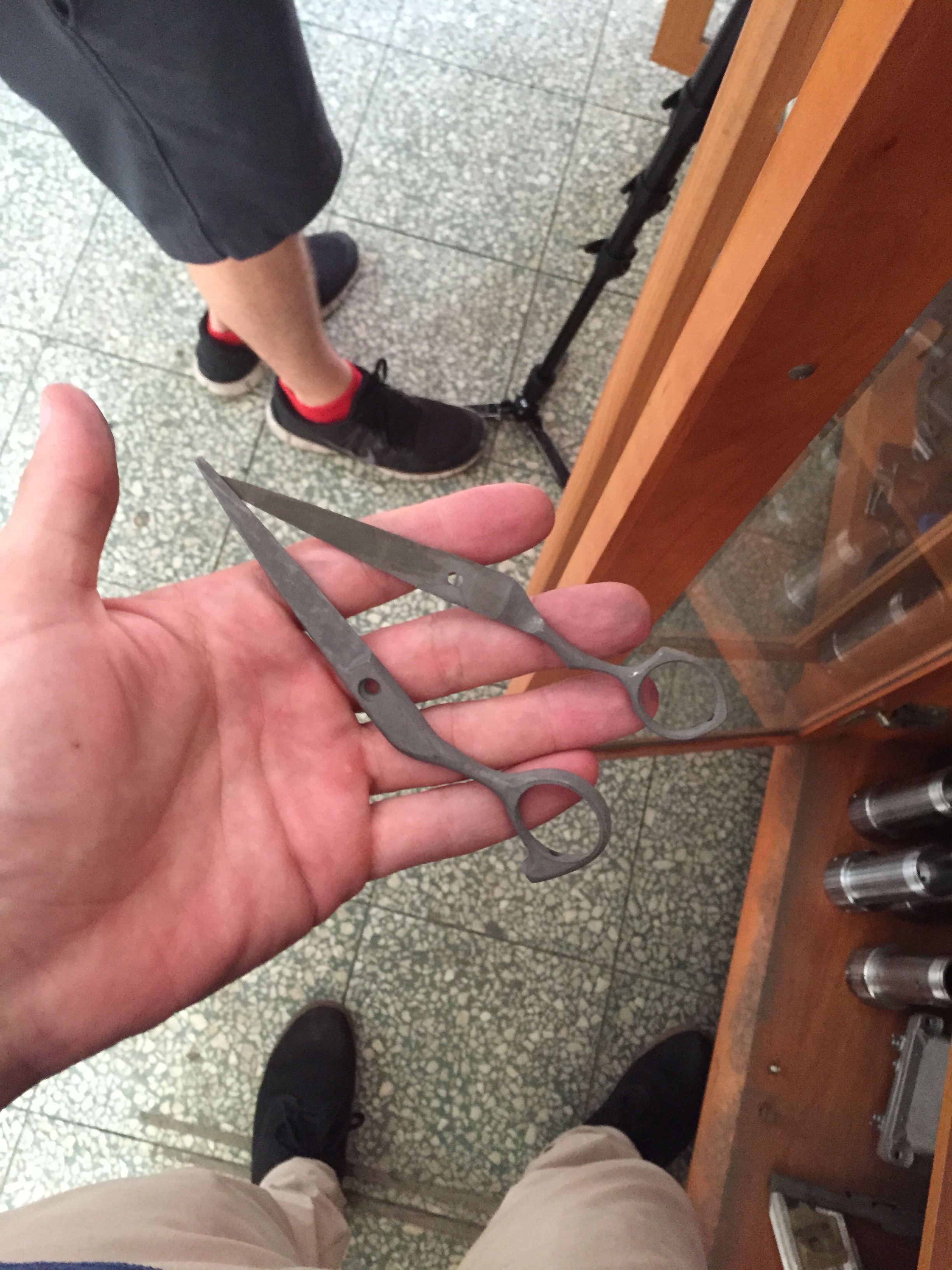
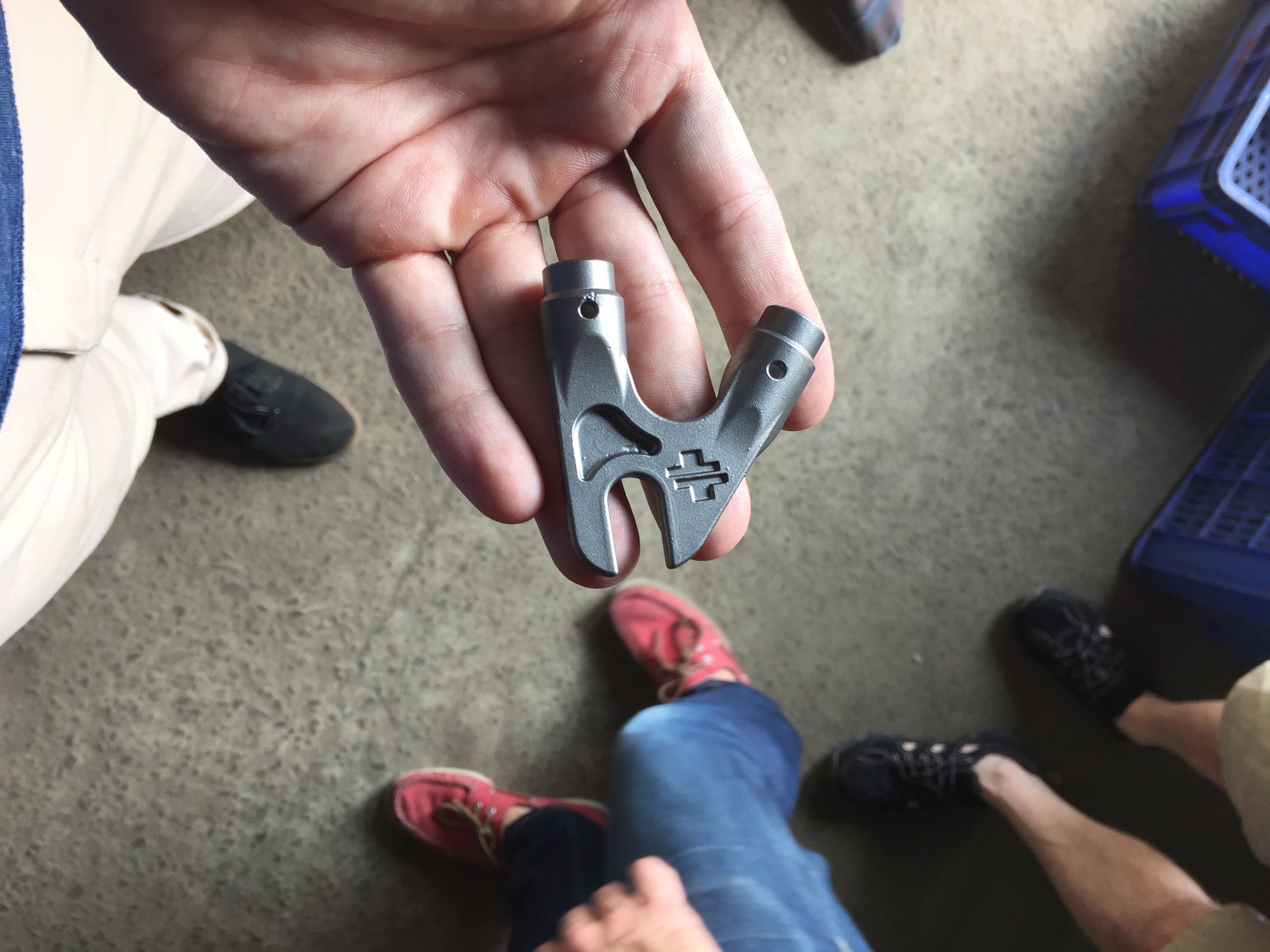
I've only visited a progressive die shop once, and I loved it. Never thought I'd get my own progressive dies, though:

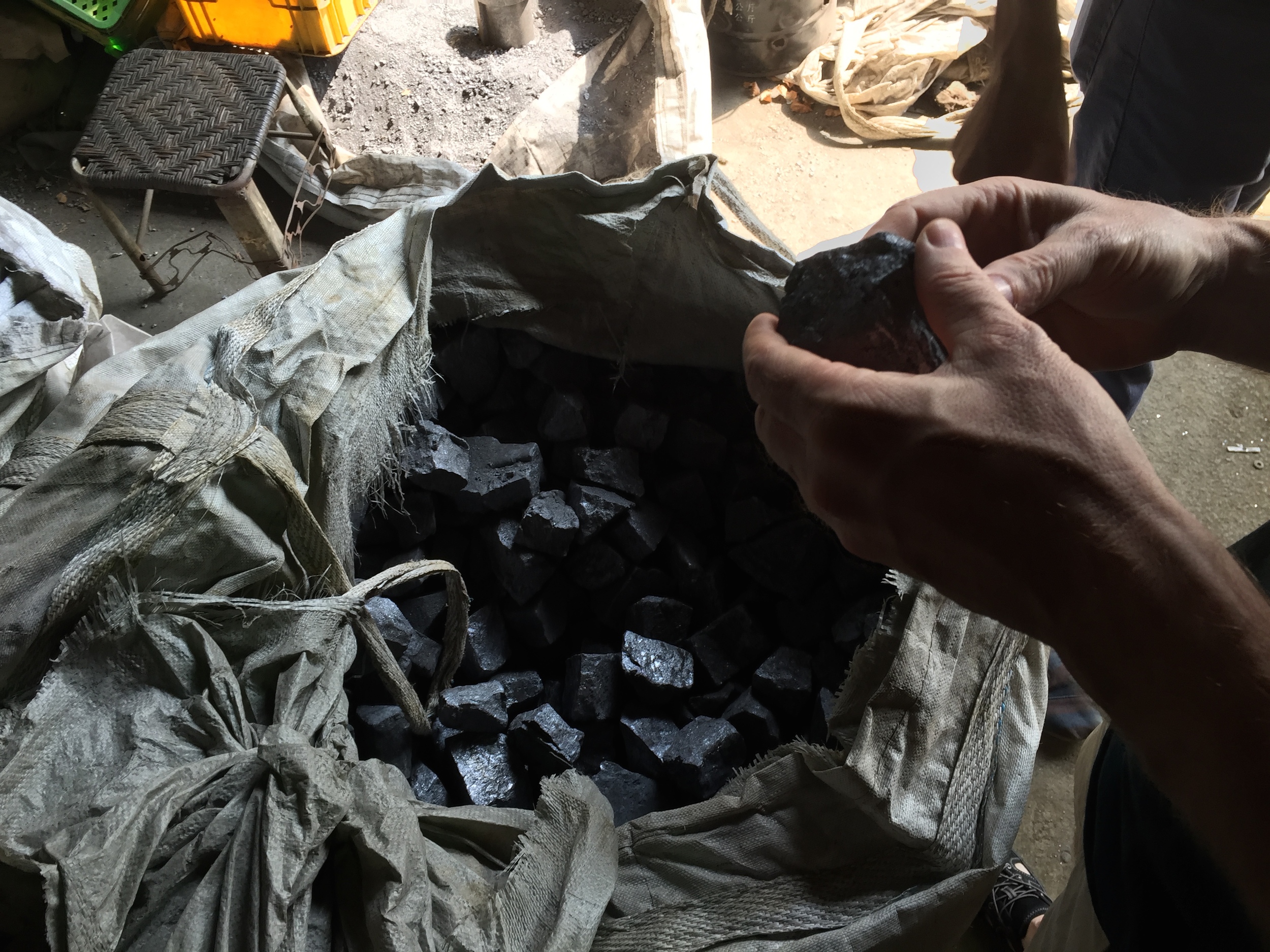
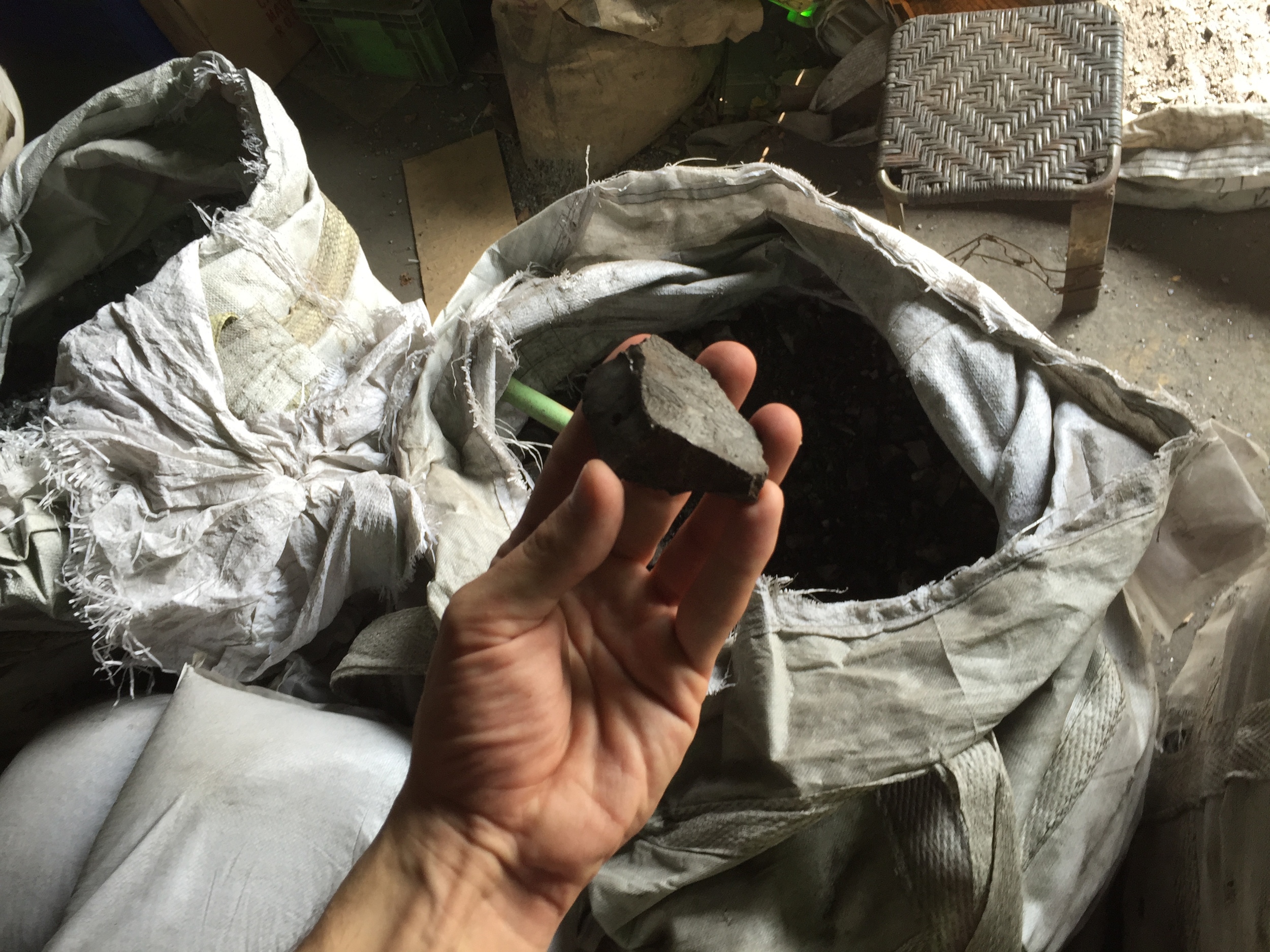
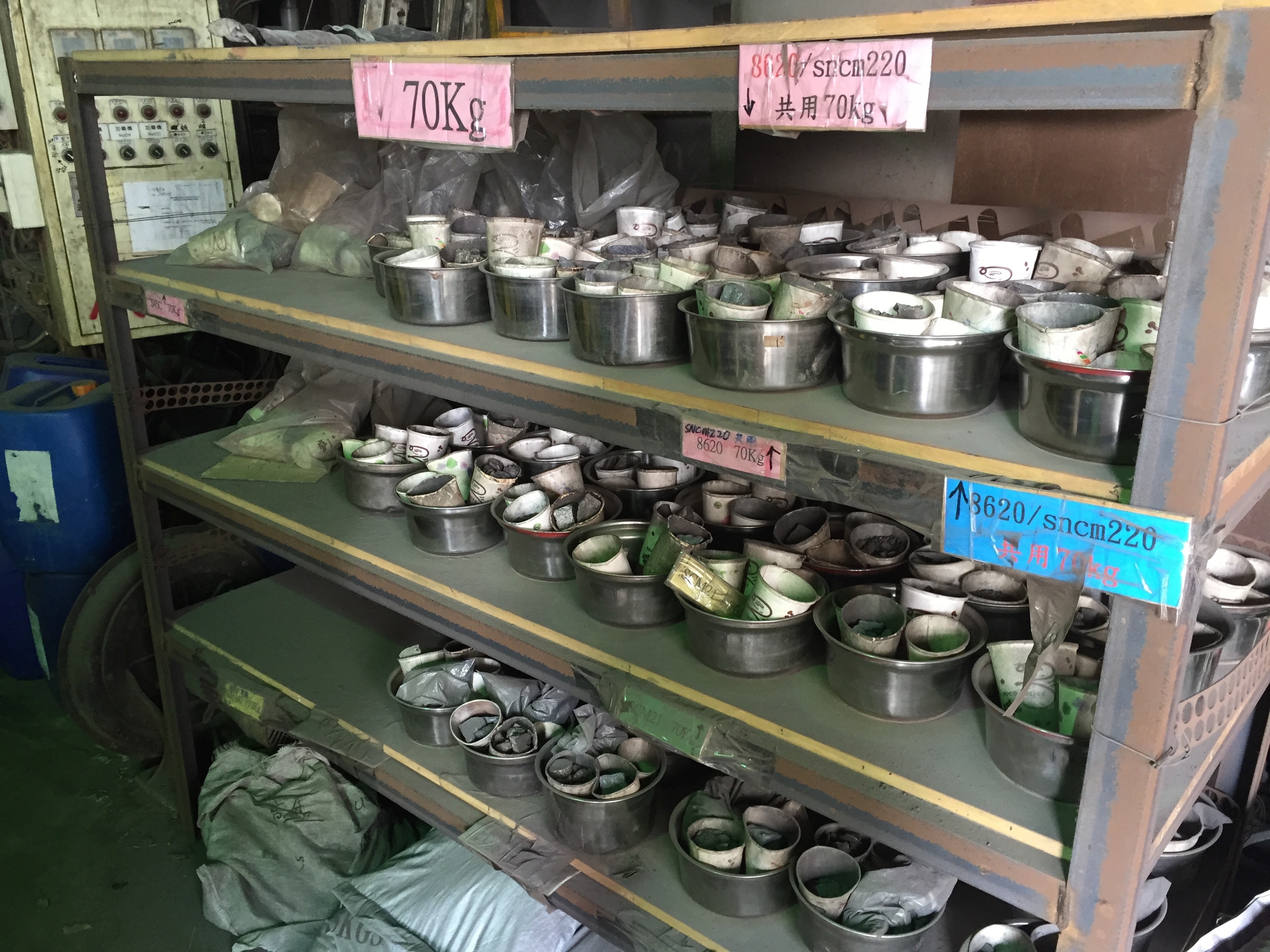
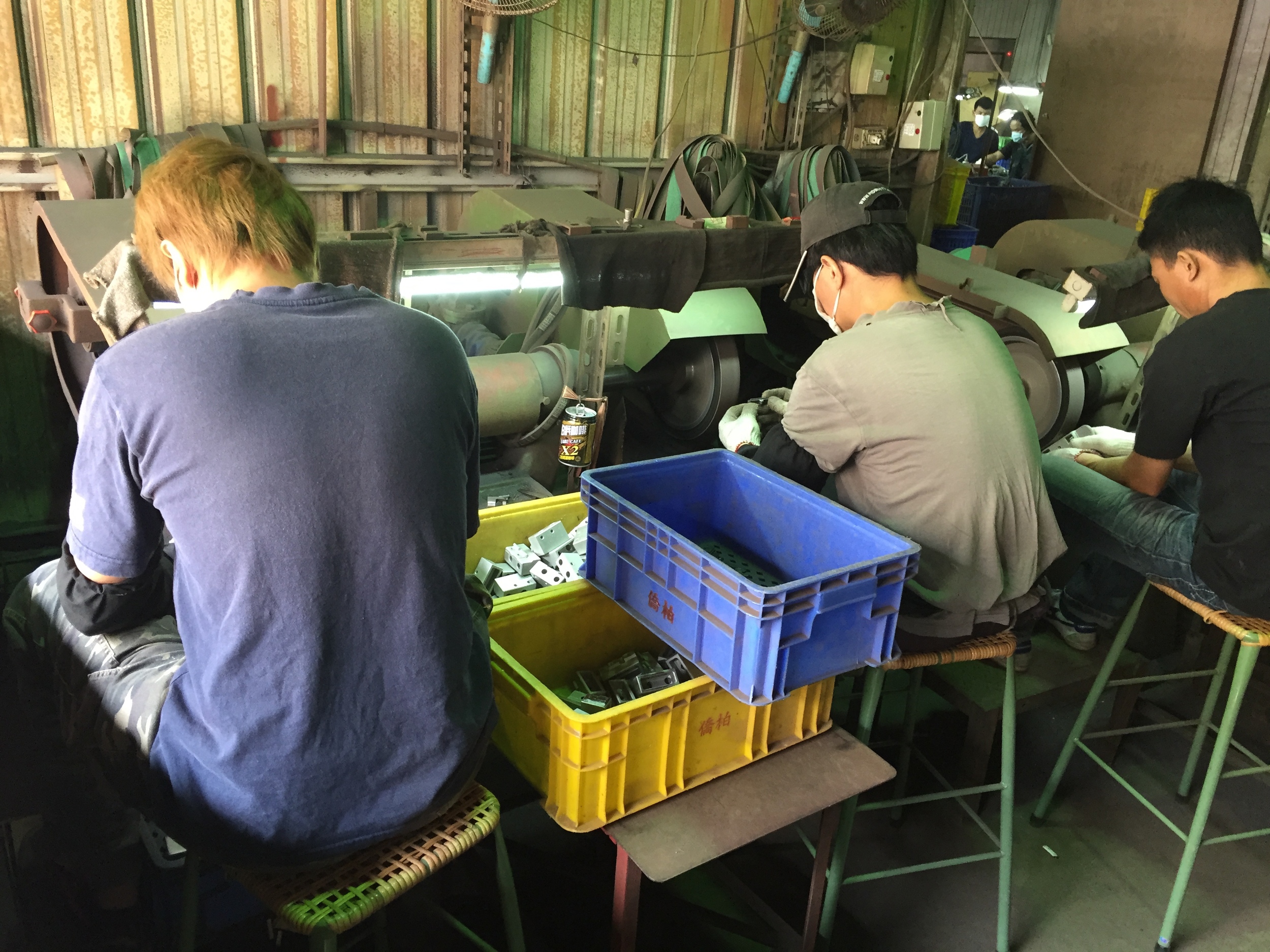
These are in Taiwan currently, and will be producing lids for The Public Radio in the next week. Pretty fun. The speaker holes are made in four stages, and the outline is the last step.

Photos from MicroTek Finishing

Added on by Spencer Wright.

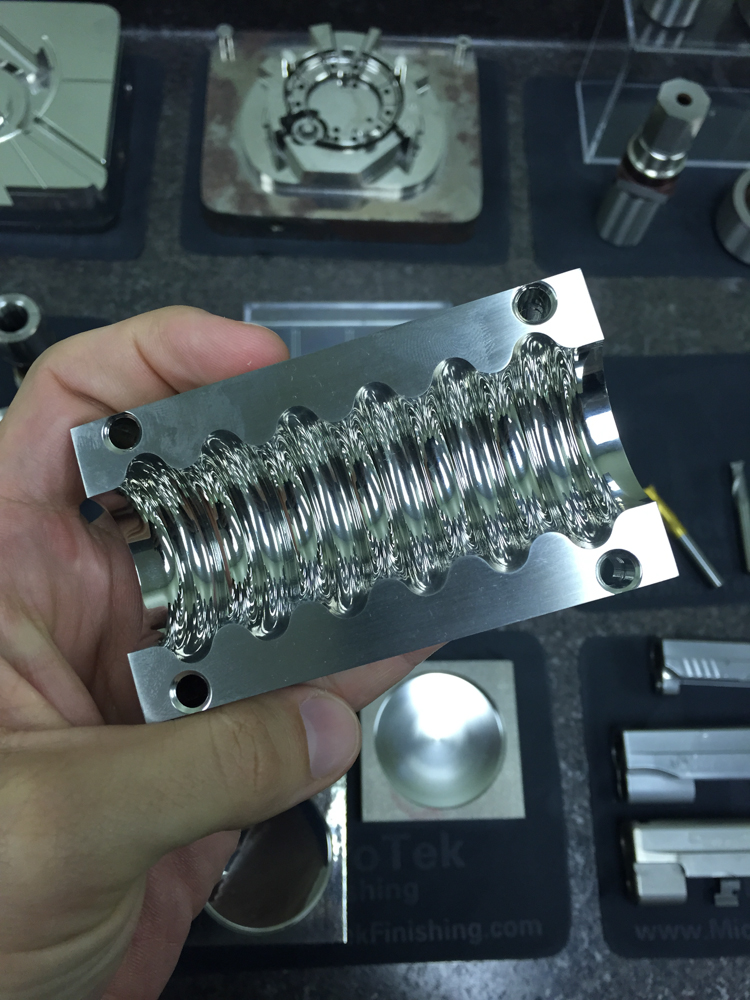
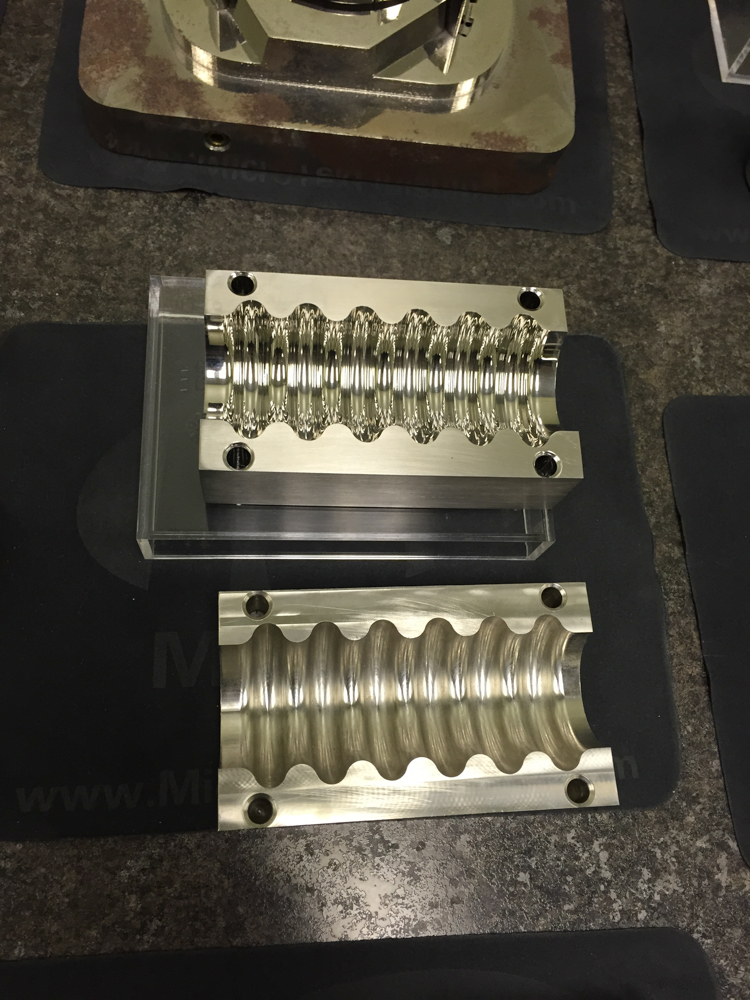
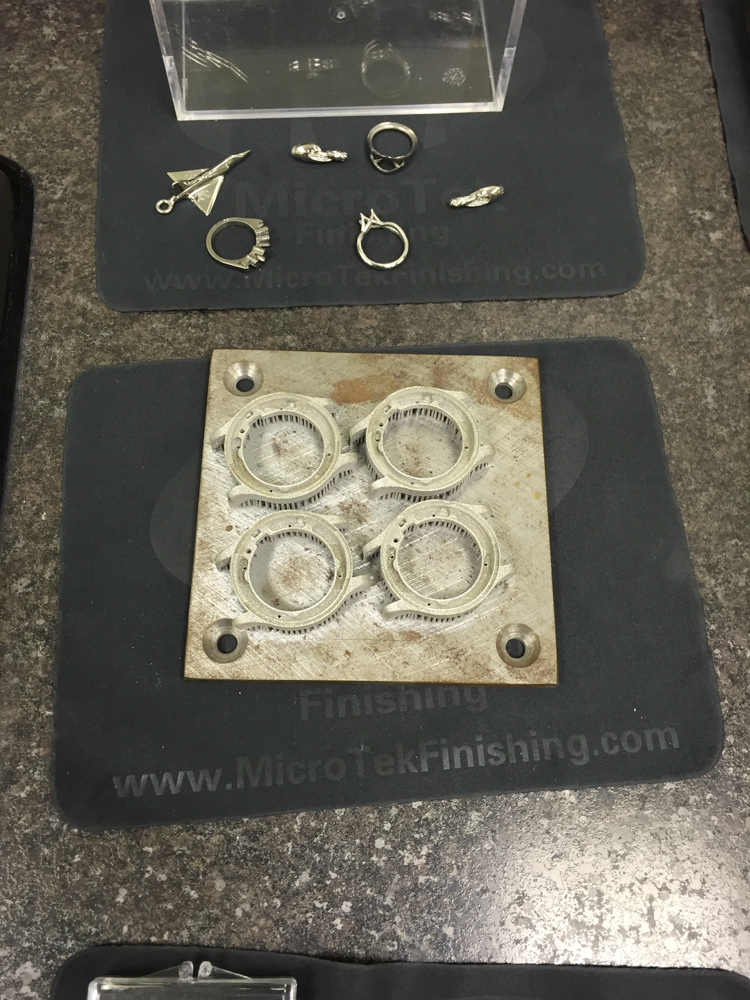
In December, I visited MicroTek Finishing in Cincinnati, Ohio. MicroTek's proprietary process takes rough parts (often produced by DMLS and EBM) and gives them selectively smooth surfaces; the results are absolutely stunning.

MicroTek is very careful to make clear that their process is *not* polishing, claiming it's more like micro-machining. They're also able to control surface features in highly precise ways, leaving exactly the magnitude and frequency roughness desired. It's a fascinating idea, and one that they're able to charge a pretty penny for.

I've been scheming on using MicroTek on my DMLS seatmast topper; I'll be sure to report back if/when it happens.

Topper drawings

Added on by Spencer Wright.

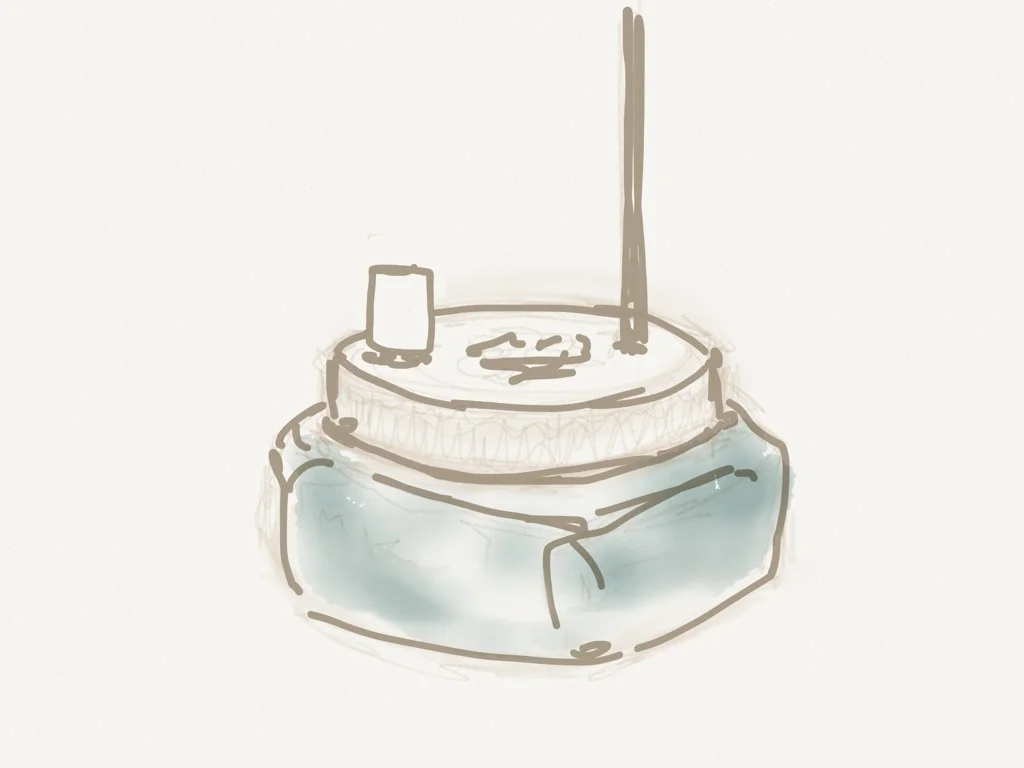
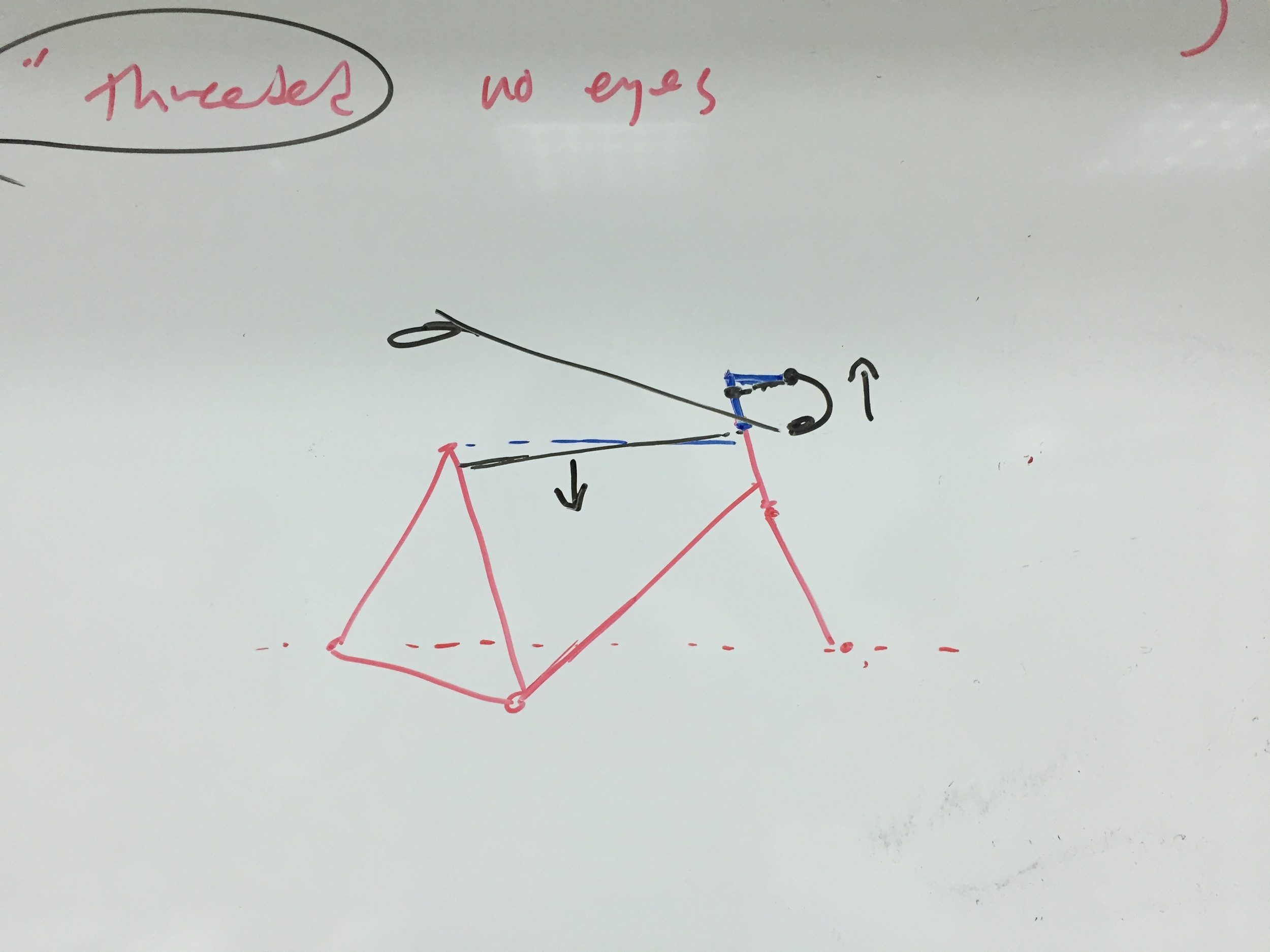
While I've been writing a much longer post about DMLS, I made a couple of additional drawings of my topper. The longer post is coming soon, but I'll drop these here for now.

Putting The Public Radio together

Added on by Spencer Wright.

We made some big changes to the assembly program for The Public Radio over the past month or two, and I wanted to document them. Here goes.

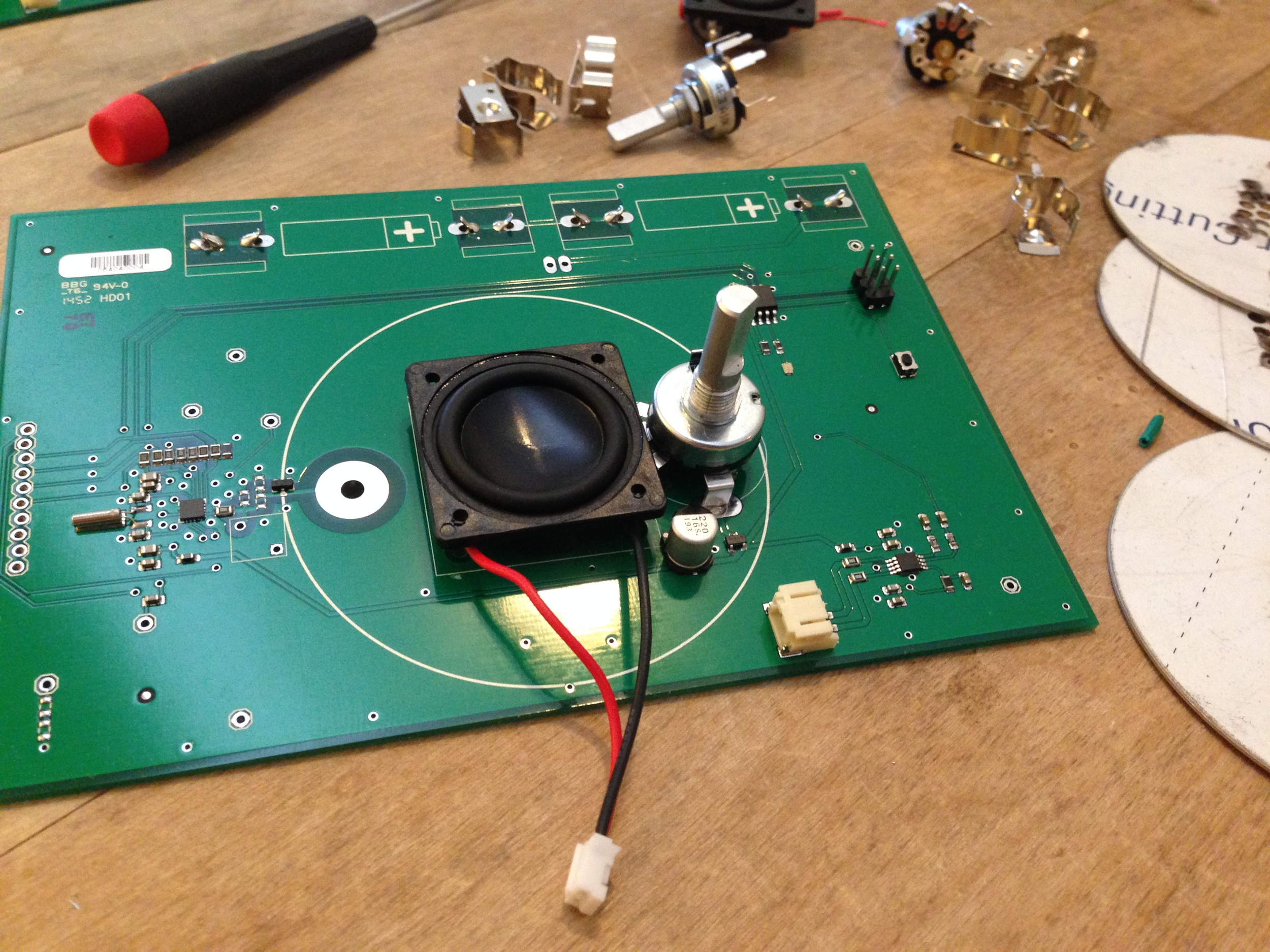
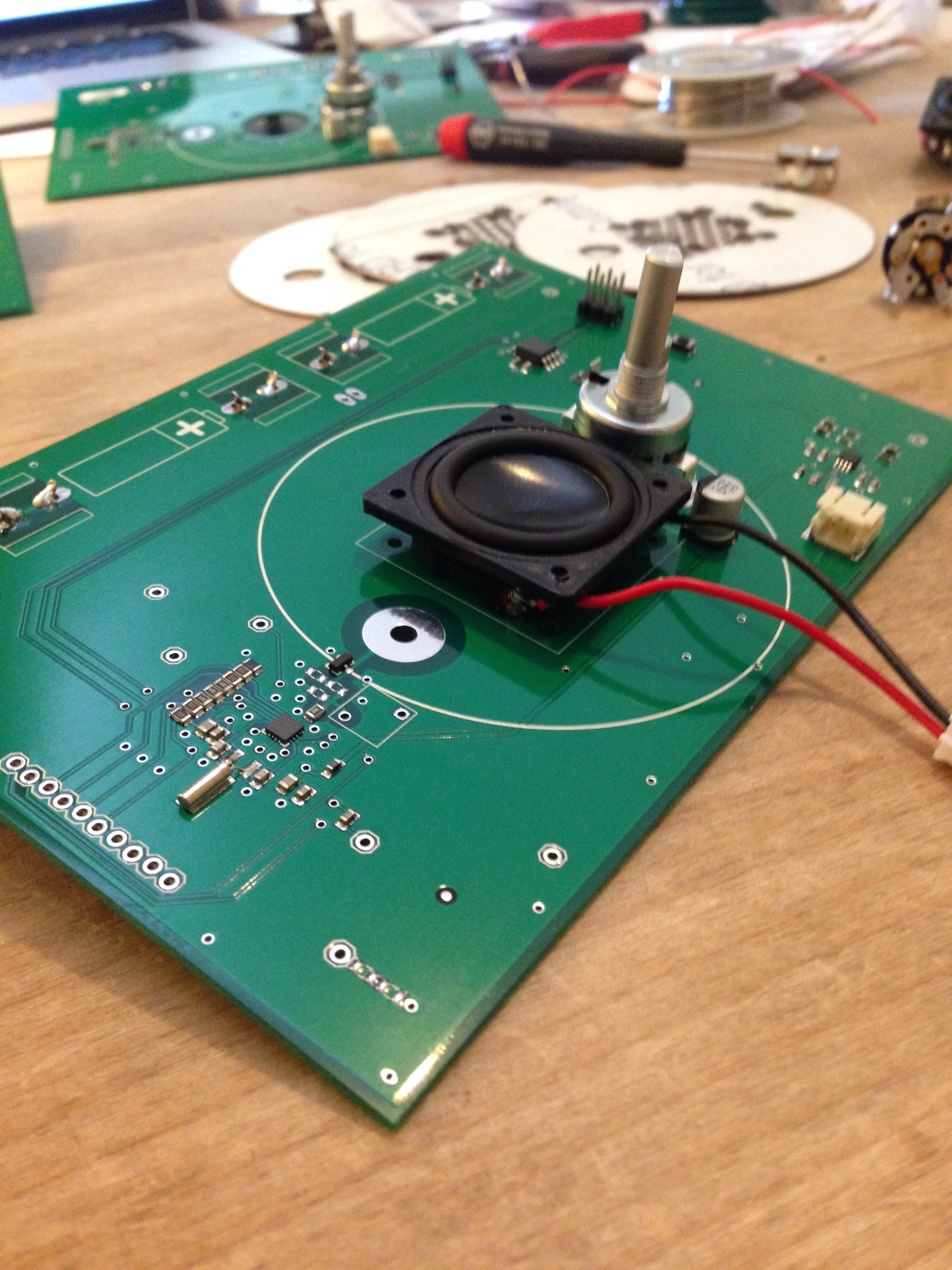
We start with a fully assembled PCB, a speaker, a spacer, a lid, some nuts & bolts, the potentiometer washer & nut, the knob, batteries, jar, ring and antenna. 

Install the speaker on the PCB.

Then slide the spacer over the potentiometer and onto the speaker.

Now install the lid over the potentiometer as well. 

Loosely install the potentiometer washer and nut. Then install the small screws through the lid, spacer, speaker and PCB and thread nuts on their ends.

Once all the screws are installed loosely, snug up the nuts and then the potentiometer washer and nut. Then install the knob, making sure the set screw is facing the flat portion of the potentiometer shaft.

Now install the antenna through the lid and thread it onto the screw.

Now install some batteries, put the radio into a jar and tighten the ring.

And, that's it!

"Do you think you're a workaholic?"

Added on by Spencer Wright.

Ada asked the question late last night, just as we were going to bed. It's been a long week, and I've worked until about midnight every single night. That's been the case for most of the past six months: In general, if I'm not working on The Public Radio it's because I've spent all evening clearing my inbox out, or writing my newsletter, or (as was the case much of this week) working late on Undercurrent stuff. And if I'm honest, the same could be said for most of my adult life. 

Regardless, though I suppose by way of a technicality, I've never considered myself a workaholic. I think of a workaholic as someone who is addicted to work - to whom the goal is working itself. 

I want freedom, though. I want to be recognized for my intuition, and my intelligence, and for the effort I put into the things I do. I want people to say "He doesn't fuck around. And he notices real stuff, and he turns his observations into really valuable output - whatever the form." And then I want to be given the benefit of the doubt - the freedom, both creative and financial - to do just that. 

It's possible - likely, even - that my efforts are misguided. At least within traditional working environments, and even at companies that espouse two pizza rules and generally empower their employees (I'll pause here to note that Paul Graham's How to Make Wealth, and especially the section titled "Working Harder," is an absolutely excellent discussion of this topic), the value of individual contributions is extremely difficult to measure, and it's correspondingly rare to have one's individual efforts result in the kind of graduation that I seem to want. And moreover, one might argue that the freedom I'm looking for is a Macguffin: Once I get this recognition, what will I do with it? Work? 

And yet, I continue. Even as I lay in bed, I was thinking of what I wanted to do over the weekend, with the explicit intention of carving out more breathing room for myself. And I awoke this morning feeling no different: There are things I want very much to work on today, and in my mind I can see how they add up to something more than the sum of their parts - to myself, my users, and to, I hope, the future of my creative path.

Our deliverable just begins with form

Added on by Spencer Wright.

From The New Yorker's profile on Jony Ive (emphasis mine):

Apple’s designers still visit factories, but a final prototype part from Cupertino is not the start of a conversation; it’s the part. Ive gave me a tour of the area in the studio behind the glass, where, beyond the milling machines, there’s also a color lab. He said, “Years ago, you thought you’d fulfilled your responsibility, as a designer, if you could accurately define the form”—in drawings or a model. Now, Ive said, “our deliverable just begins with form.” The data that Apple now sends to a manufacturer include a tool’s tracking path, speed, and appropriate level of lubricant.

This is interesting. As a designer, I welcome any and all developments that allow me to send G-code directly to my manufacturer. 

Why not Github for mechanical design files

Added on by Spencer Wright.

I spoke today to Jon Placa @ ProtoExchange about how we're using Github on The Public Radio. In a followup email, he asked: "Is there any reason why you aren't using Github to host your actual design files (beyond gerbers)?" My reply:

No singular reason. But...
  • Only I work on our mechanical design, so there's no need to collaborate.
  • When I was collaborating on mechanical design (last job), I used Autodesk Vault - which is actually pretty good.
  • Mechanical design is even more fragmented - it's not as if me posting .ipt and .iam files on Github means they're really useful to anyone else, because maybe they're on Solidworks or an earlier version of Inventor - or, more likely still, on some consumer grade system.
That said, the original goal was to be open with all of it, and I would like to post those files there too - if only for posterity's sake.

Public Radio progress

Added on by Spencer Wright.

So, a few things have happened.

Over the past months, we've worked a ton on improving The Public Radio's reception. We want it to perform as well as any FM receiver on the market, but we were having trouble getting there.

Finally, we spent a day with Todd taking The Public Radio apart piece by piece. And as it turns out, reception wasn't our issue - interference was. 

The entire time, we'd never looked critically at The Public Radio's amplifier - a TI TPA2005D1. We had chosen it mostly because it was available and easy to develop with (i.e. Sparkfun sells a development kit with it), but its efficiency was also a key selling point. The TPA2005 is a Class-D amplifier, which means that it amplifies the audio signal as a series of pulses. These pulses operate at a frequency of about 250kHz, and the whole device has a much lower duty cycle than Class-A, -B, or -AB amplifiers, all of which operate more or less continuously. Because Class-D amps have such low duty cycles, they're way more efficient than linear amps. We wanted the Public Radio to have as long a runtime as possible off of a single set of batteries, and so we stuck with the TPA2005D1 to minimize quiescent power consumption and increase life.

But that switching frequency... Once we pulled the amp off The Public Radio, the audio quality improved dramatically. The 250kHz stuff happening on the amp must have been creating harmonics into the mHz range, and that noise had been getting onto the rest of our board and making our lives *very* difficult. It's possible we could have gotten rid of it with some clever filtering, but the bottom line is that it didn't matter: the difference in power consumption is mostly when the input is low, which is never going to be the case when you're listening to HOT97. And anyway we're talking about dozens if not hundreds of hours of runtime regardless - and the difference isn't something that most listeners will ever notice.

So: Class-D amp out. Class-AB amp in.

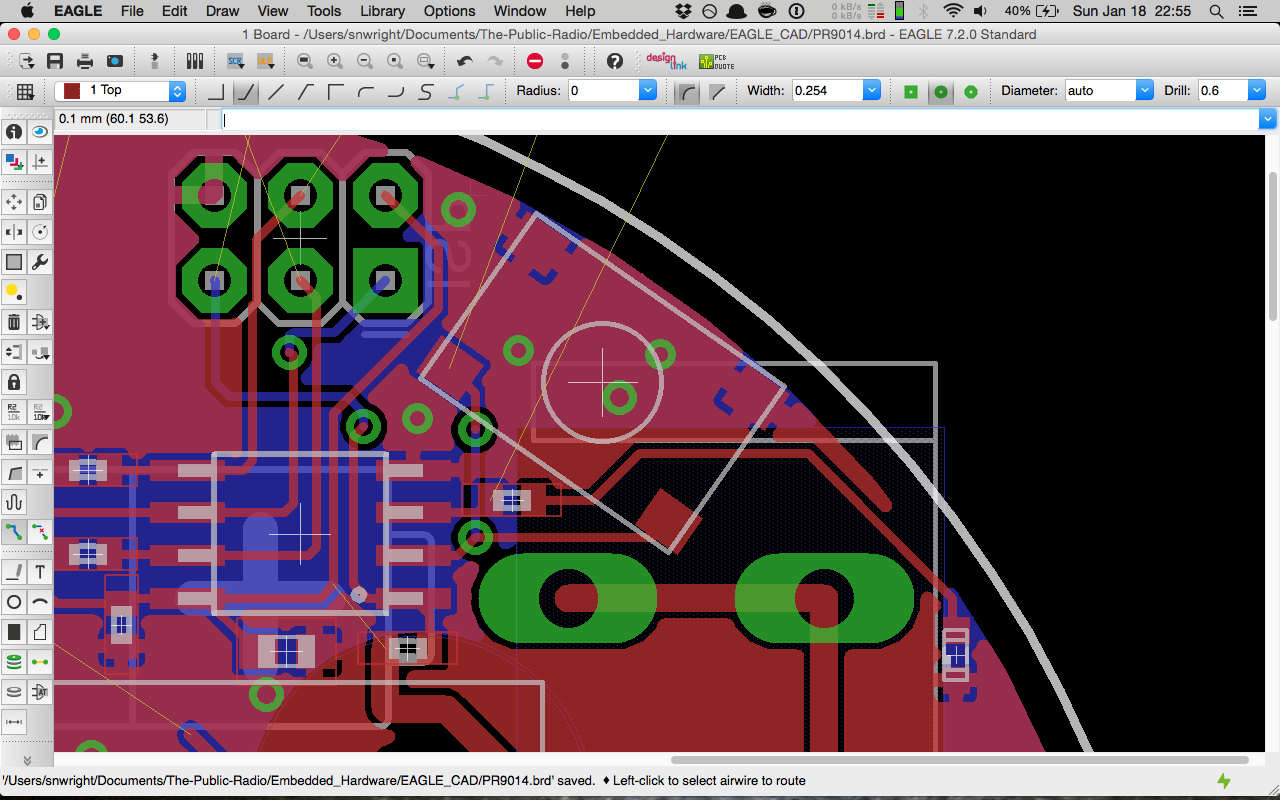
Our new amplifier, a TI TPA6203A1, is towards the bottom of this board.

Once that was done, our progress jumped significantly. We bought some quick-turn boards from Advanced Circuits and spent a night putting them together. By the end, we were listening to Funkmaster Flex without an antenna even connected. The Public Radio has *excellent* reception now, and we can finally focus on the DFM and production challenges ahead.

In the meantime, we've received samples of the speaker spacer that I designed a month or so ago. They work well, and having them figured out means that we can pull the trigger on our lid tooling too.

This week, we'll officially place an order for 2500 assembled PCBs. We'll also begin designing our testing & tuning jigs in earnest, and that'll inevitably mean going back into software development as well. 

Onward.

Random things from recently

Added on by Spencer Wright.

Things I've learned:

  • Visible light communication is a thing - and it predates radio. 
  • Banks can destroy my will.
  • Talk to your suppliers about packaging, and don't let them ship stuff to you individually bagged.
  • Industrial quality framed solder stencils are intense.
  • 70% OEE is something to brag about.

Things I'm working on:

  • Saying no to more things.
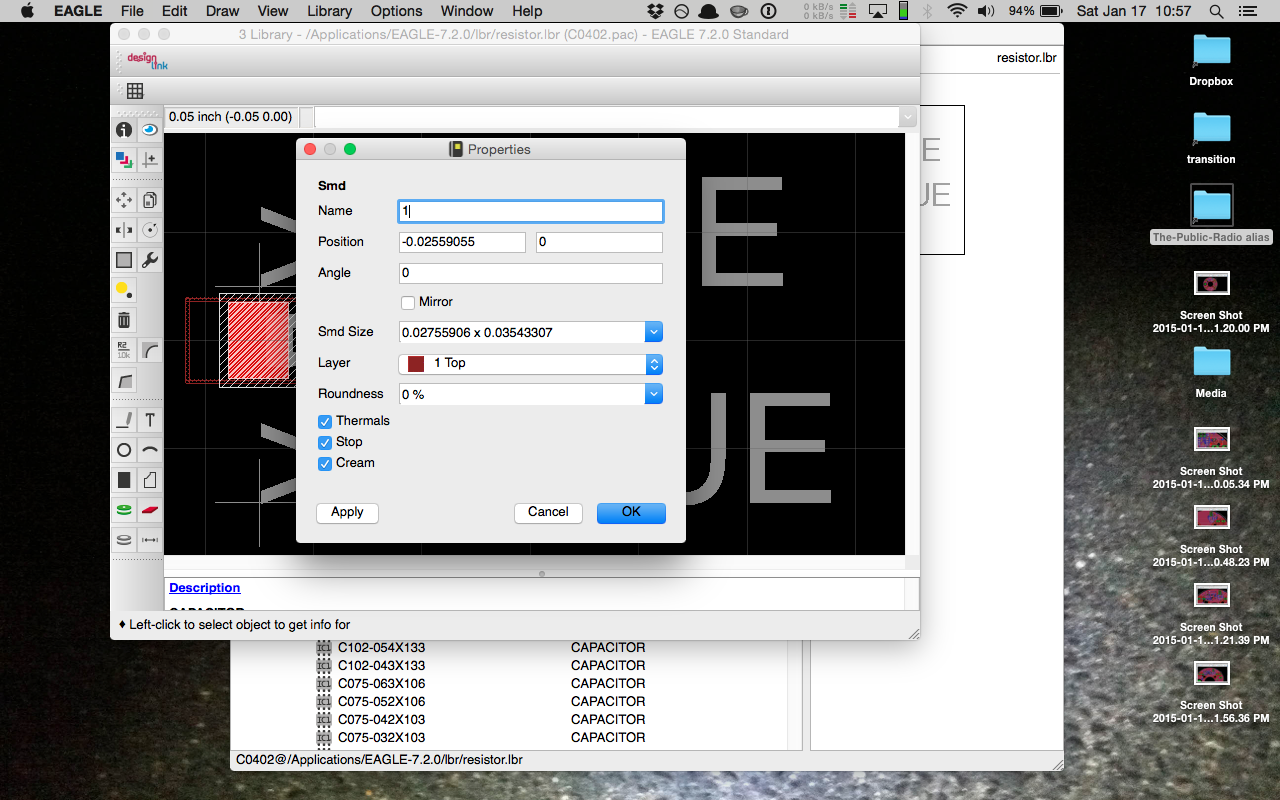
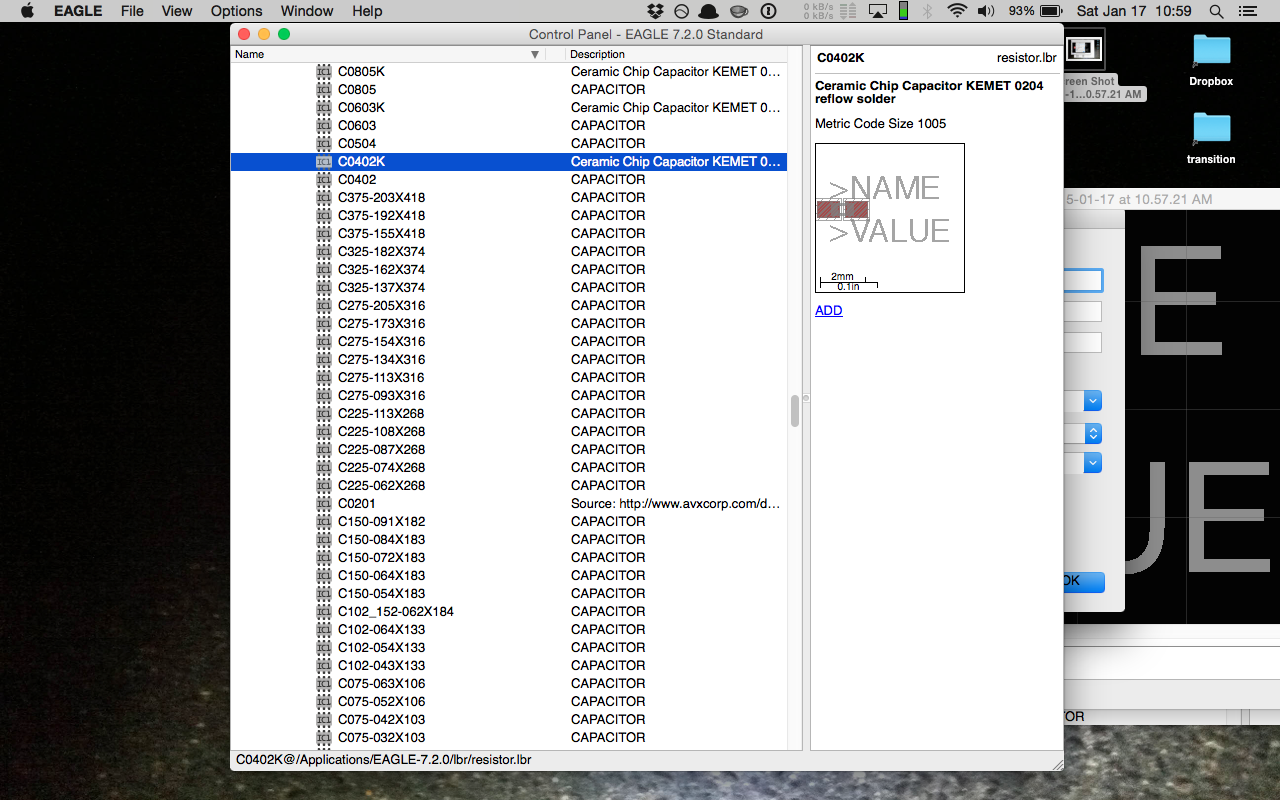
  • It's not that EAGLE Cad doesn't have features; they're just a PITA to learn.
  • Being really clear about my domain expertise - and monetizing it as such.
  • Keeping actual finances, as opposed to just spending money and hoping it works out.
Things I'm not really working on:

  • Exercise. It's been last on my list for a while now, and I'm beginning to accept that that'll be the case until The Public Radio gets further along.
  • Taking time off. I've spent a *lot* of my ostensibly "free" time working over the past months, and I'm not making much effort to change that - at the moment.

EAGLE => X/Y CSV

Added on by Spencer Wright.

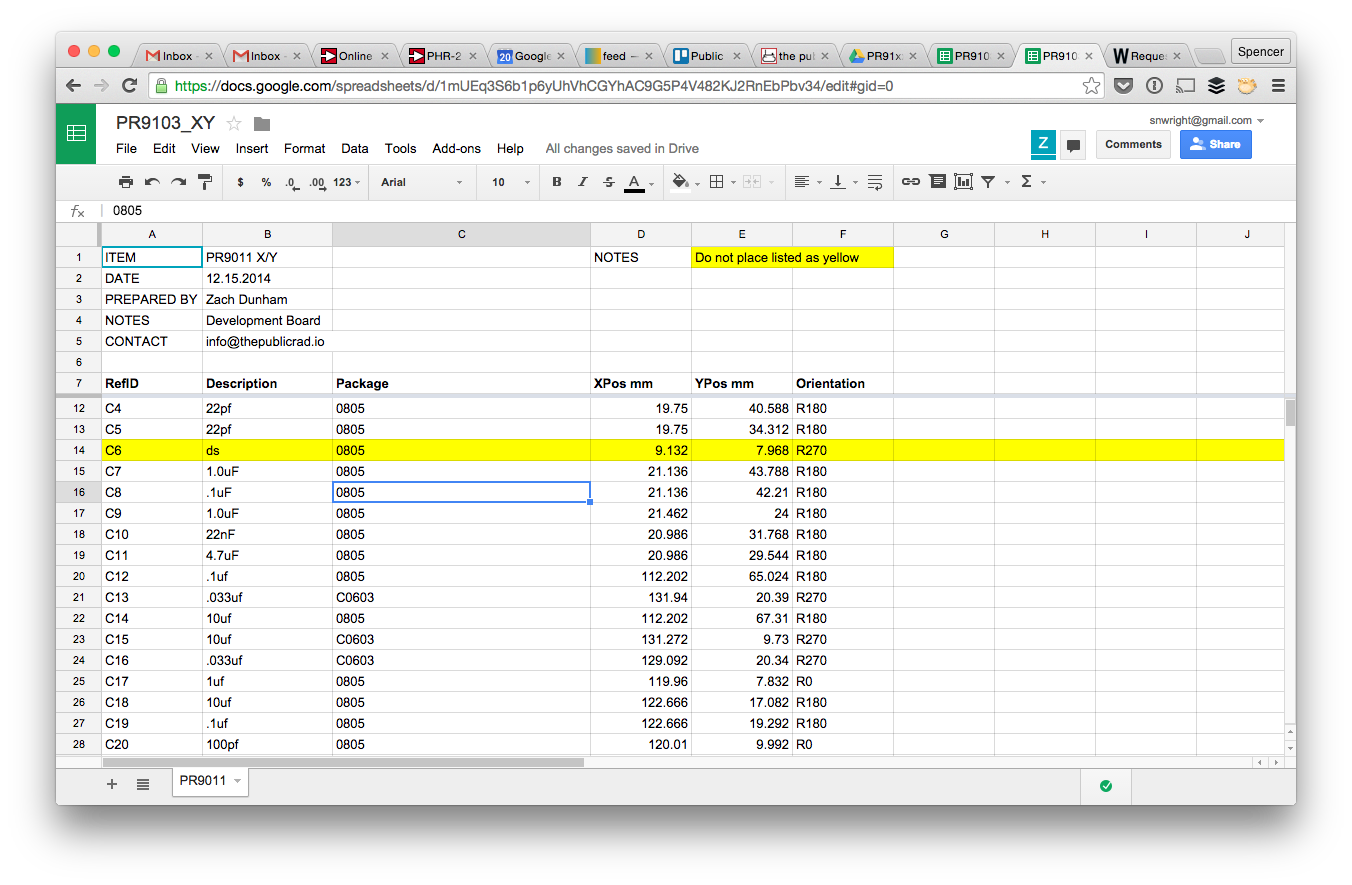
In order to program his pick-and-place machines, our prototyping supplier for the development boards on The Public Radio requested a document (CSV or spreadsheet) with part names and X/Y coordinates. We figured that EAGLE could probably do this easily, but the process ended up being a bit tricky. 

EAGLE, in all it's weirdness, generates plain-text partlists that are formatted by column (i.e. each field starts on a given character column in the file). Ours starts out like this:

There are a few problems with this. First, a bunch of it is superfluous; we already have a partlist (which we created in Google Docs and links directly to manufacturer product numbers). Second, some of the "Value" fields are missing, making it difficult to index a given word on a line. Third, there are inconsistent delimiters; at first I thought I could use spaces, but the missing values screwed that up (and the manual solution was, for a few reasons, unappealing to me).

So the problem: How to process this to produce a document with consistent, useful formatting and no superfluous information?

The answer: A shell script.

My end result is hosted on Github, here. It's the first shell script I've written in probably ten years, but AFAICT it works well. 

The function takes one argument from stdin, which should be the plain-text partlist exported directly from EAGLE. It creates a second document for output and then processes the input file, sending just the necessary information to the output - and separating all fields with a comma in the process. The output looks like this:

I'm pretty crappy at scripting these days, so it took me a few hours to complete - but the end result is exactly what I wanted, and we used it numerous times in the few days since I wrote it. 

In short: This was arguably the biggest success of my whole week. And it was fun to write, too! Check it out if you're interested :)

The Devil's Advocate Office

Added on by Spencer Wright.

The Israeli Directorate of Military Intelligence, AMAN, has specific roles dedicated to advocating for contrary points of view. From a 2007 paper by Yosef Kuperwasser, of the Saban Center for Middle East Policy (emphasis mine):

...But the key reason that AMAN has not become an arm of the military is that it has in place a number of tools to ensure the promotion of diverse views. First, in order to make sure that different and opposing opinions are heard within the Israeli intelligence community, AMAN has a culture of openness, where individuals are expected to voice dissenting opinions. The organizational slogan that reflects this openness is, “Freedom of opinion, discipline in action.” AMAN has two other tools that promote diversity: the “devil’s advocate” office and the option of writing “different opinion” memos. 
The devil’s advocate office ensures that AMAN’s intelligence assessments are creative and do not fall prey to group think. The office regularly criticizes products coming from the analysis and production divisions, and writes opinion papers that counter these departments’ assessments. The staff in the devil’s advocate office is made up of extremely experienced and talented officers who are known to have a creative, “outside the box” way of thinking. Perhaps as important, they are highly regarded by the analysts. As such, strong consideration is given to their conclusions and their memos go directly to the office of the Director of Military Intelligence, as well as to all major decision makers. The devil’s advocate office also proactively combats group think and conventional wisdom by writing papers that examine the possibility of a radical and negative change occurring within the security environment. This is done even when the defense establishment does not think that such a development is likely, precisely to explore alternative assumptions and worst-case scenarios.

While the devil’s advocate office is an institutional level safeguard against group think, there is also an individual-level safeguard. The analysts themselves are given venues for expressing alternate opinions. Any analyst can author a “different opinion” memo in which he or she can critique the conclusions of his or her department. Senior officers do not criticize analysts who choose to write such memos.

This is smart.

Diff Gifs

Added on by Spencer Wright.

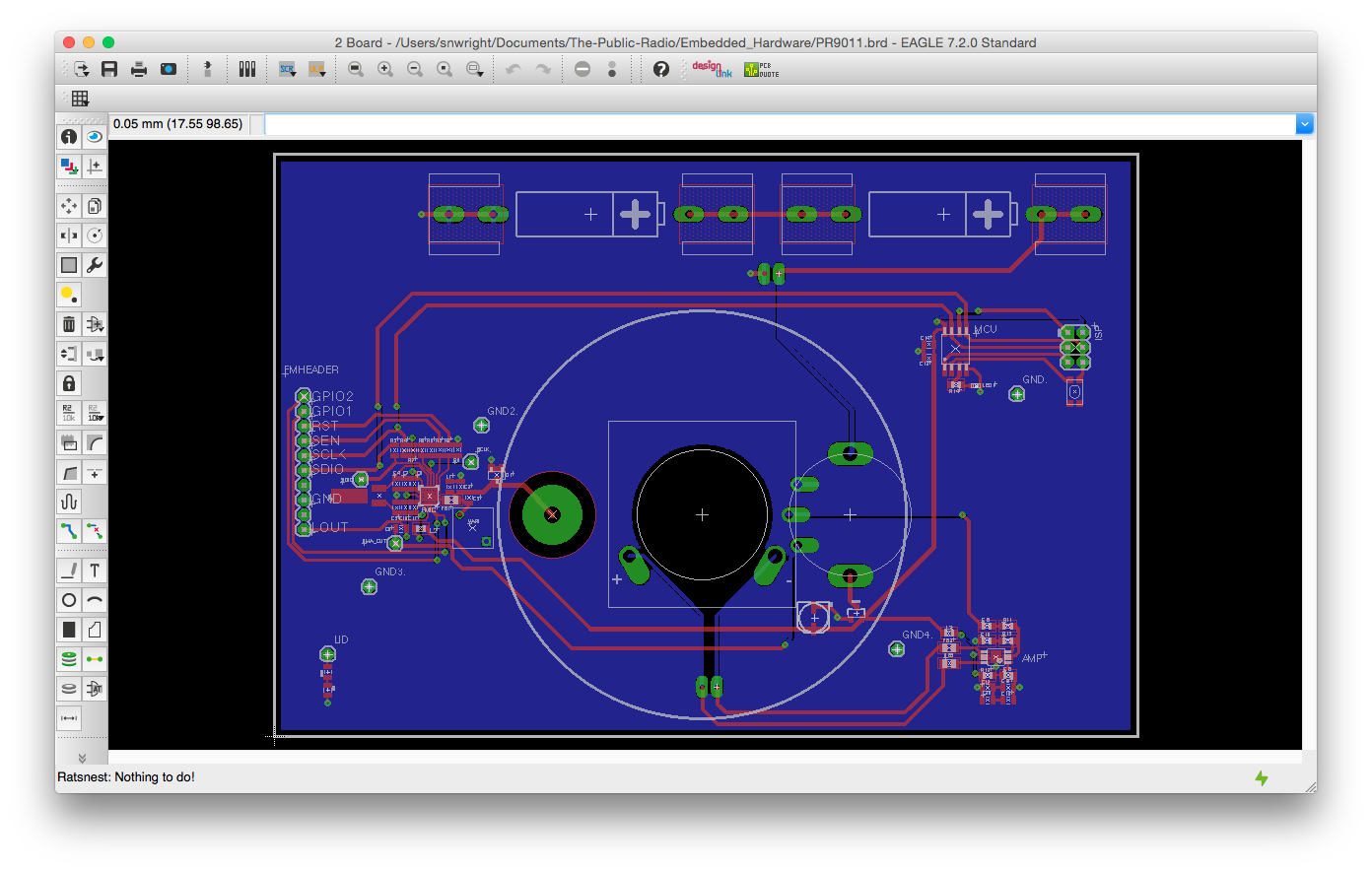
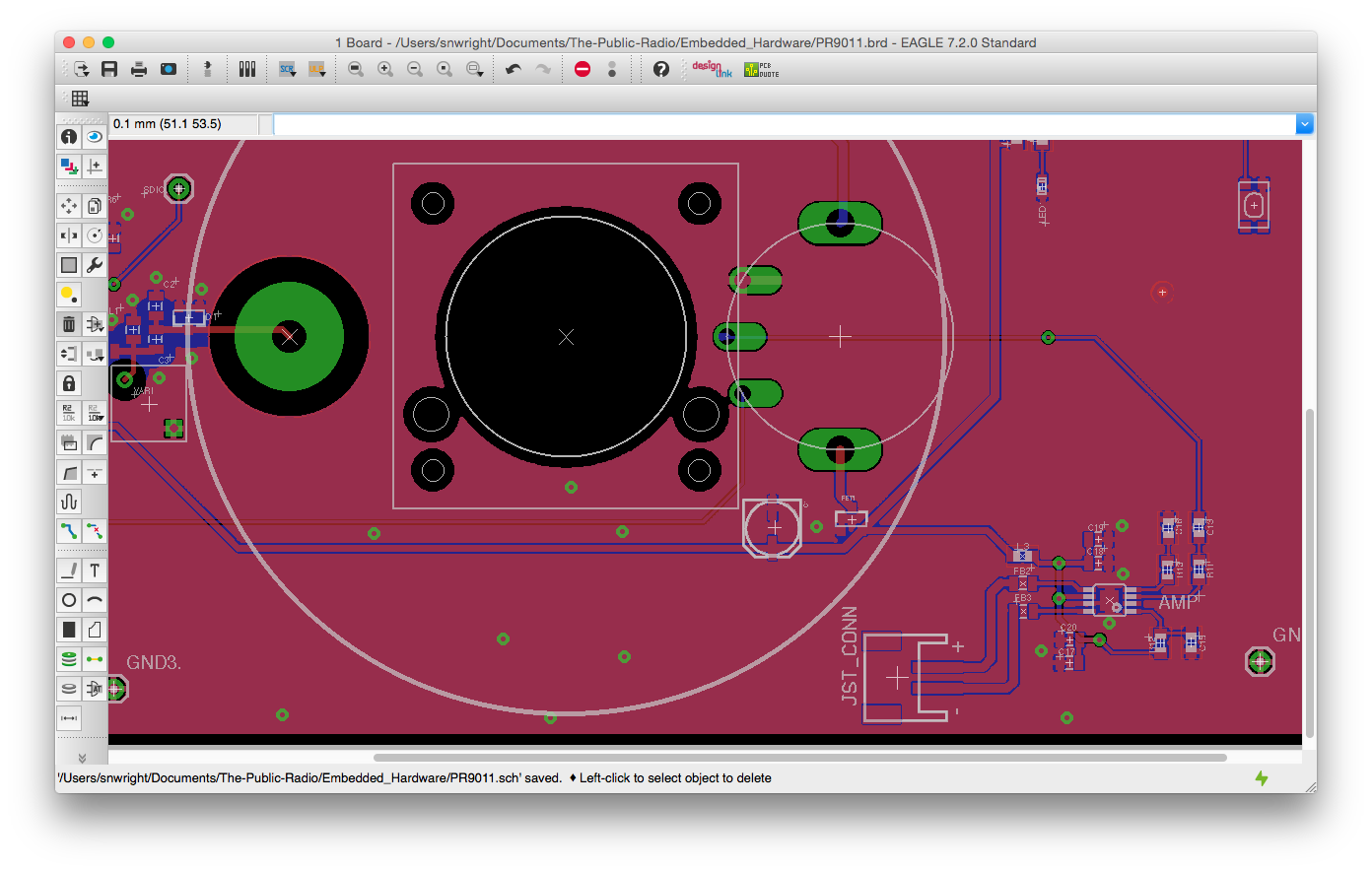
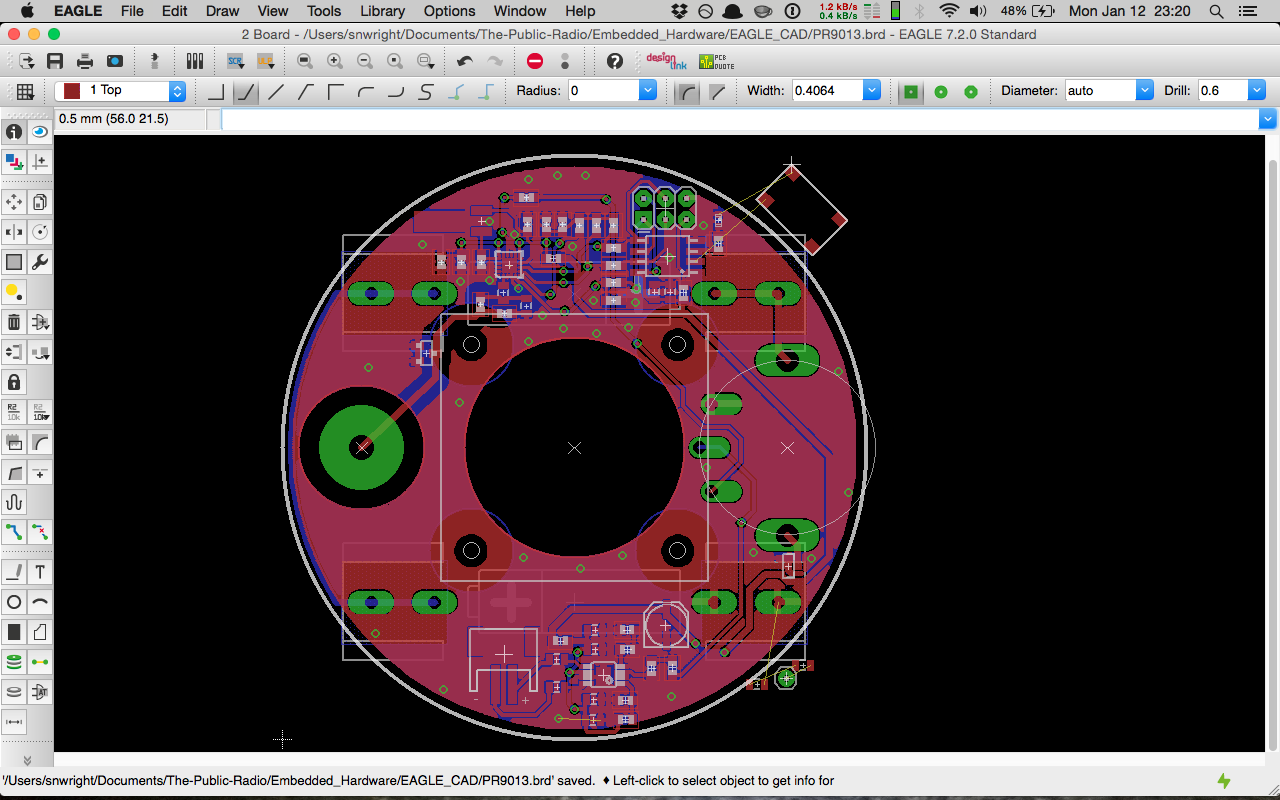
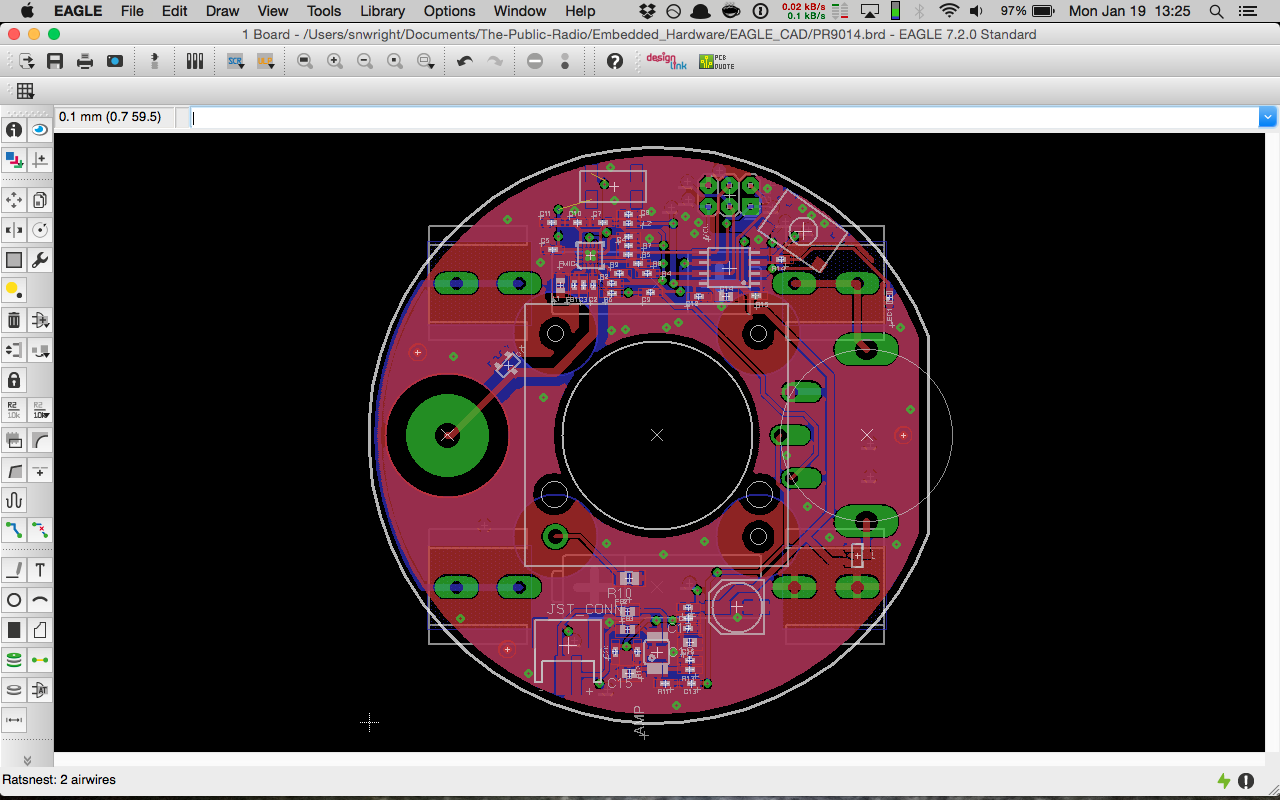
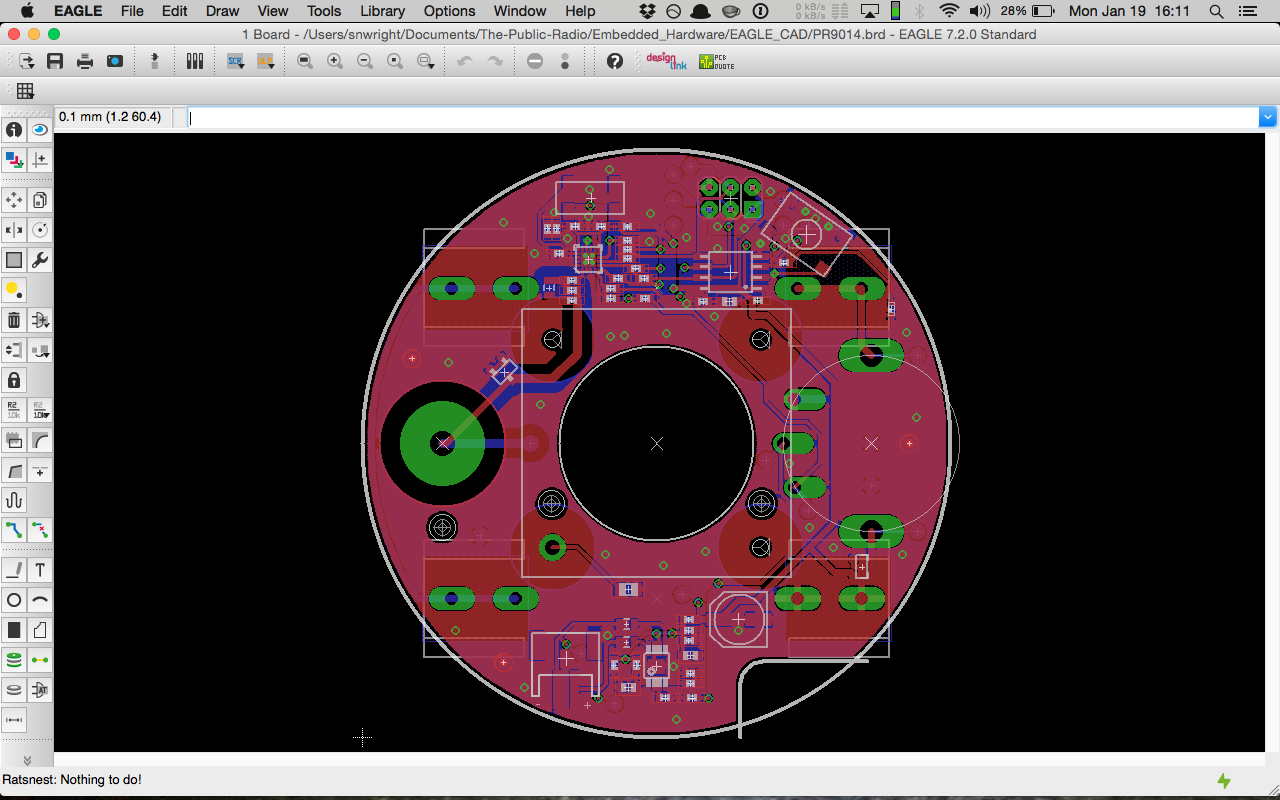
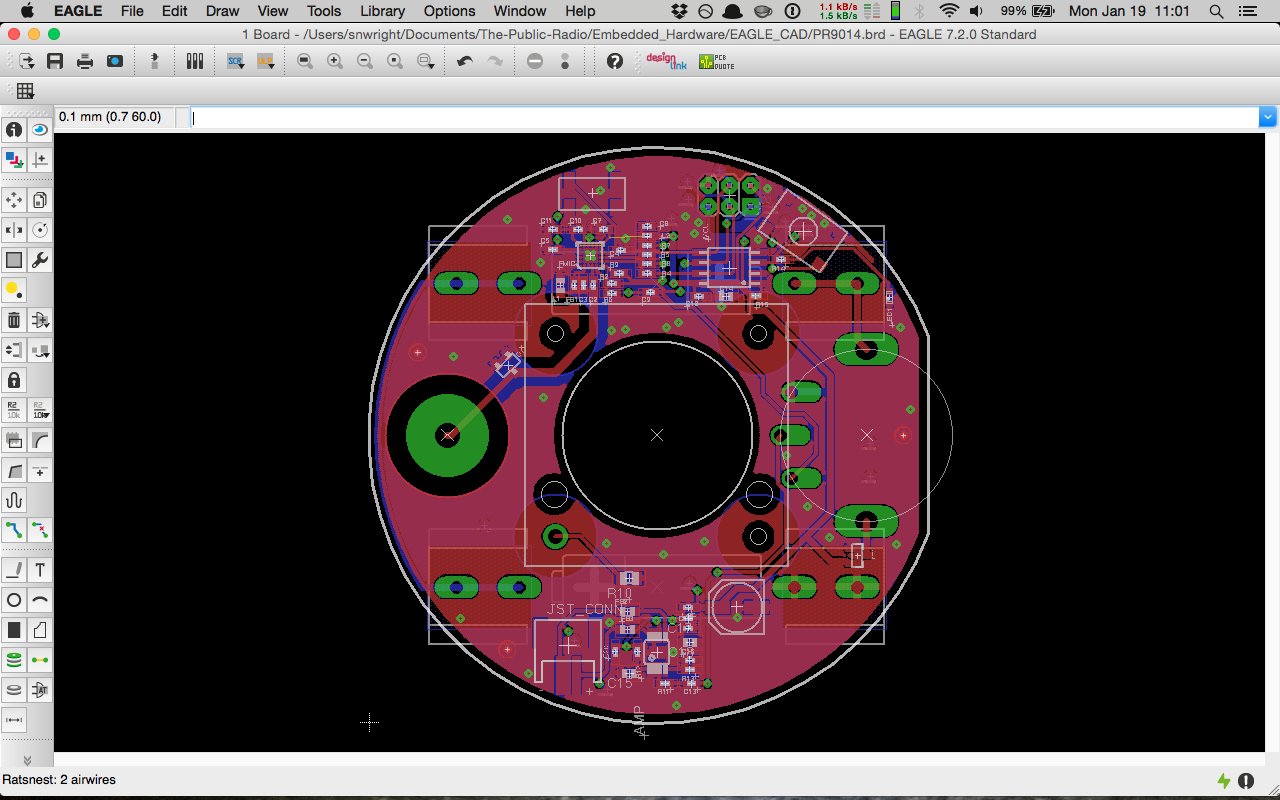
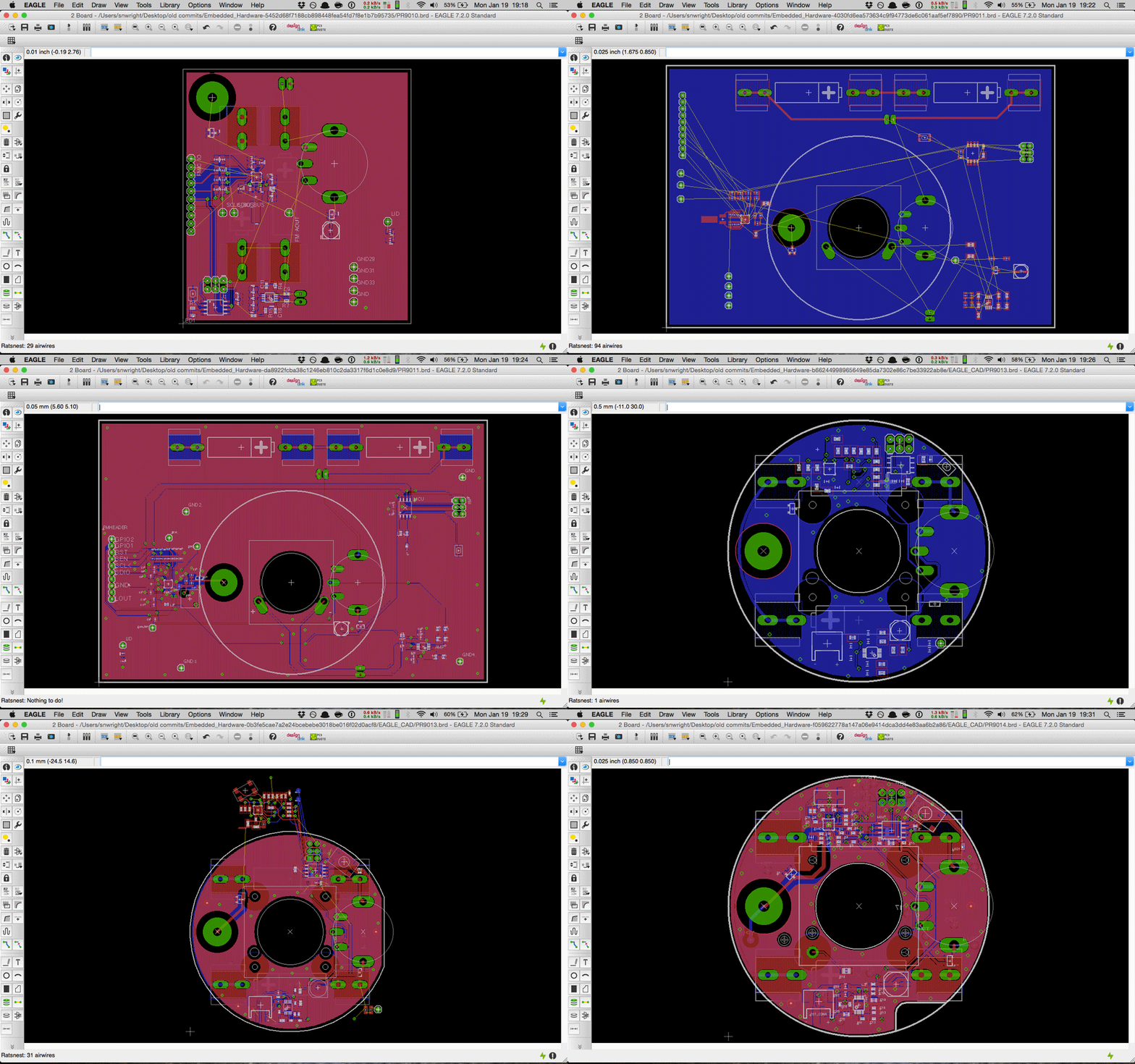
Inspired by a tweet by Chris Loughnane, I decided to make a visual history of the EAGLE CAD commits that Zach & I have made to The Public Radio's Github since the beginning of December.

The schematic changes are pretty subtle:

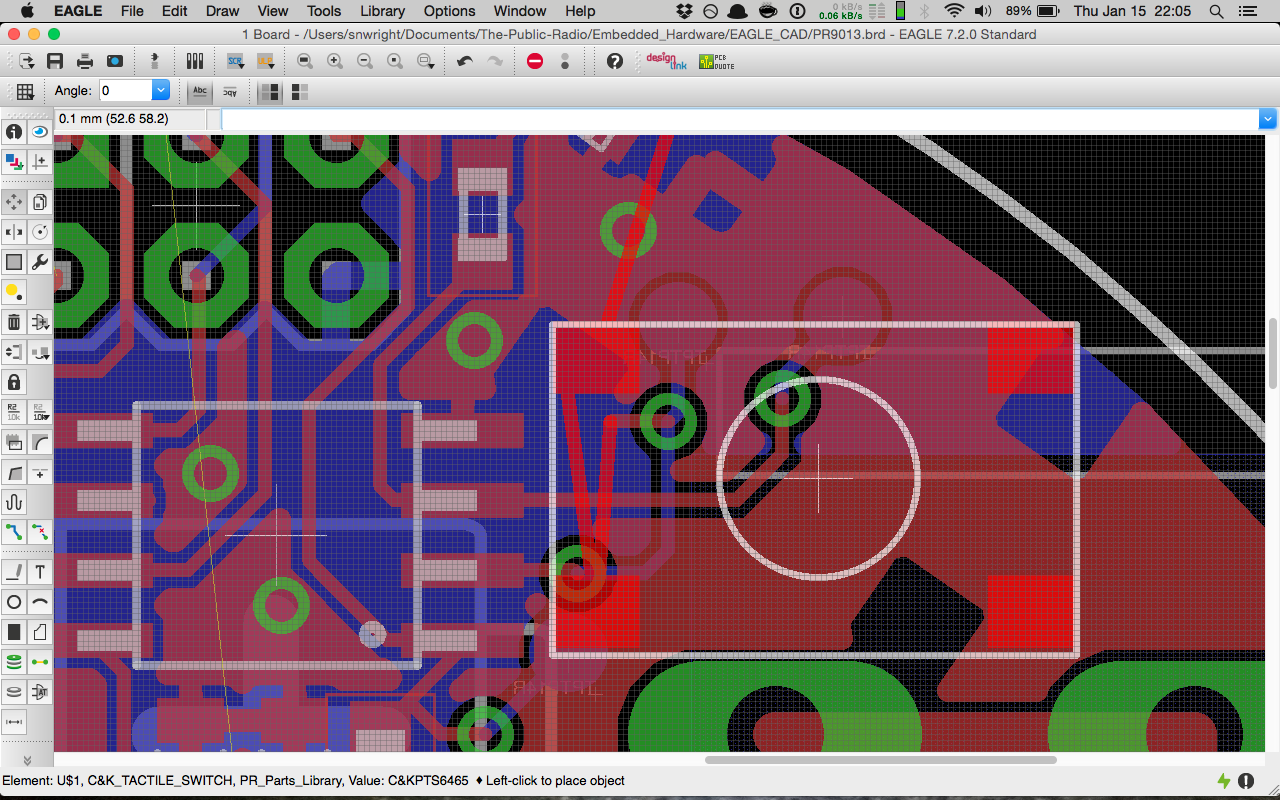
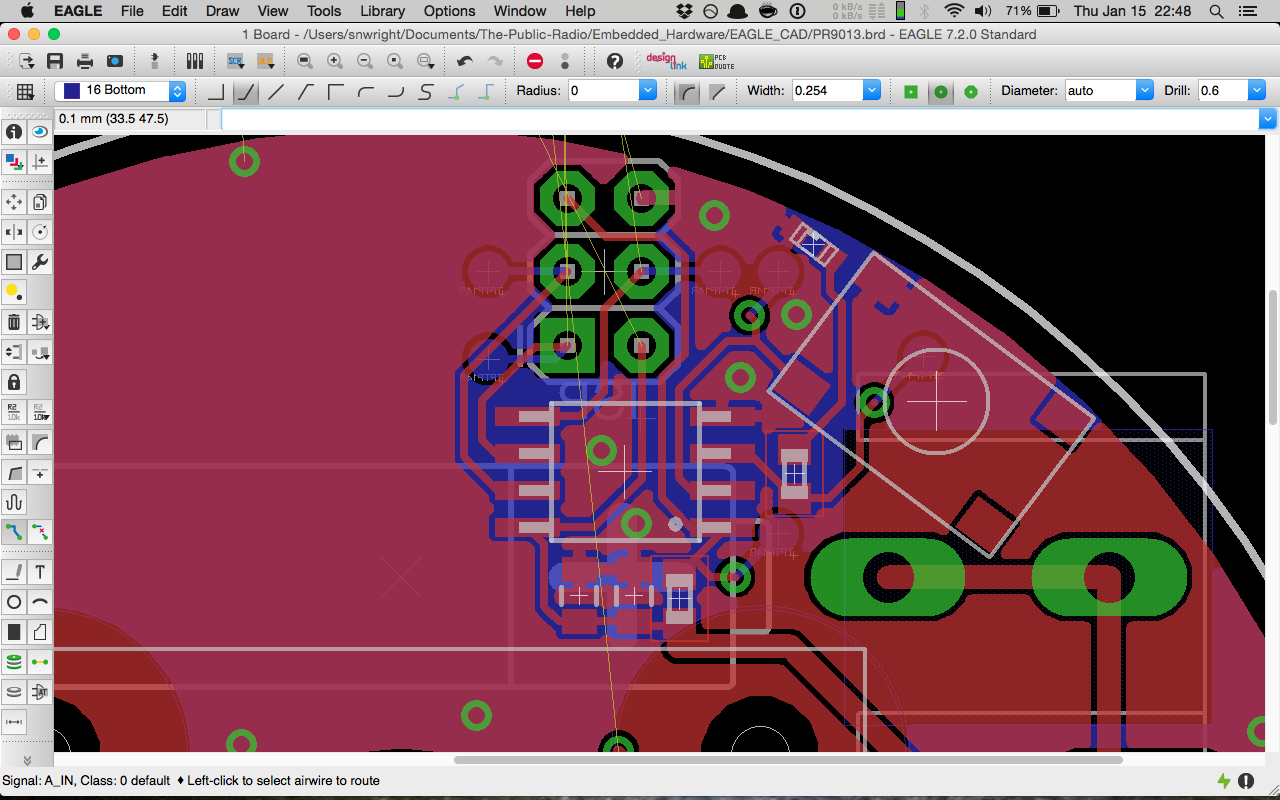
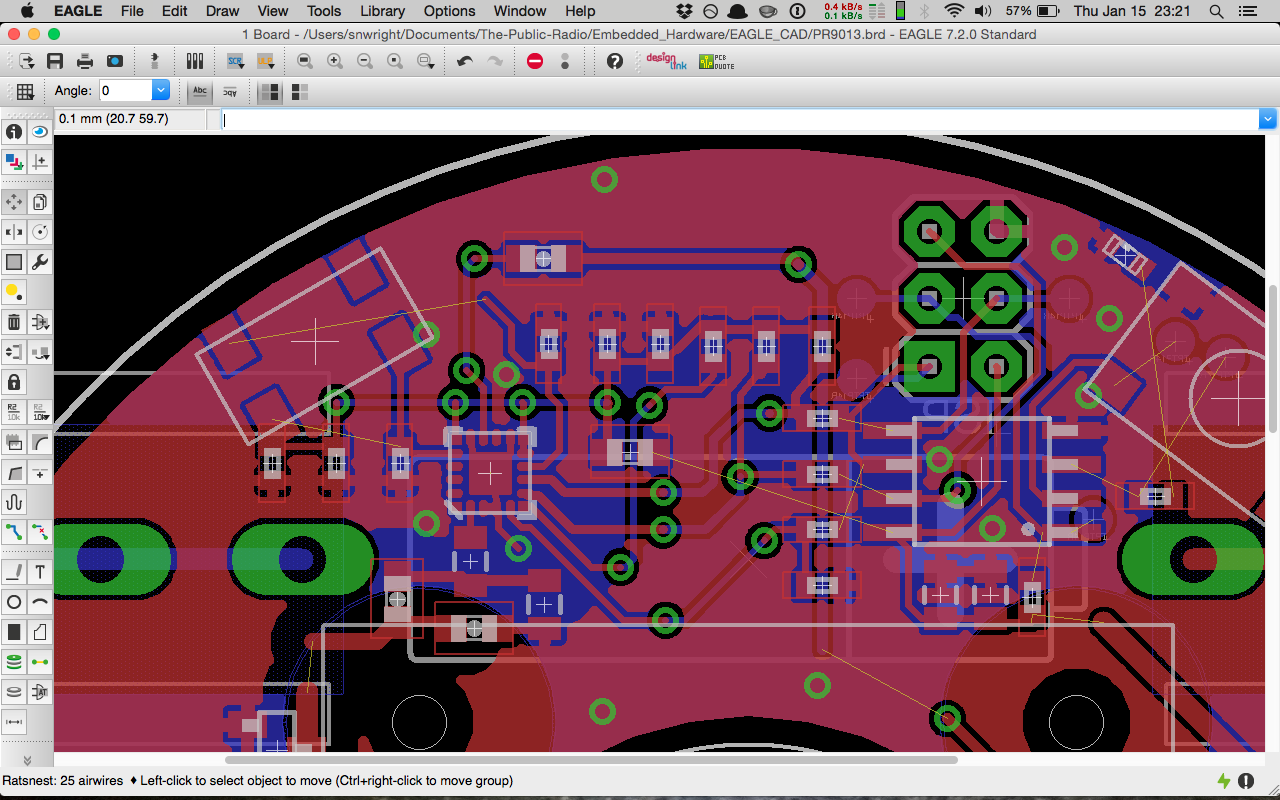
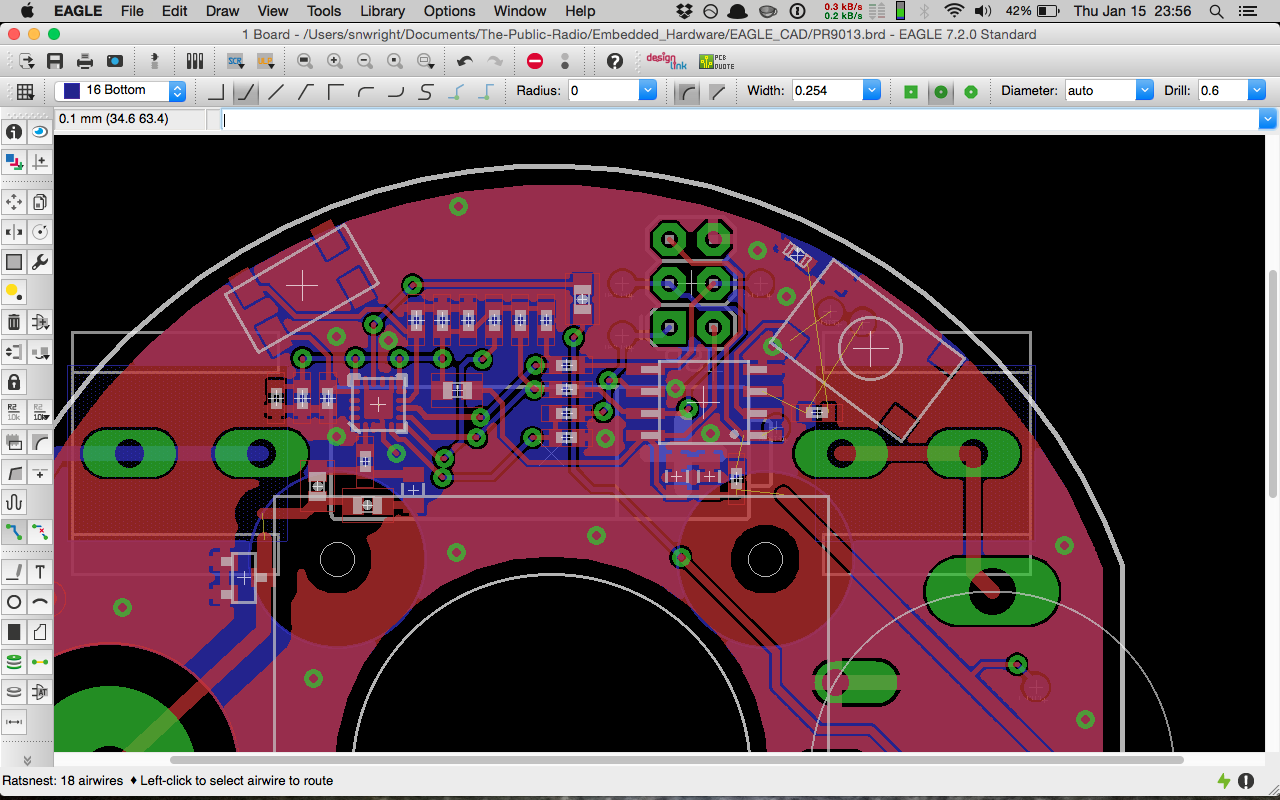
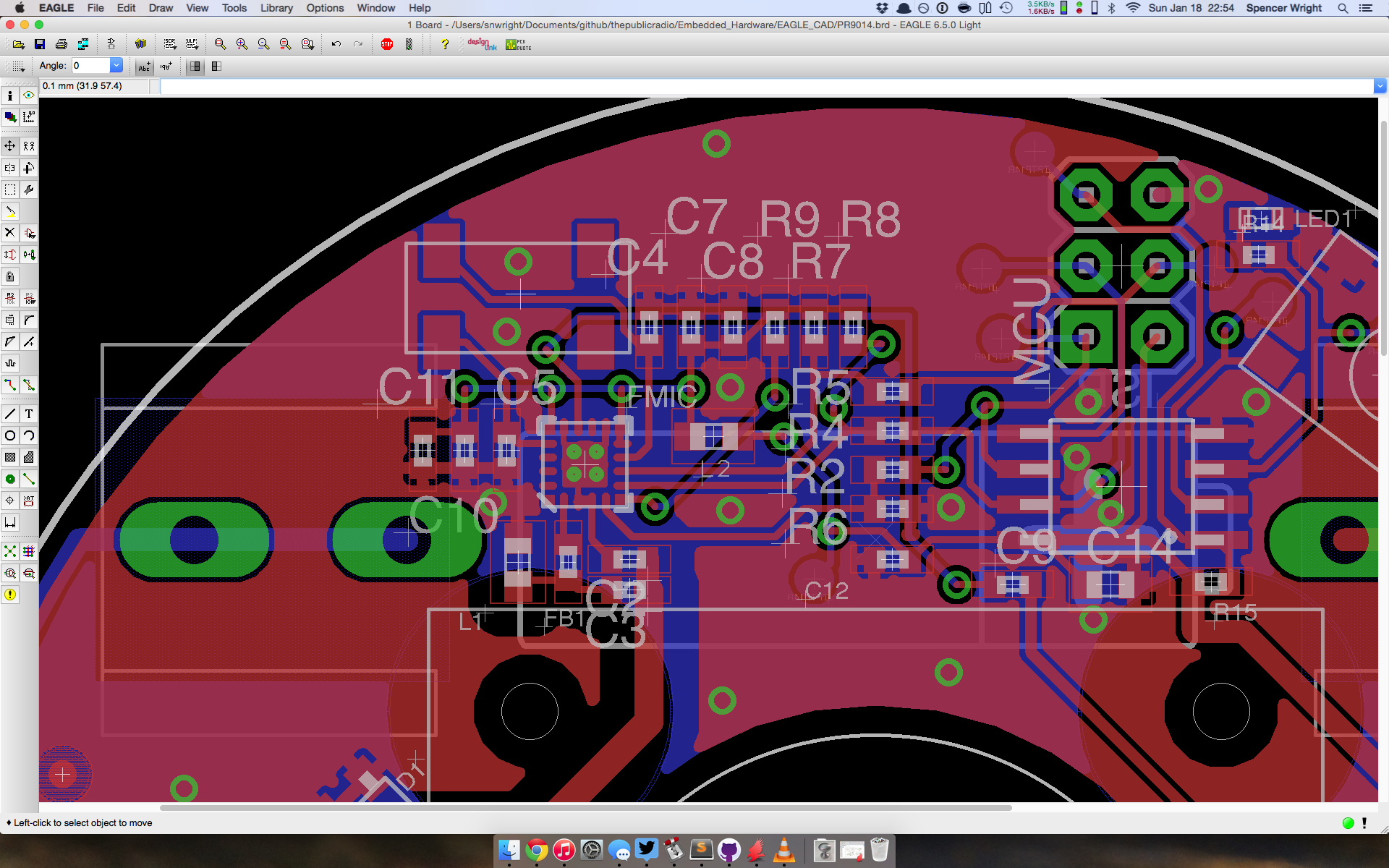
The layout is more dramatic. Partly that's because of the shift to rectangular dev boards, but if you look closely you can see that a *lot* of stuff has moved around:

brd-development.gif

Incidentally, someone - Cadsoft? Github? - should make an automated way of generating these things. They're so useful!

Anyway. We'll be ordering another round of PCBs tomorrow. Fun!

Everything I know about how speakers are made

Added on by Spencer Wright.

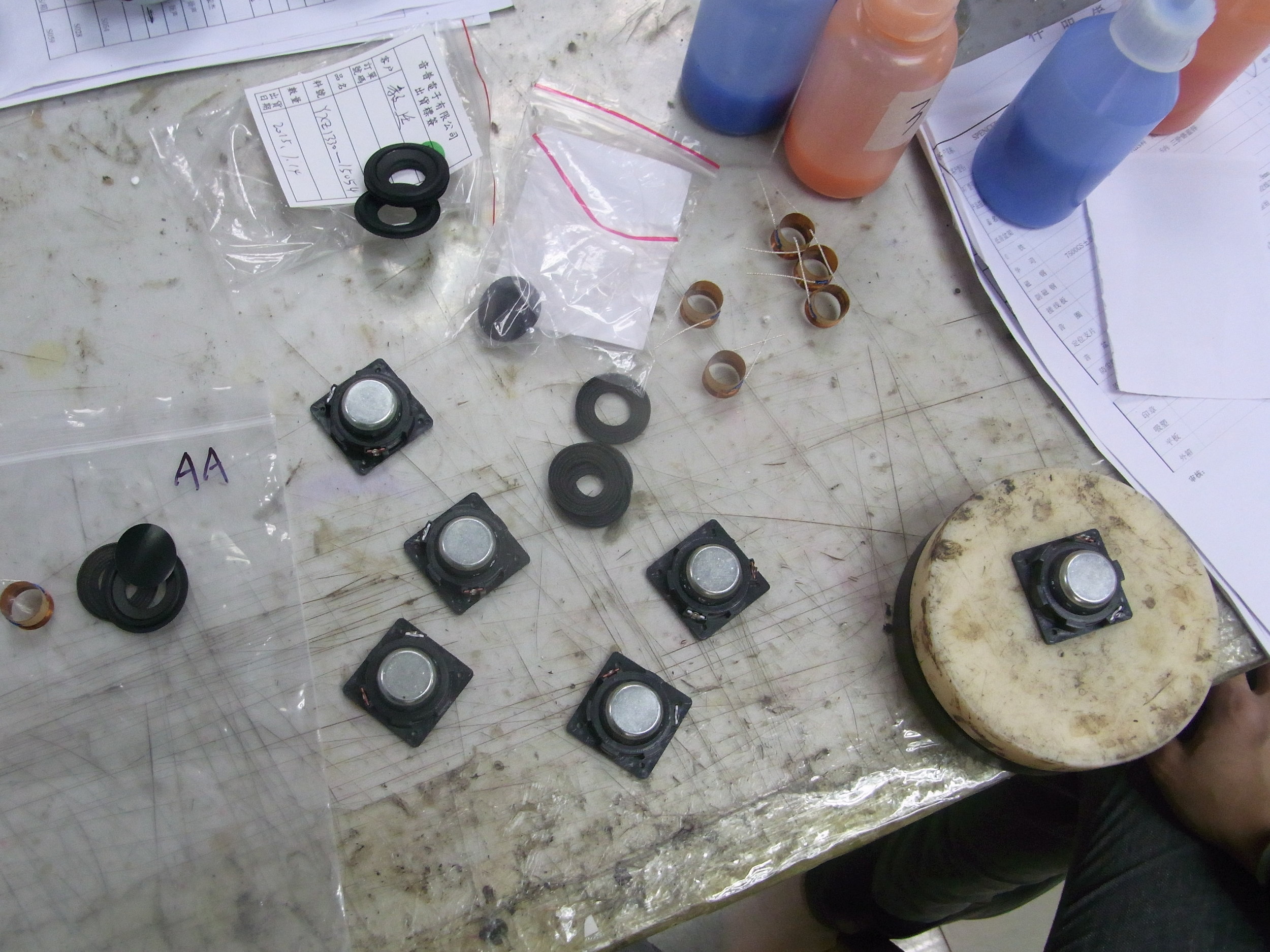
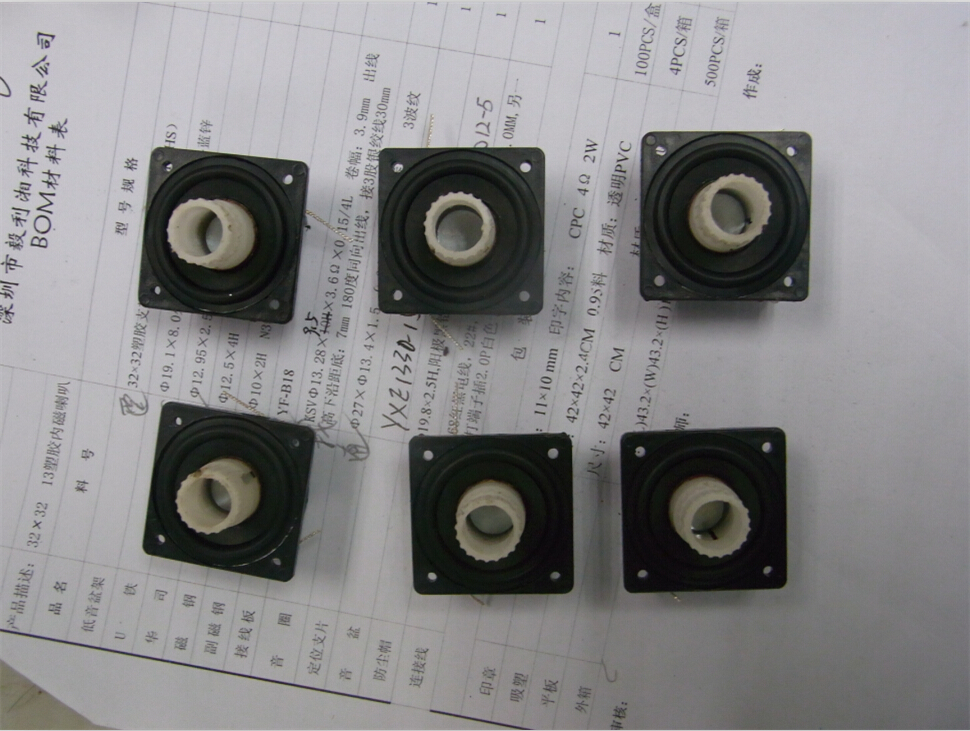
Two photos from a speaker manufacturer in Dongguan. These constitute basically the entirety of what I know about speaker manufacturing.

So, there you go. Speakers. I'm looking to learn more: ping me if you can help (seriously).

Notes from an investment casting factory in Taiwan

Added on by Spencer Wright.

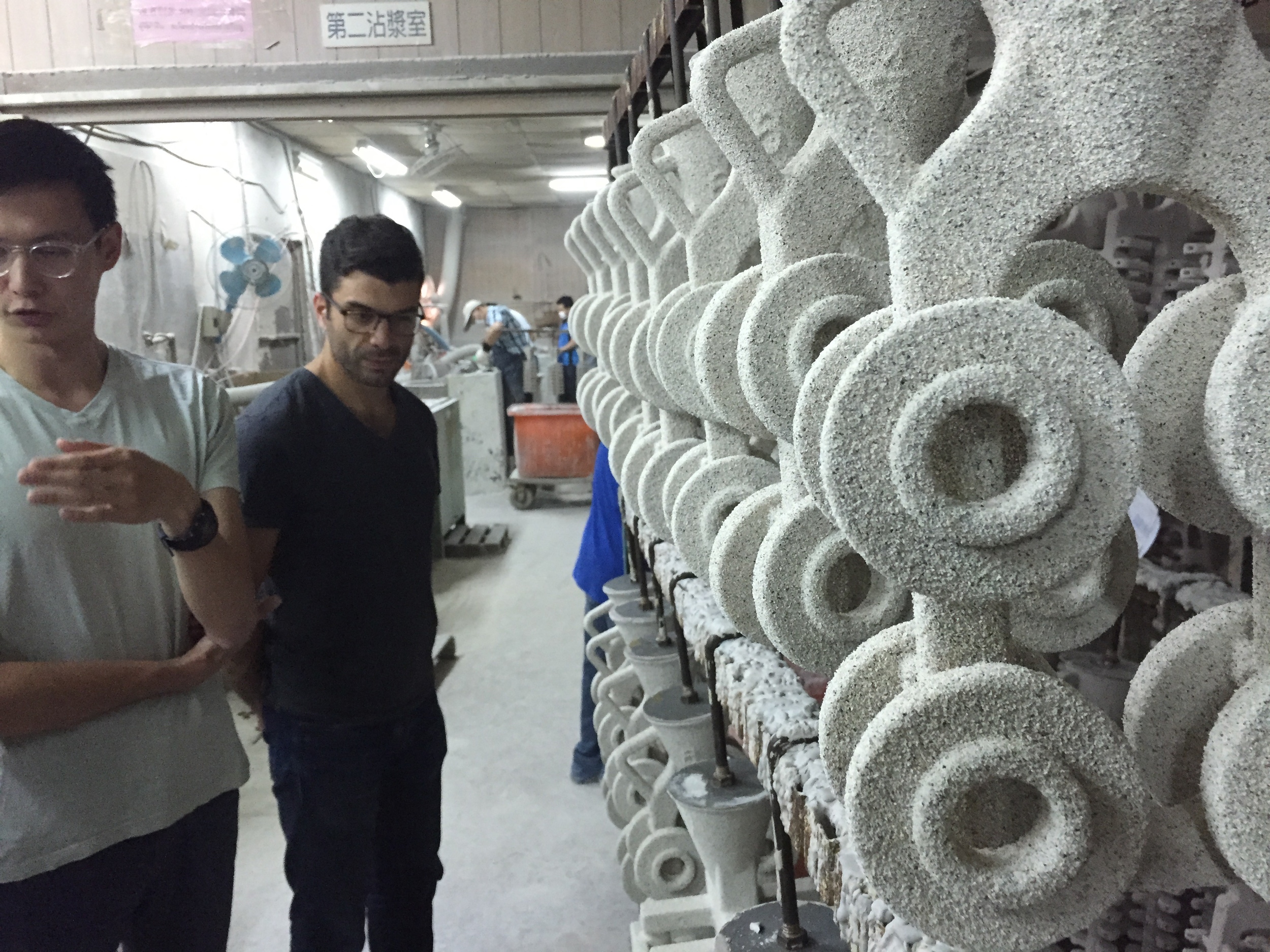
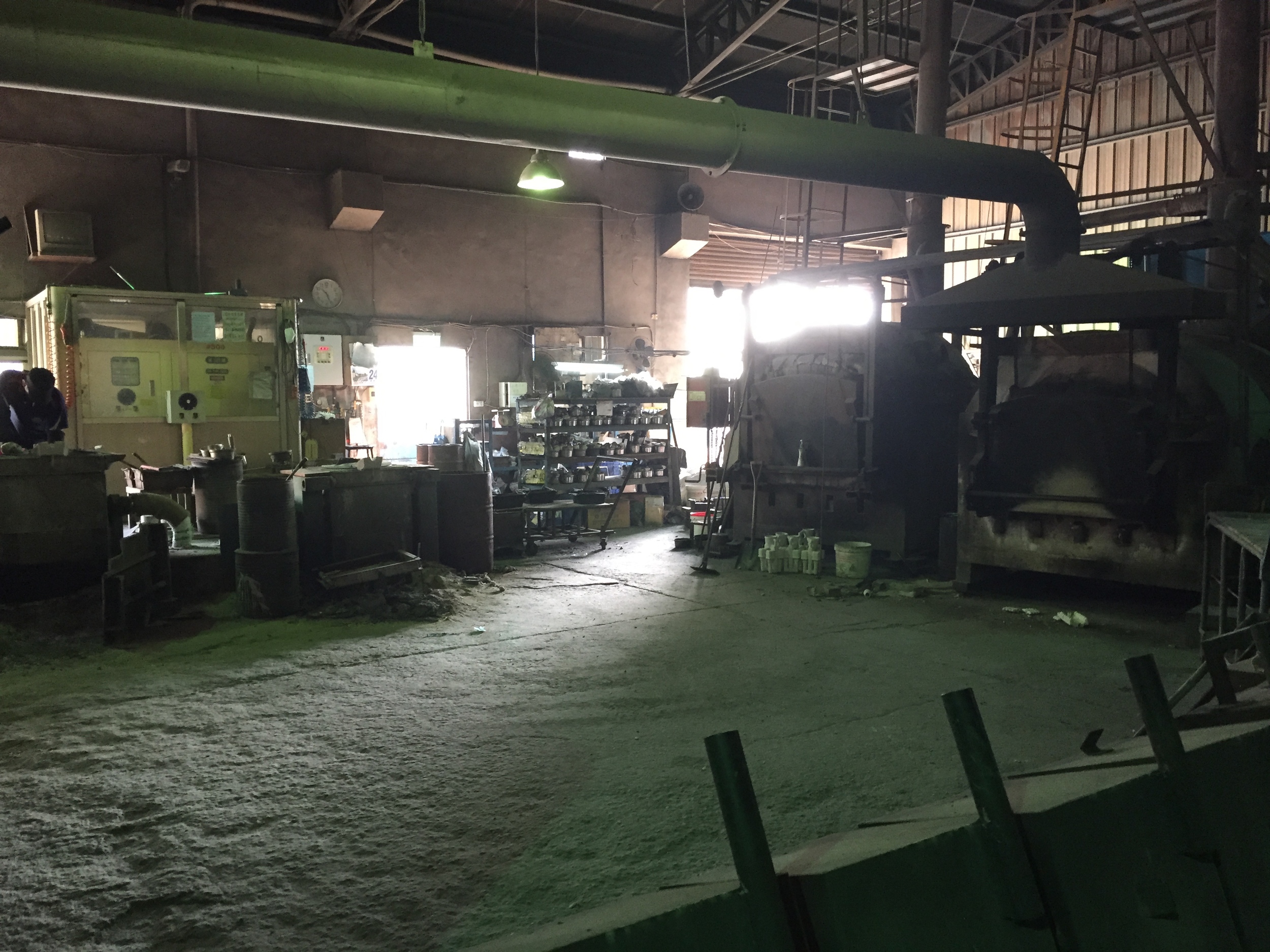
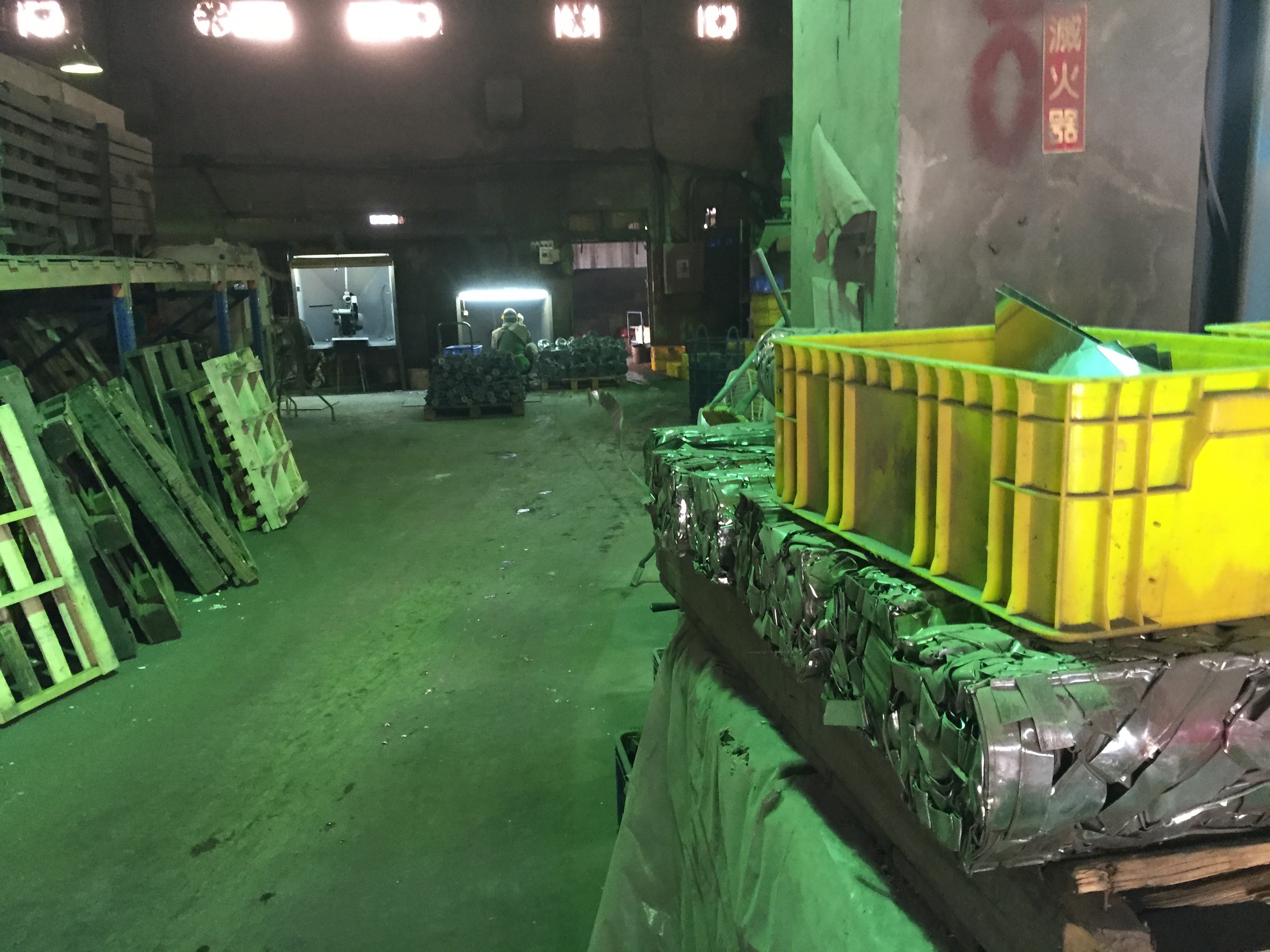
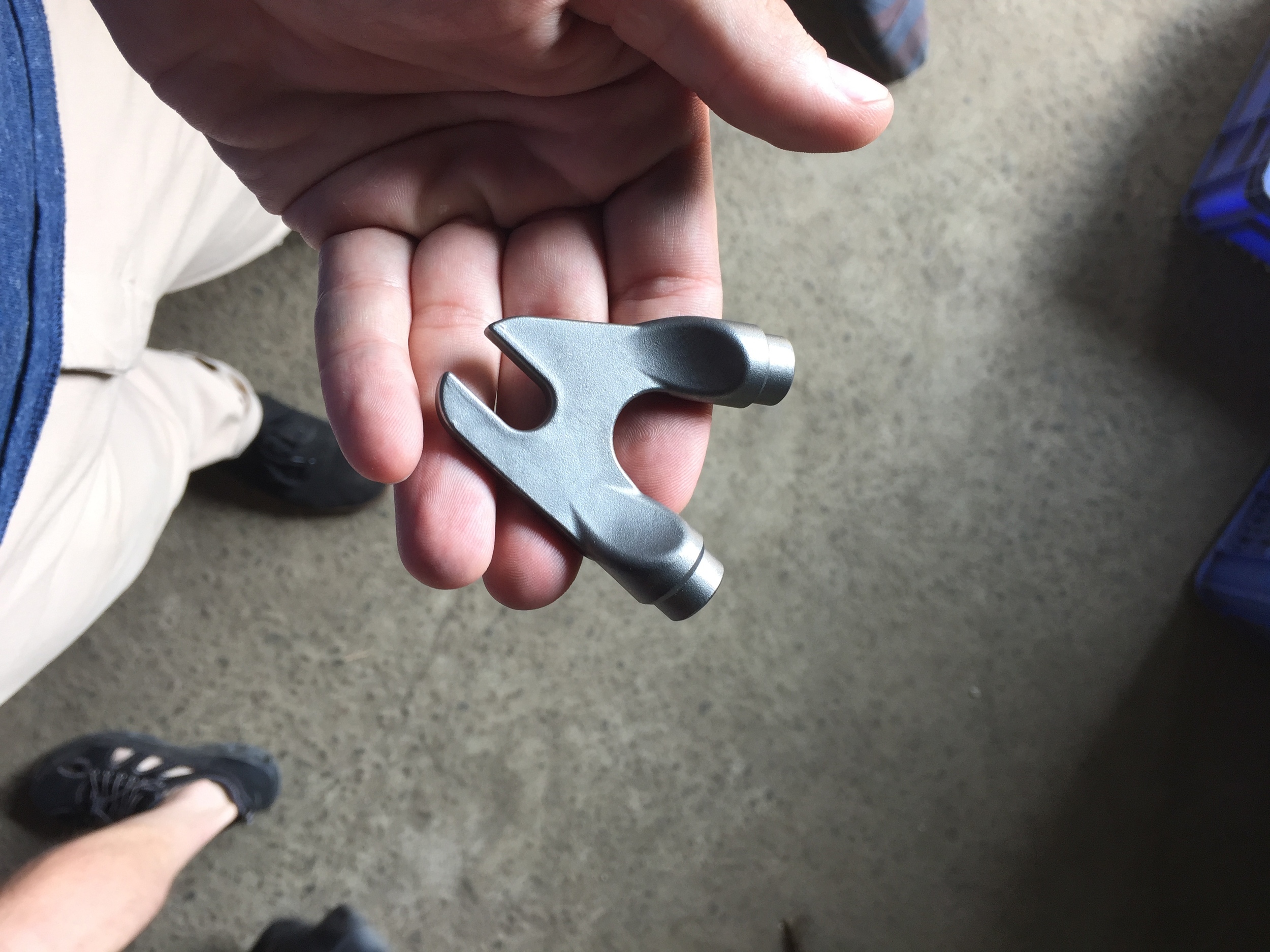
In October, I visited a Taiwanese investment casting shop with Brilliant Bicycles. It was *great.*

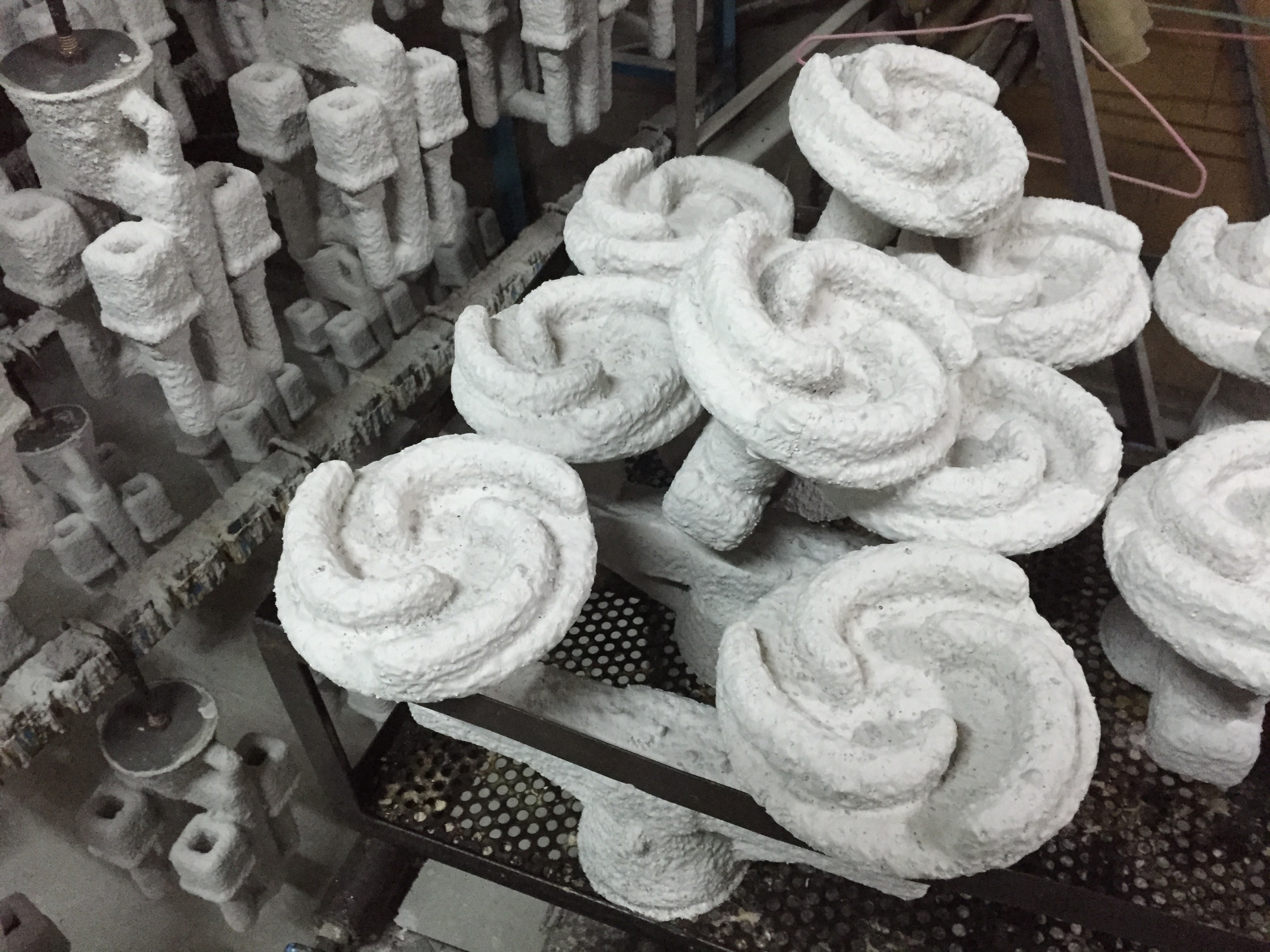
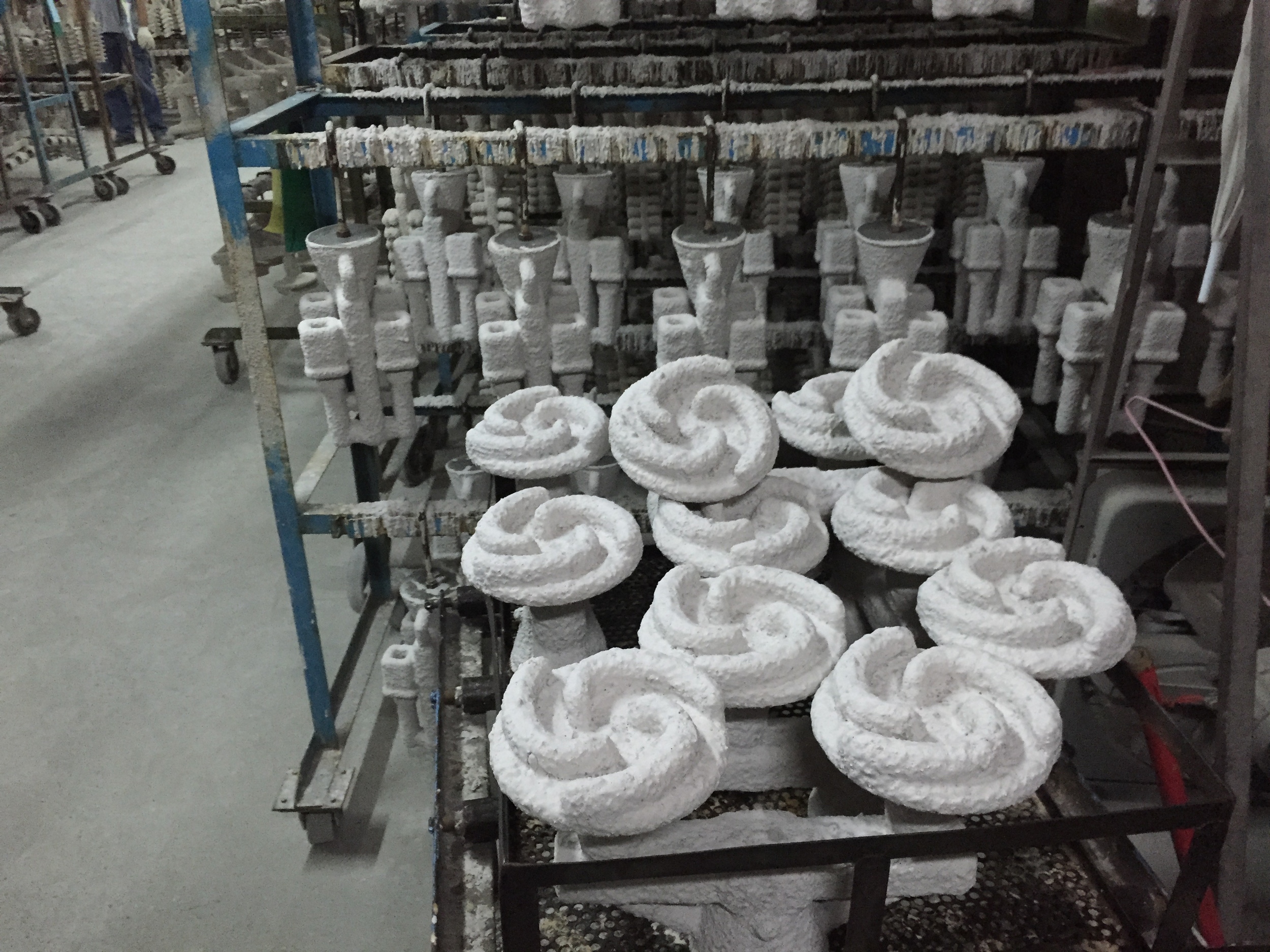
We started in the wax casting room. Here, aluminum molds are used to cast wax positives, which basically resemble finished parts:

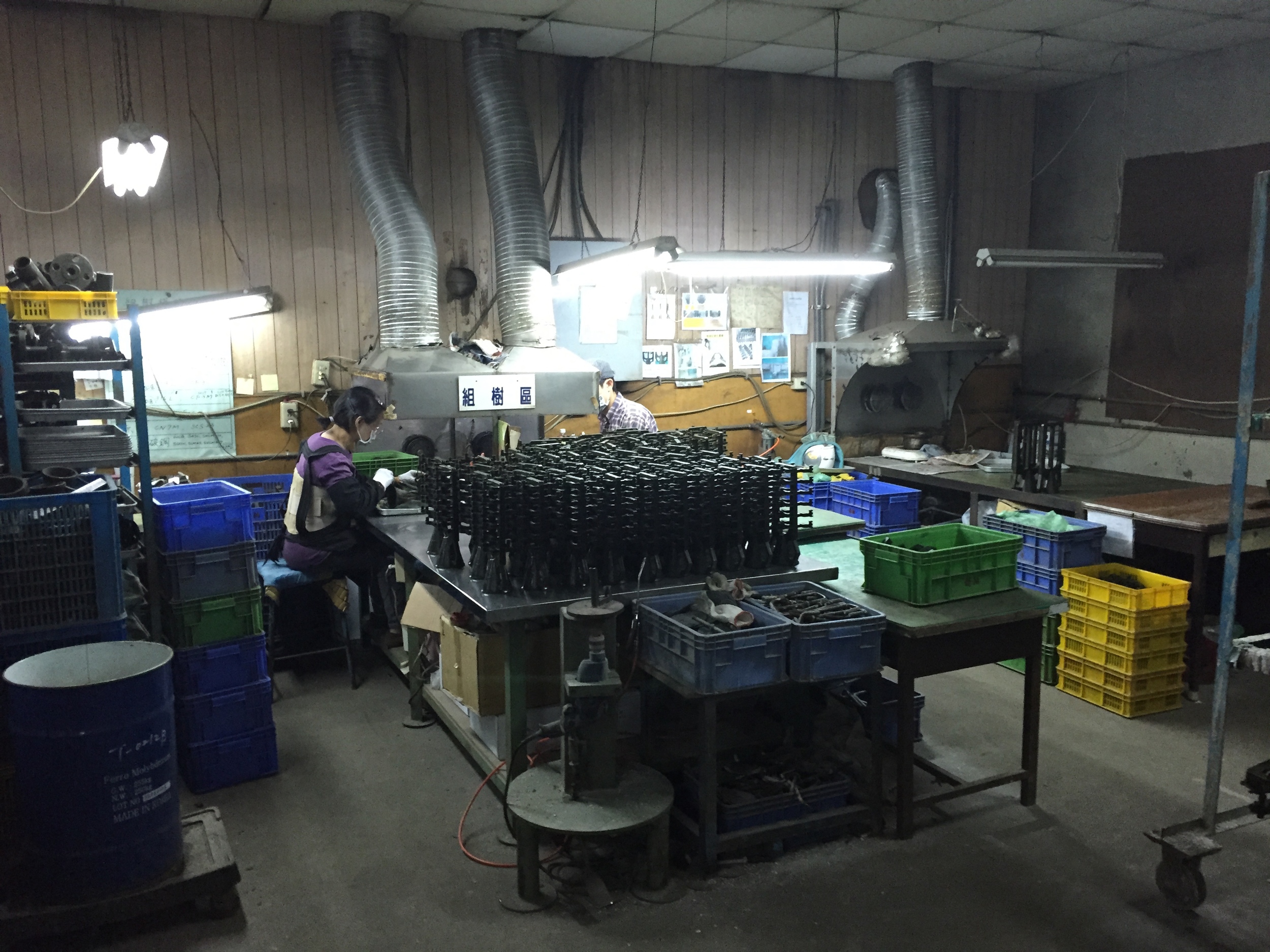
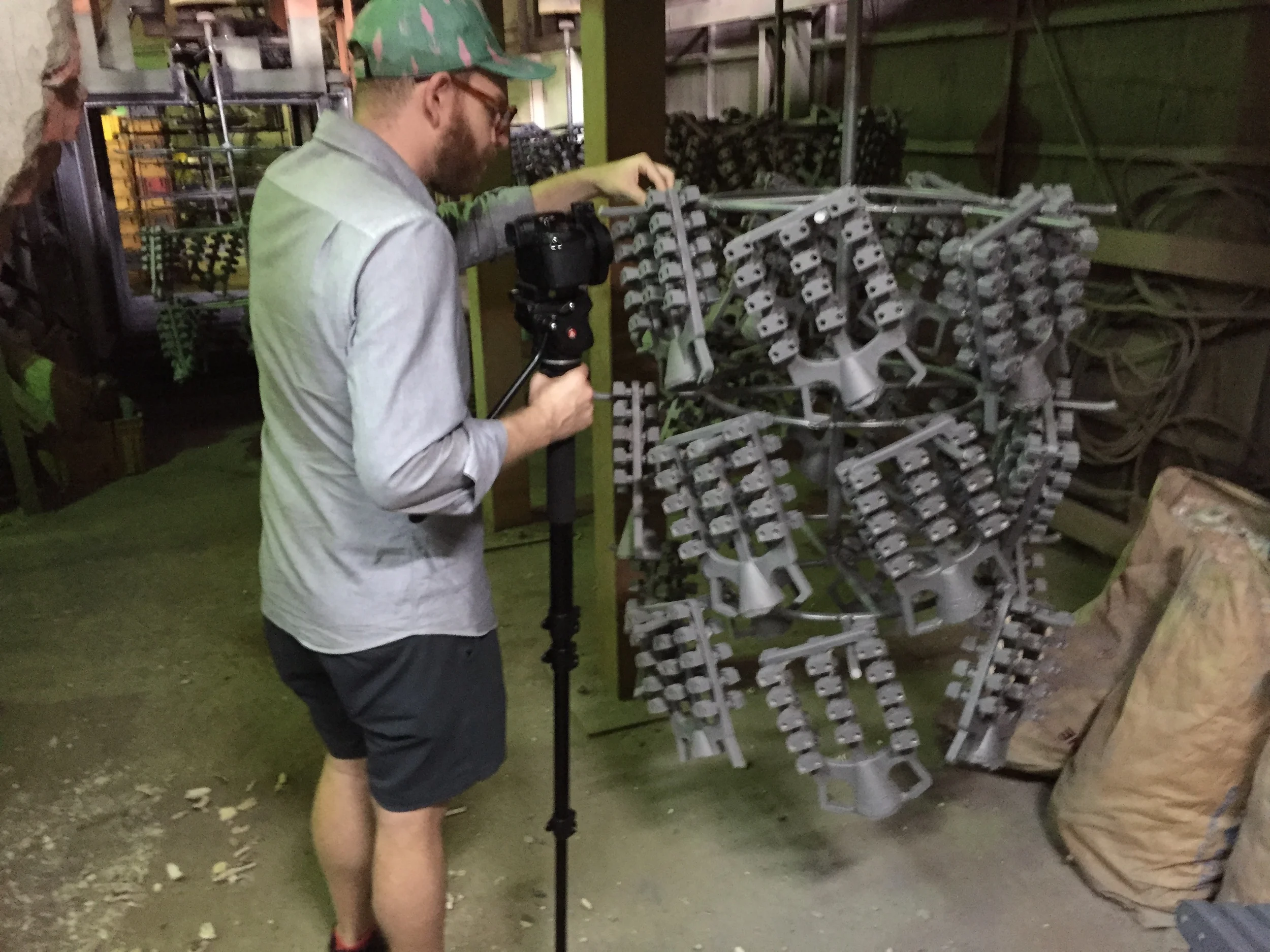
Then we moved to wax tree assembly. Here, wax positives are welded (with an iron) to sprues. It was a really quick process. On one side there was a guy molding the sprues themselves:

And on the other side they're welded to parts. The whole room was air conditioned and very cool (it was hot outside), to keep the wax from melting.

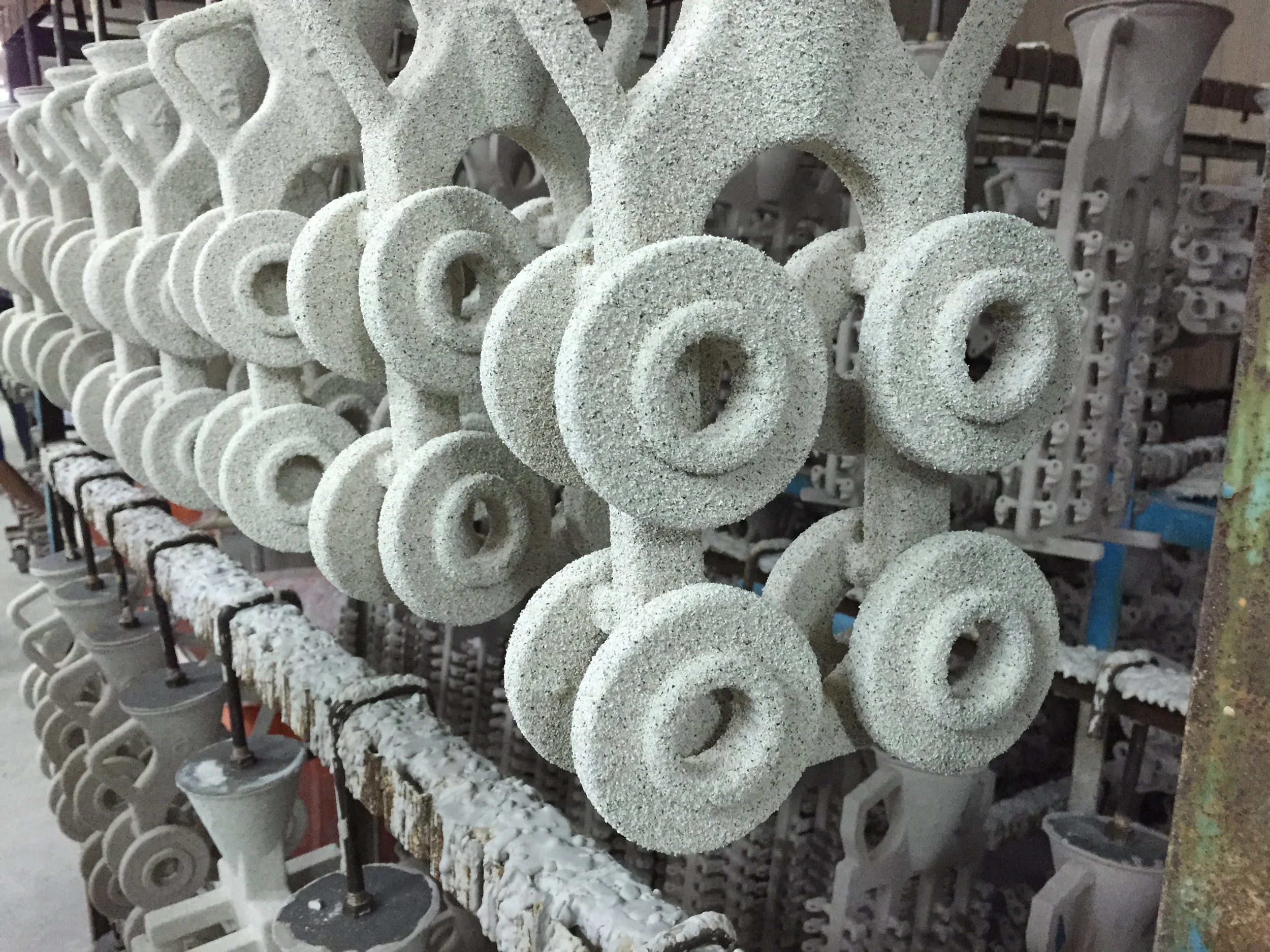
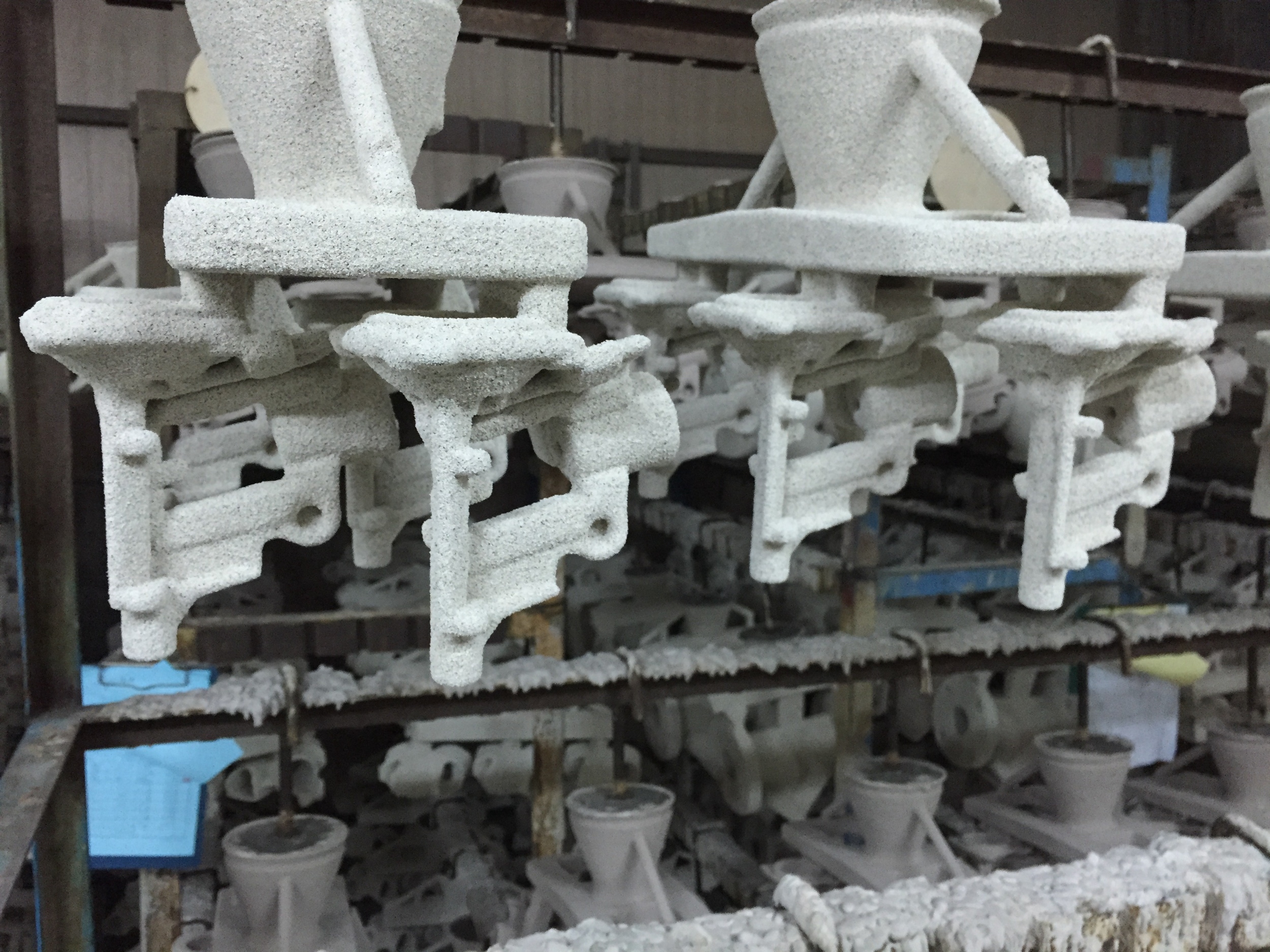
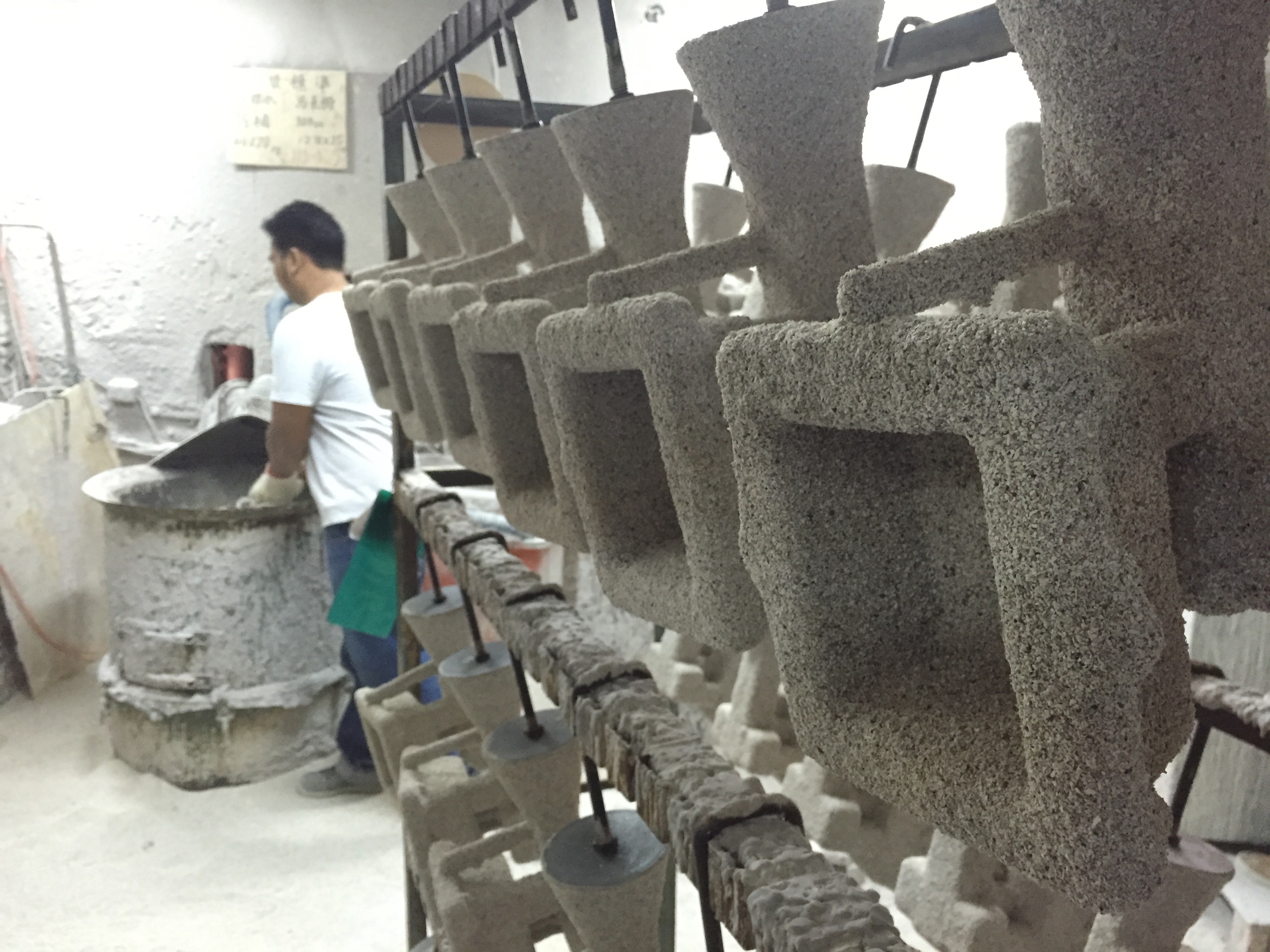
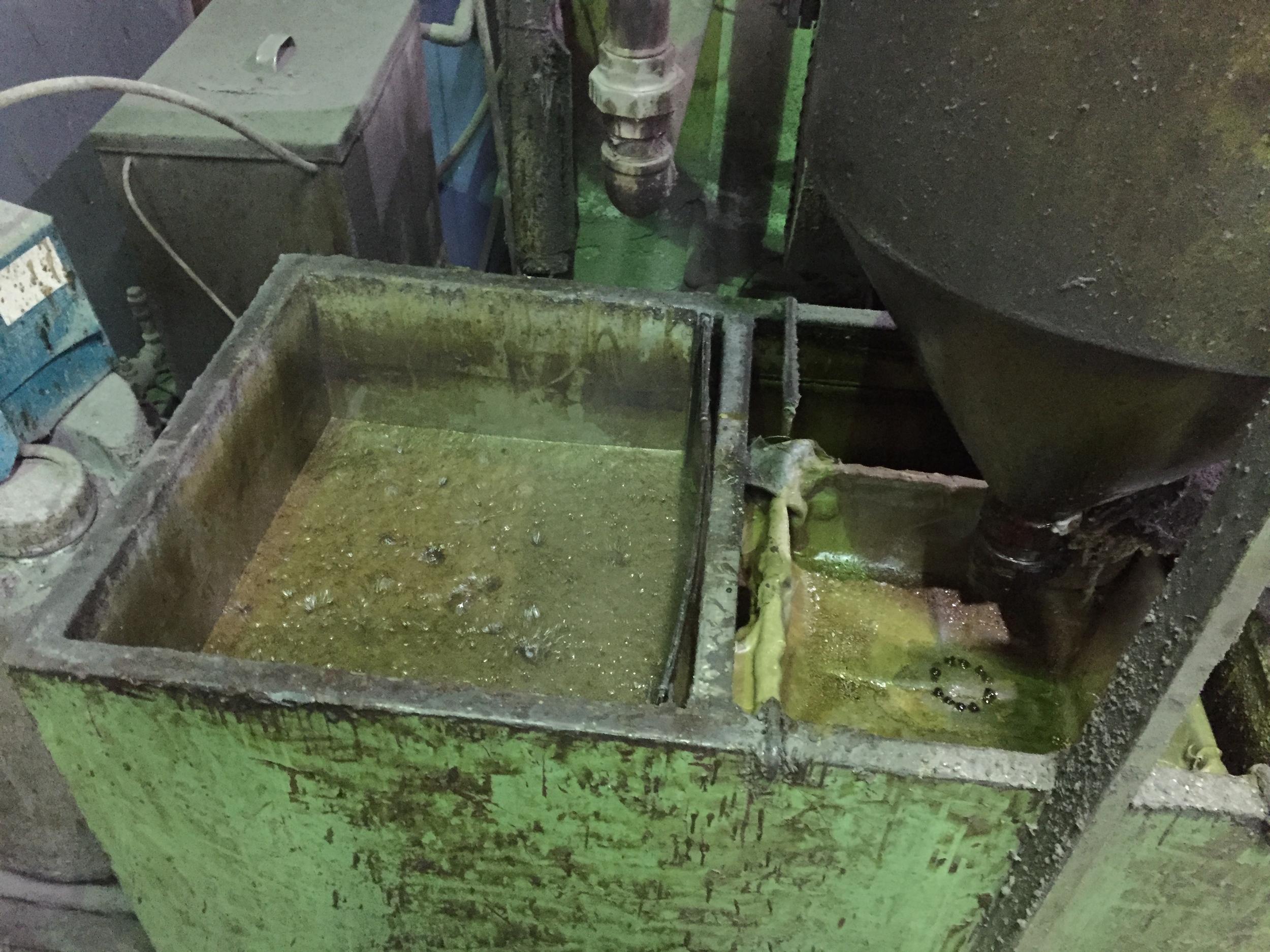
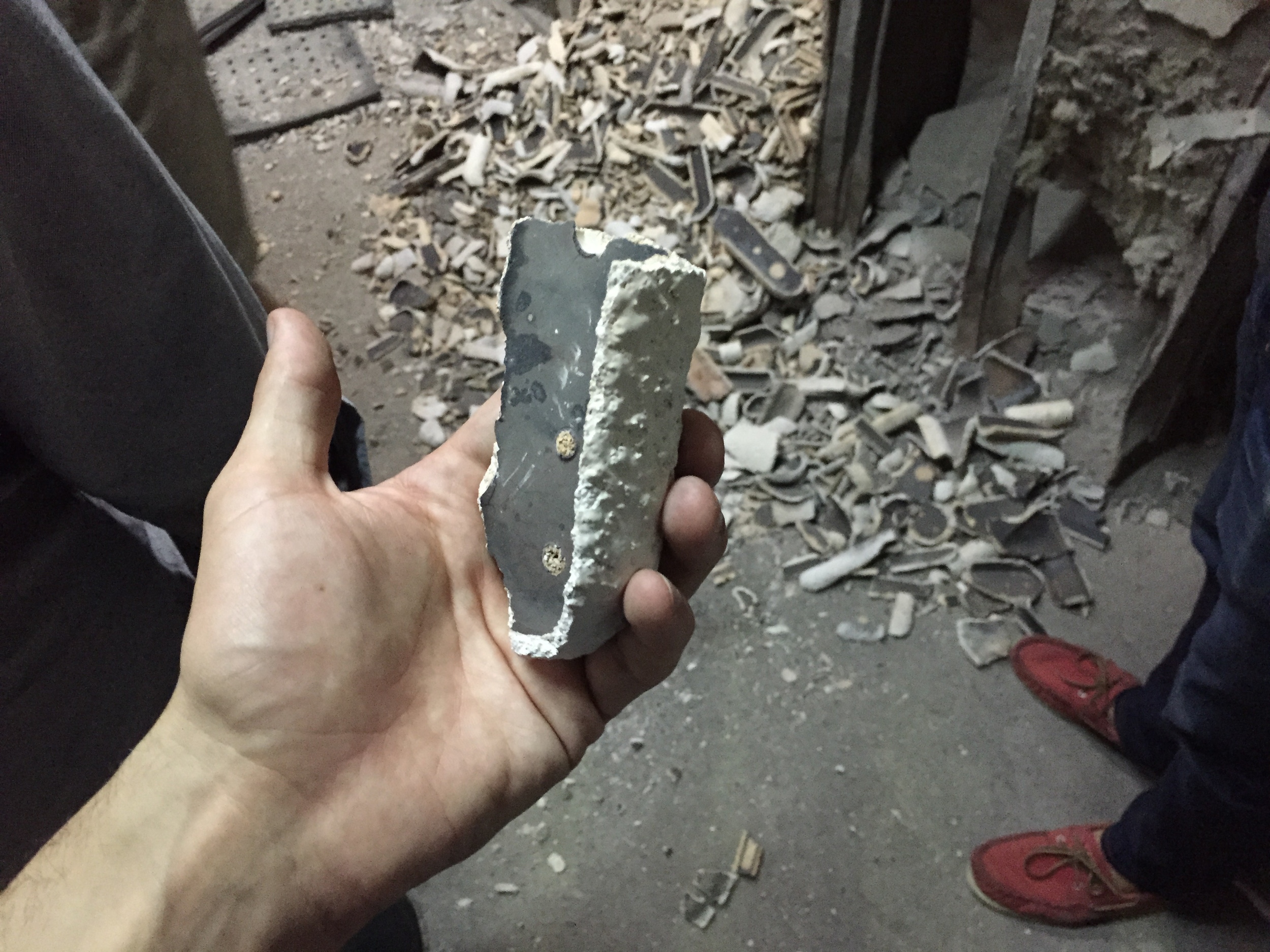
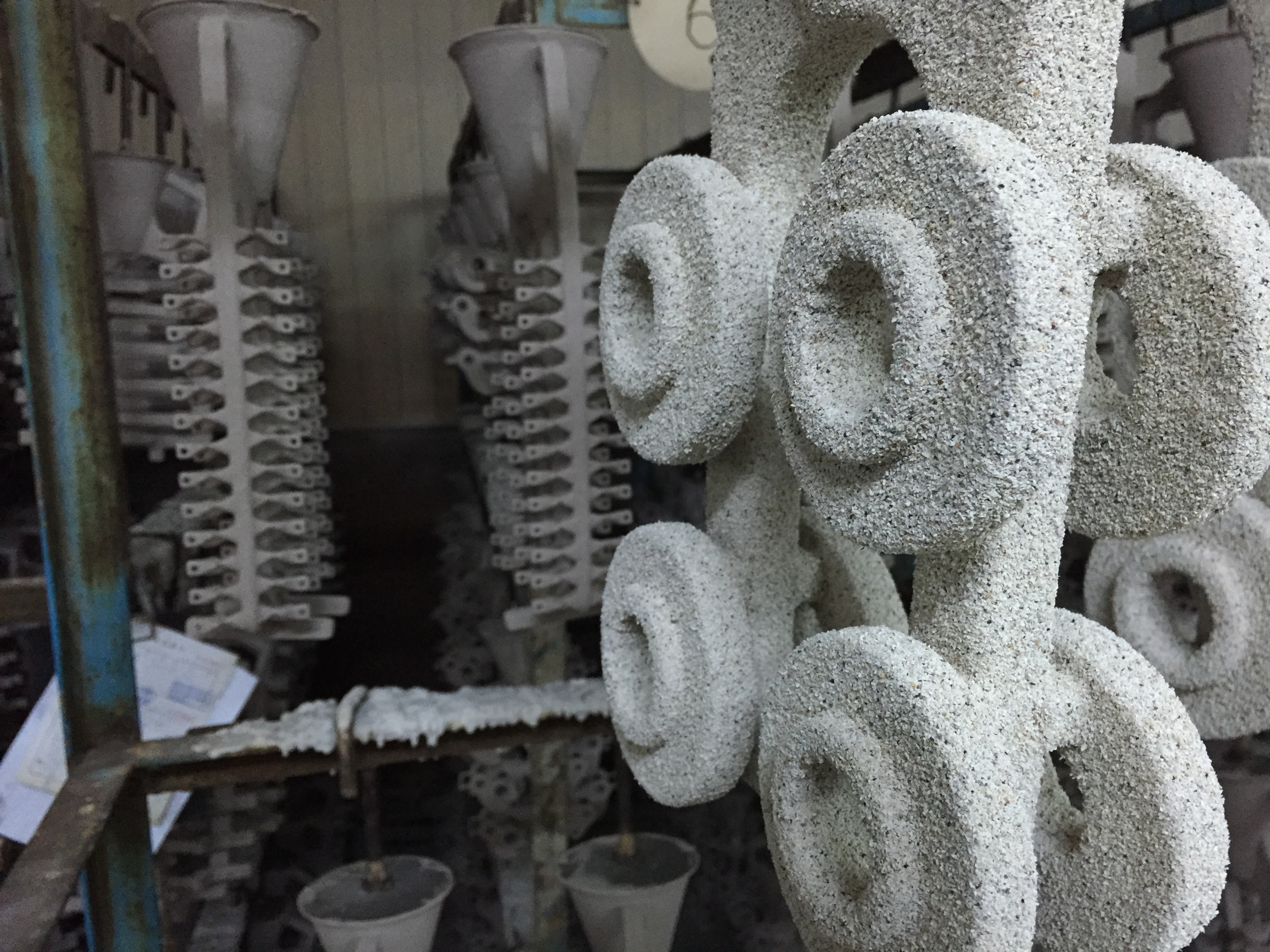
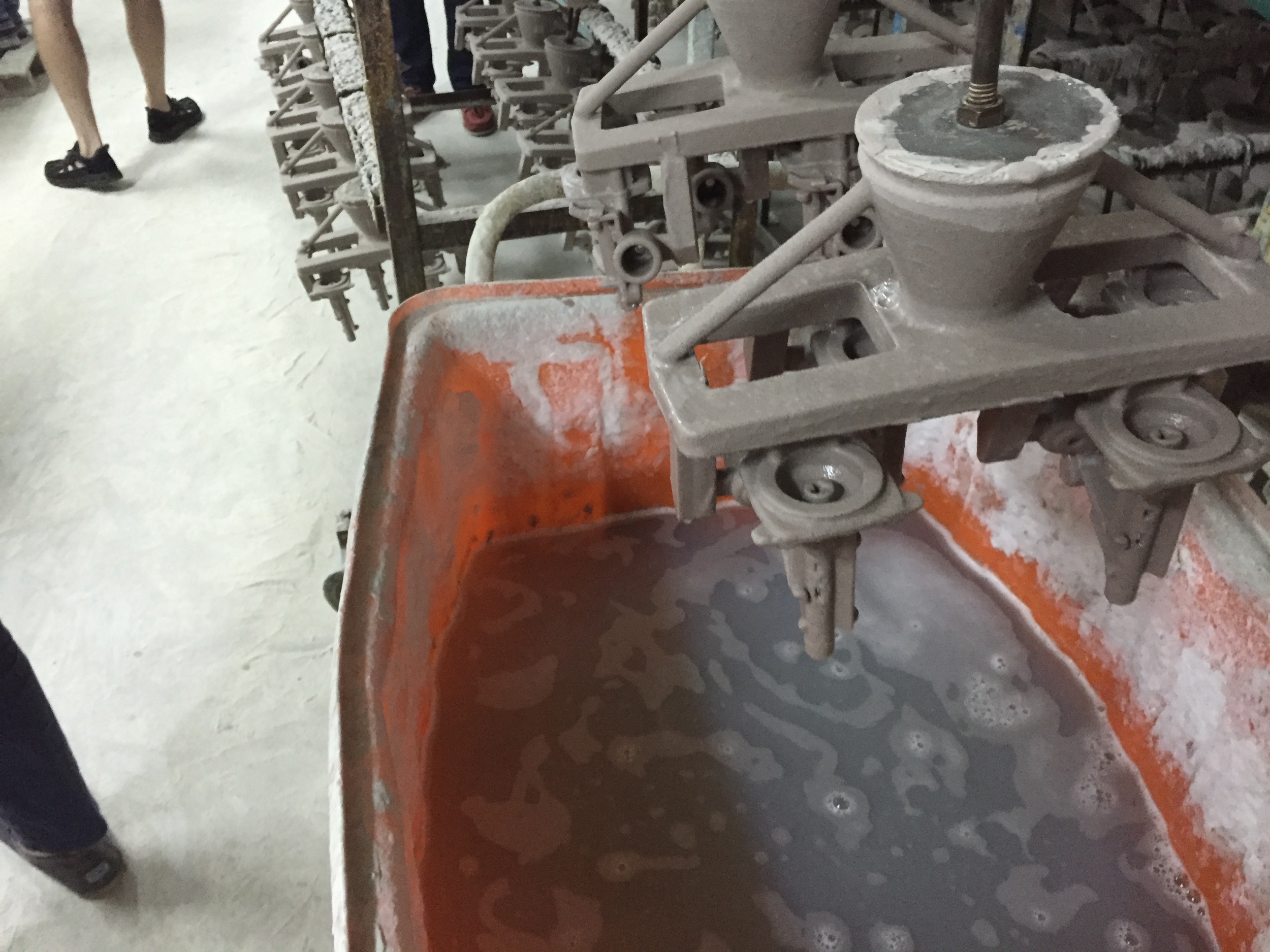
Once the trees were assembled, they're dipped in clay and sand. There are a number of dipping stages, and the aggregate goes from fine to coarse. First comes a liquid dip:

Then a dry aggregate, which is continuously shaken to make the process easier:

This is one of maybe three areas where dipping was happening:

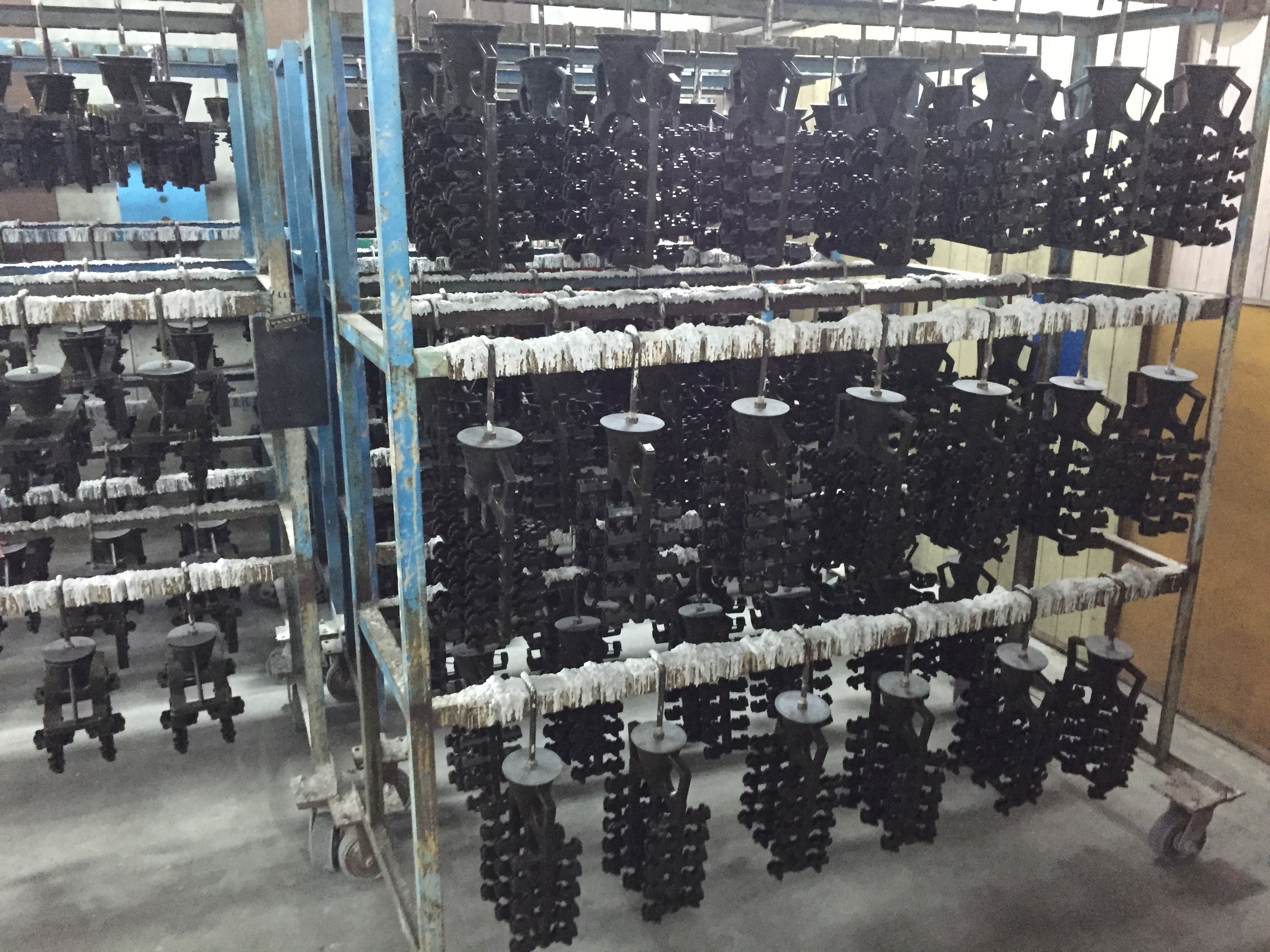
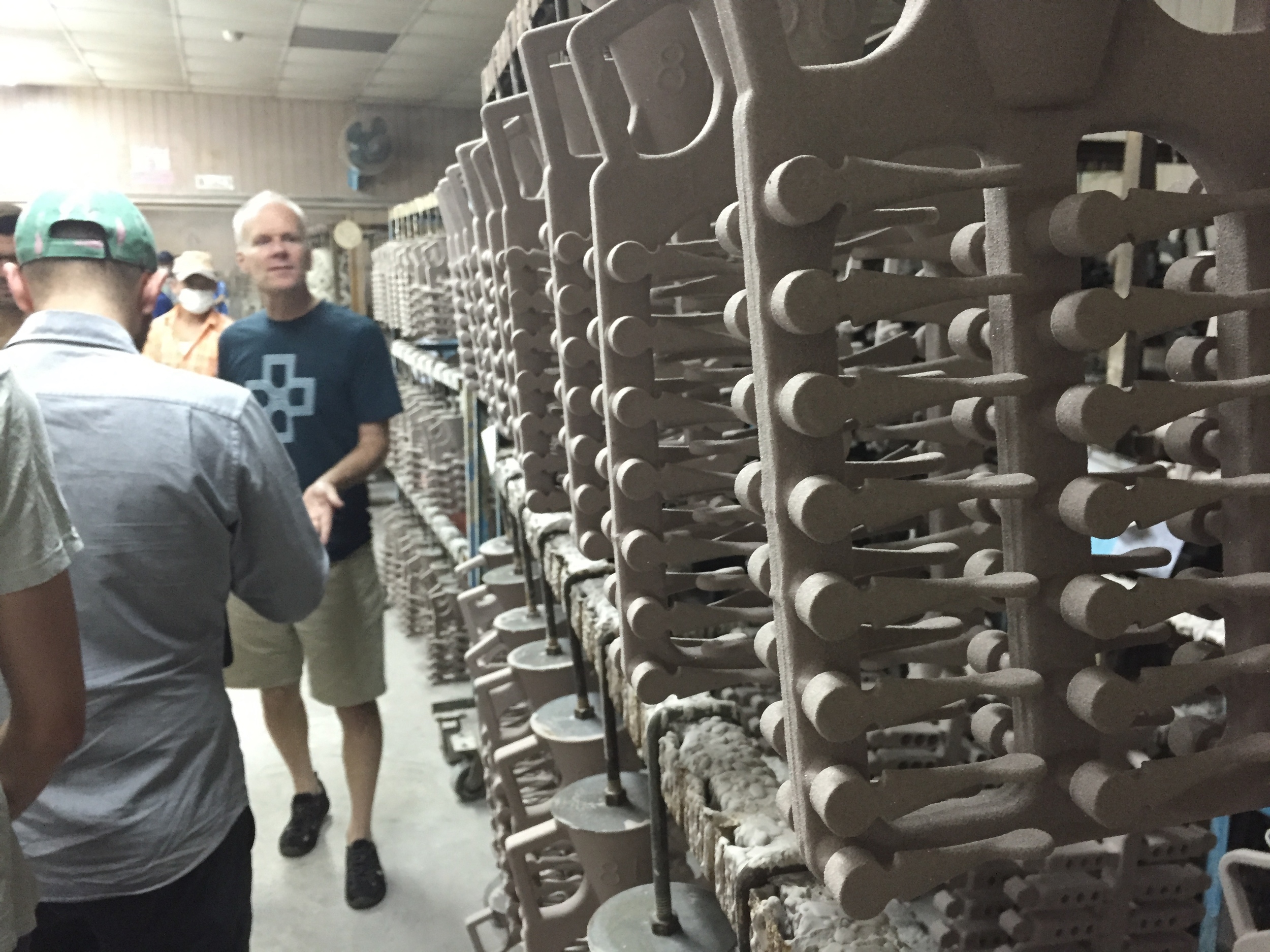
Then there were a bunch of dipped tree drying racks. The dipped trees need to dry before they can move forward in the process.

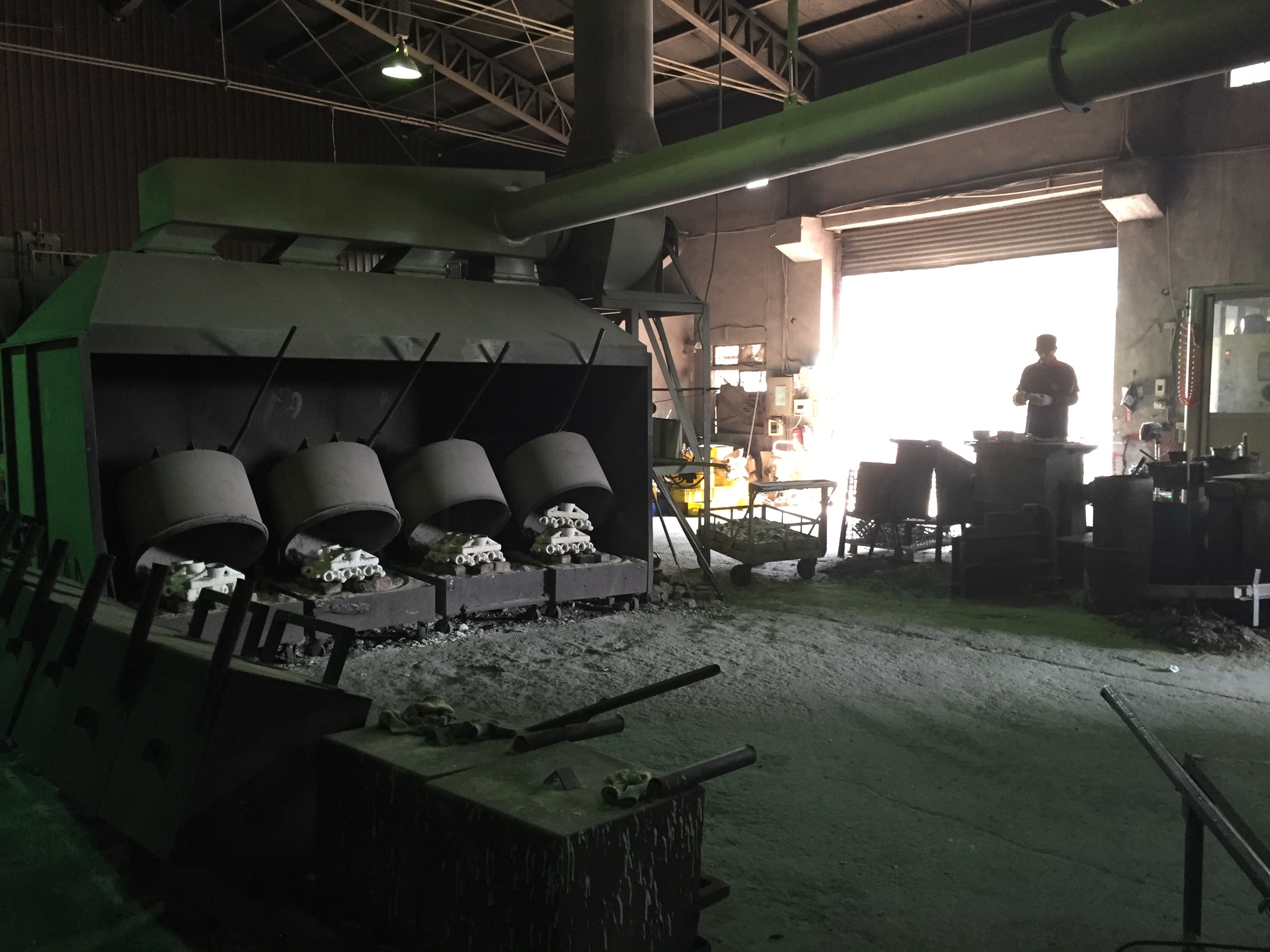
Then there was a big room full of kilns, where the trees were fired and cast. Nearby were big bags of raw material - iron and alloying elements - that would be melted down to cast whatever alloy was necessary.

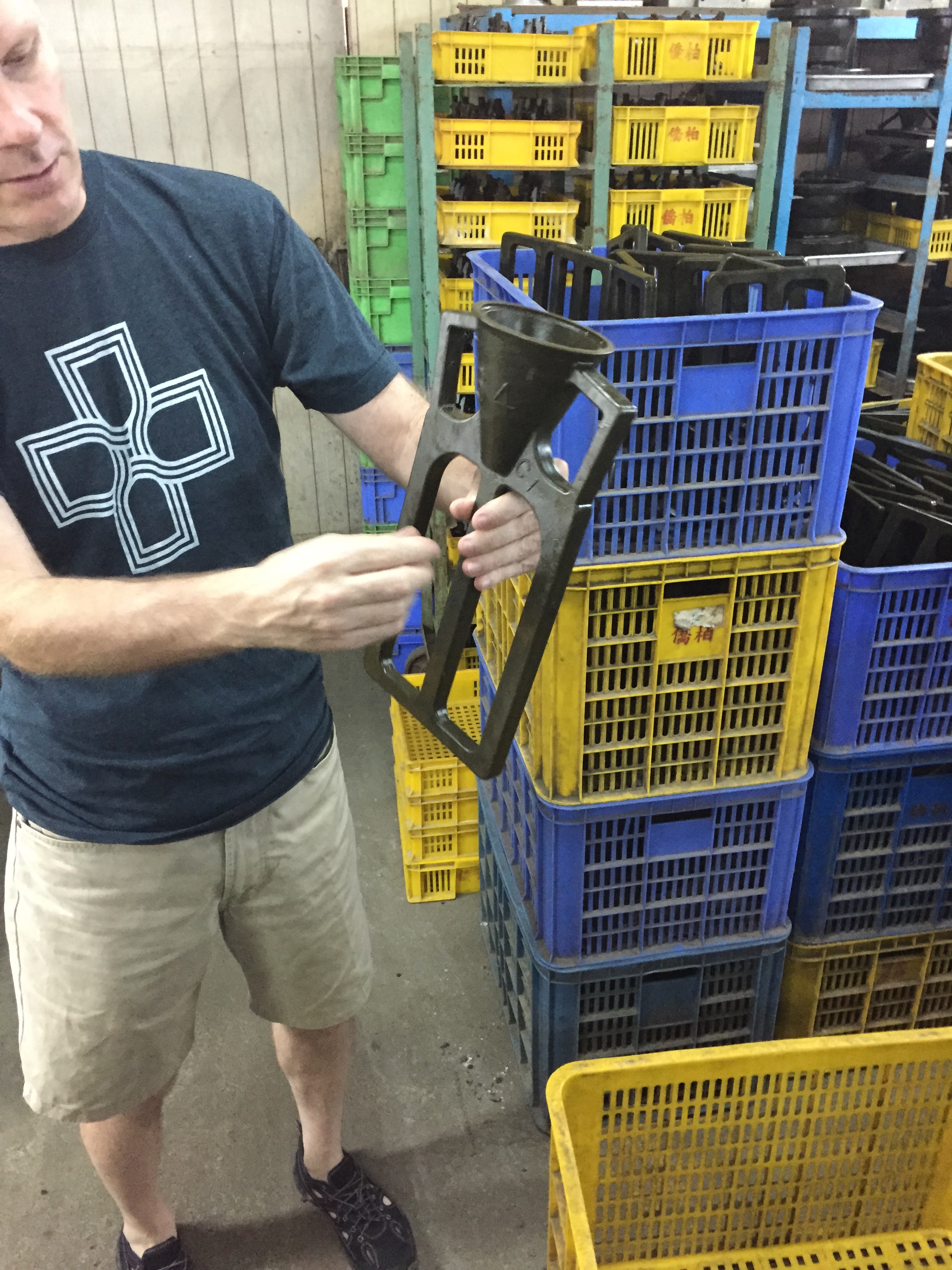
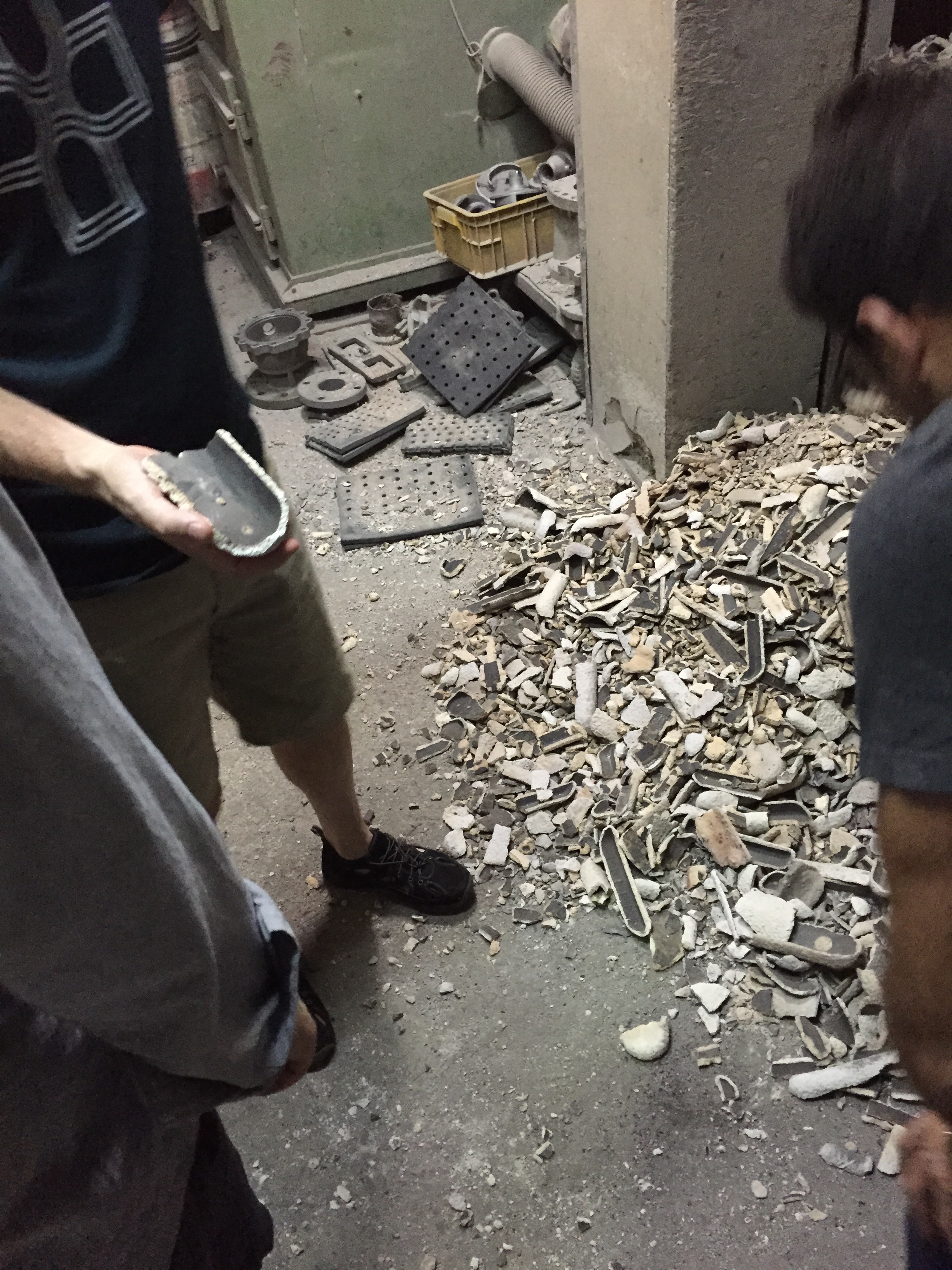
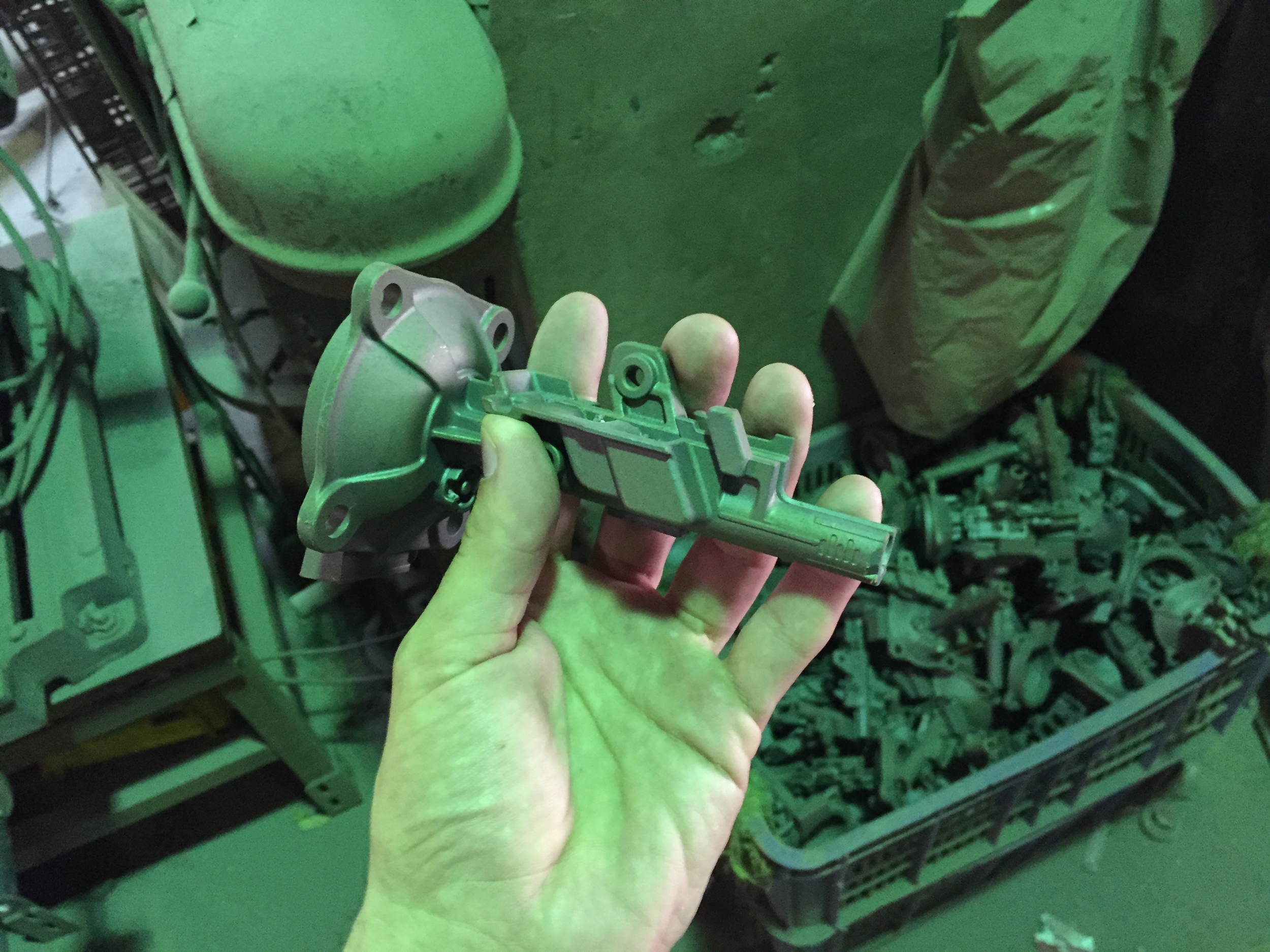
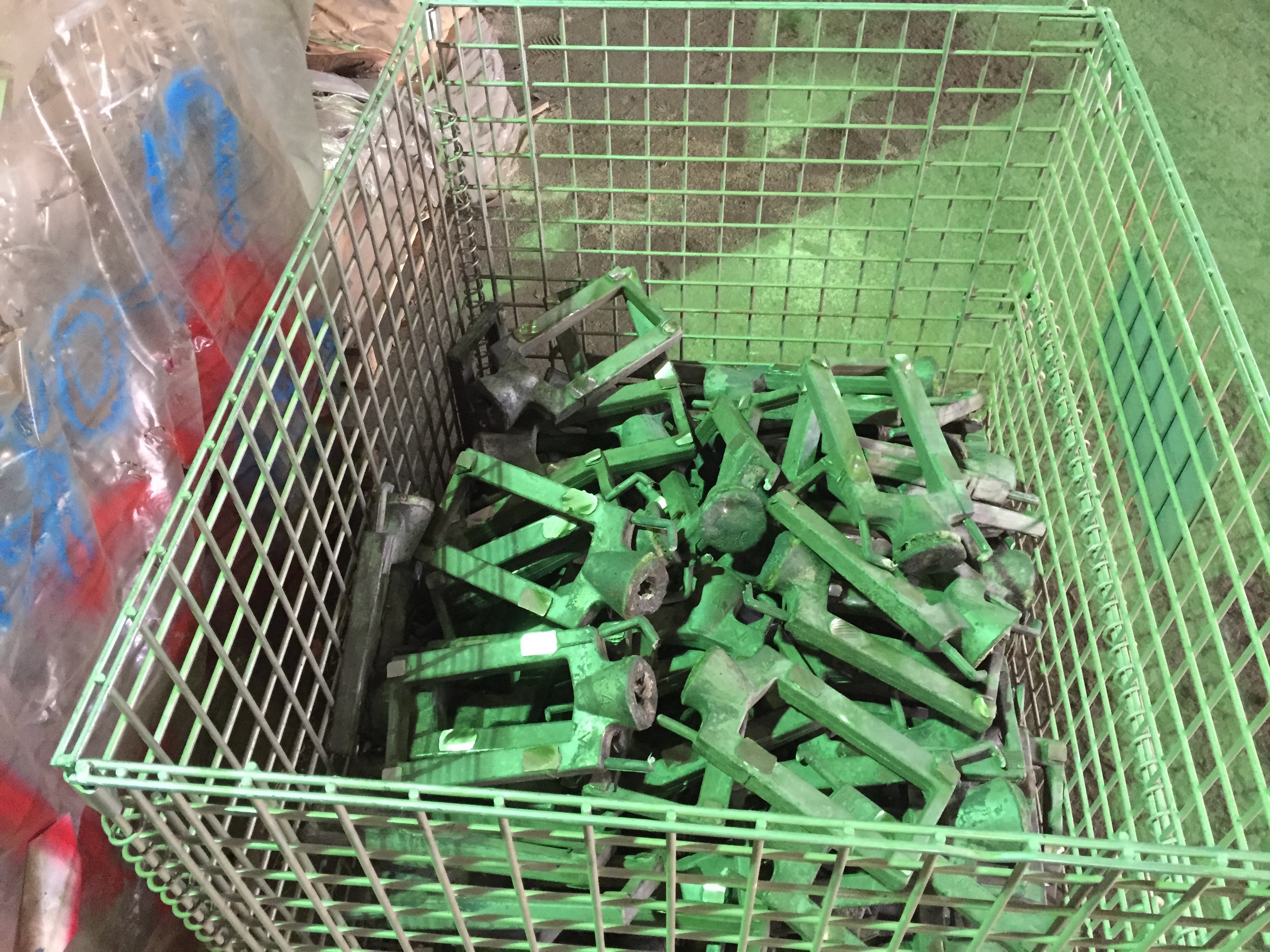
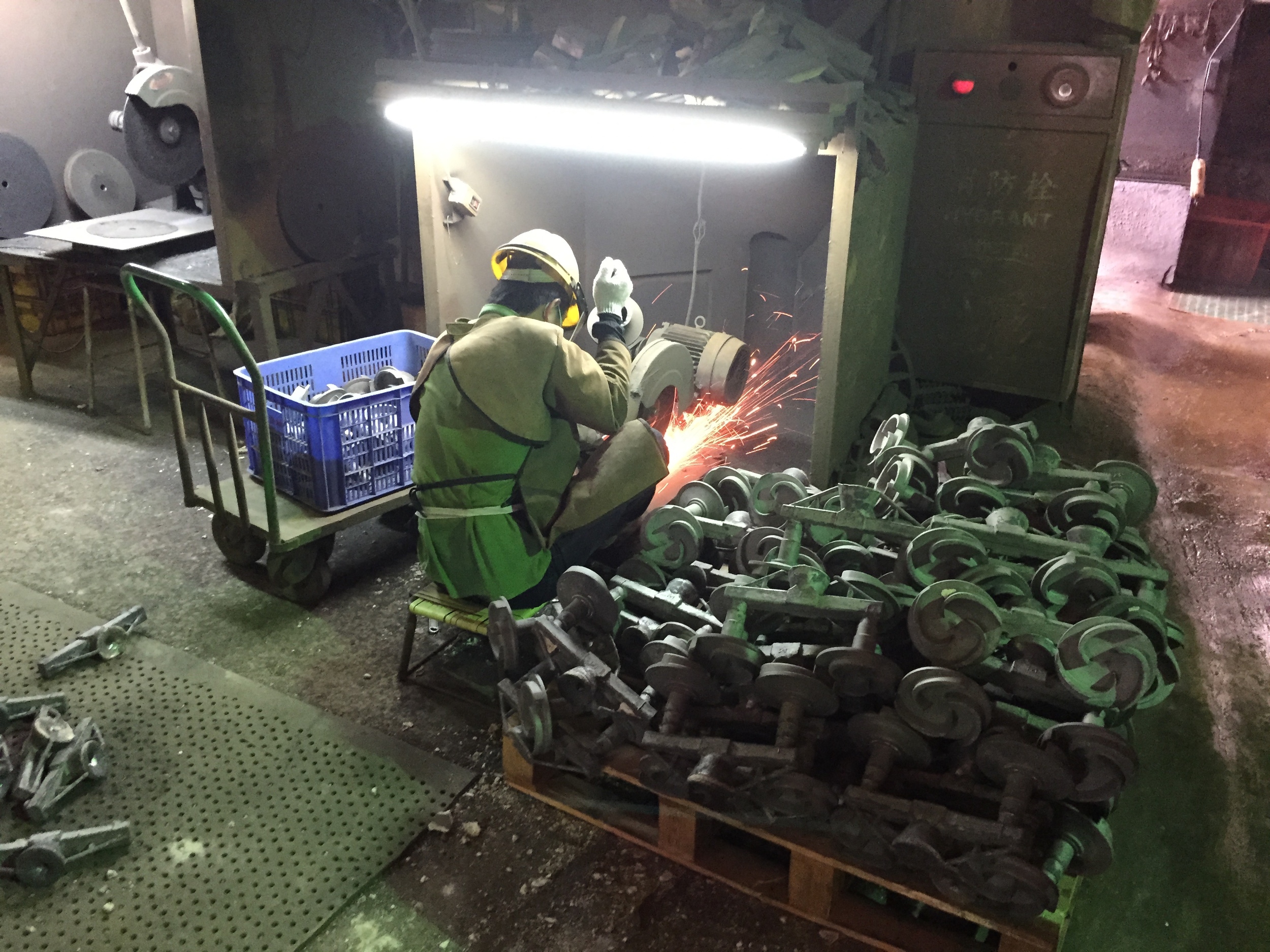
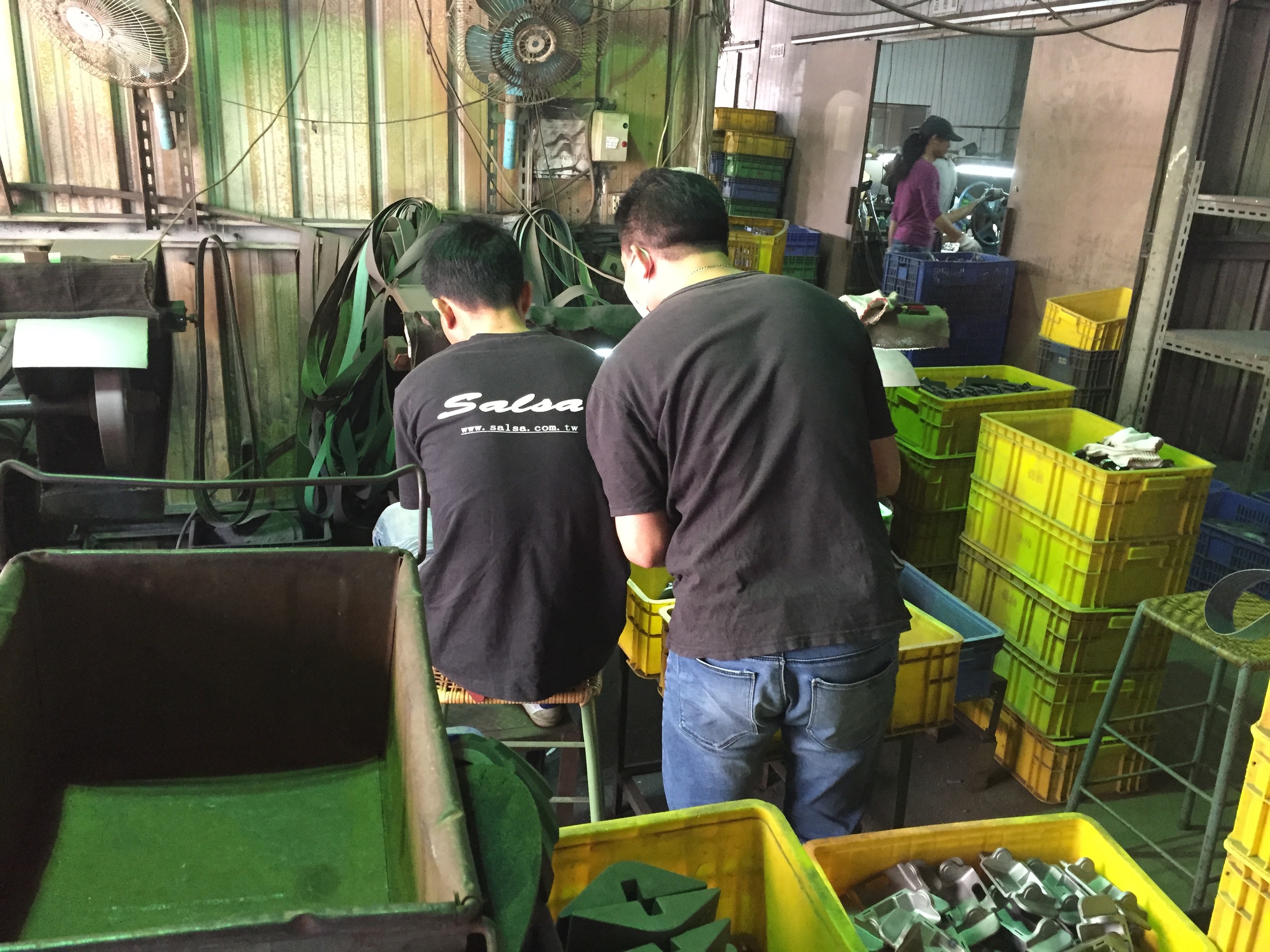
After the trees are baked and cast in steel, the resulting steel trees need to be cut apart:

And then the individual parts are checked in QC and cold-set into place where they've distorted:

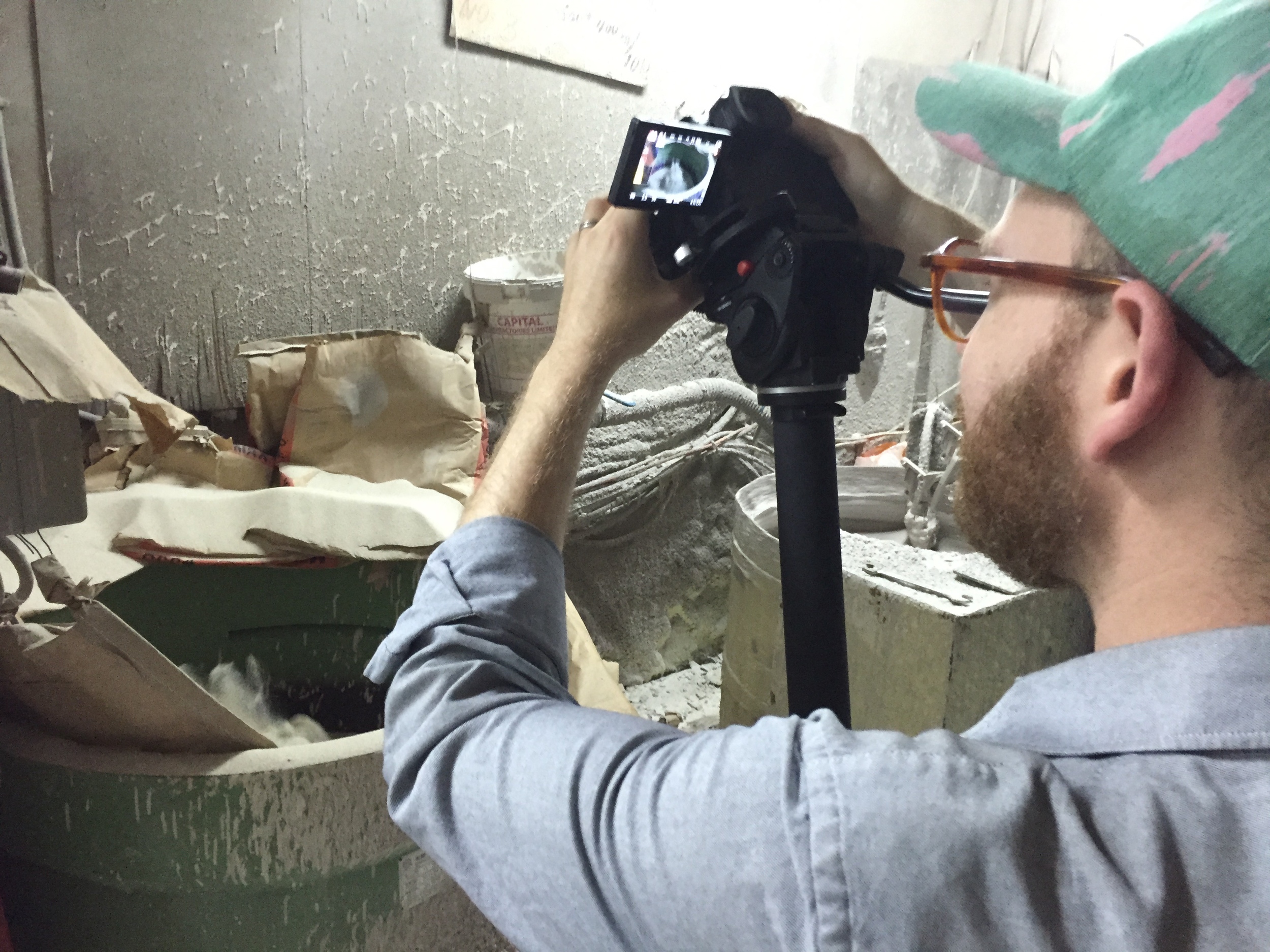
Okay, photos:

This factory was one of the coolest shops I've ever seen. Being able to see so many steps of the process coming together sequentially was really great. So many manufacturing processes happen in a distributed, disjointed manner; it was fun walking through this shop and seeing parts be transformed from wax to steel as we went.

Notes from a bicycle assembly shop in Taiwan

Added on by Spencer Wright.

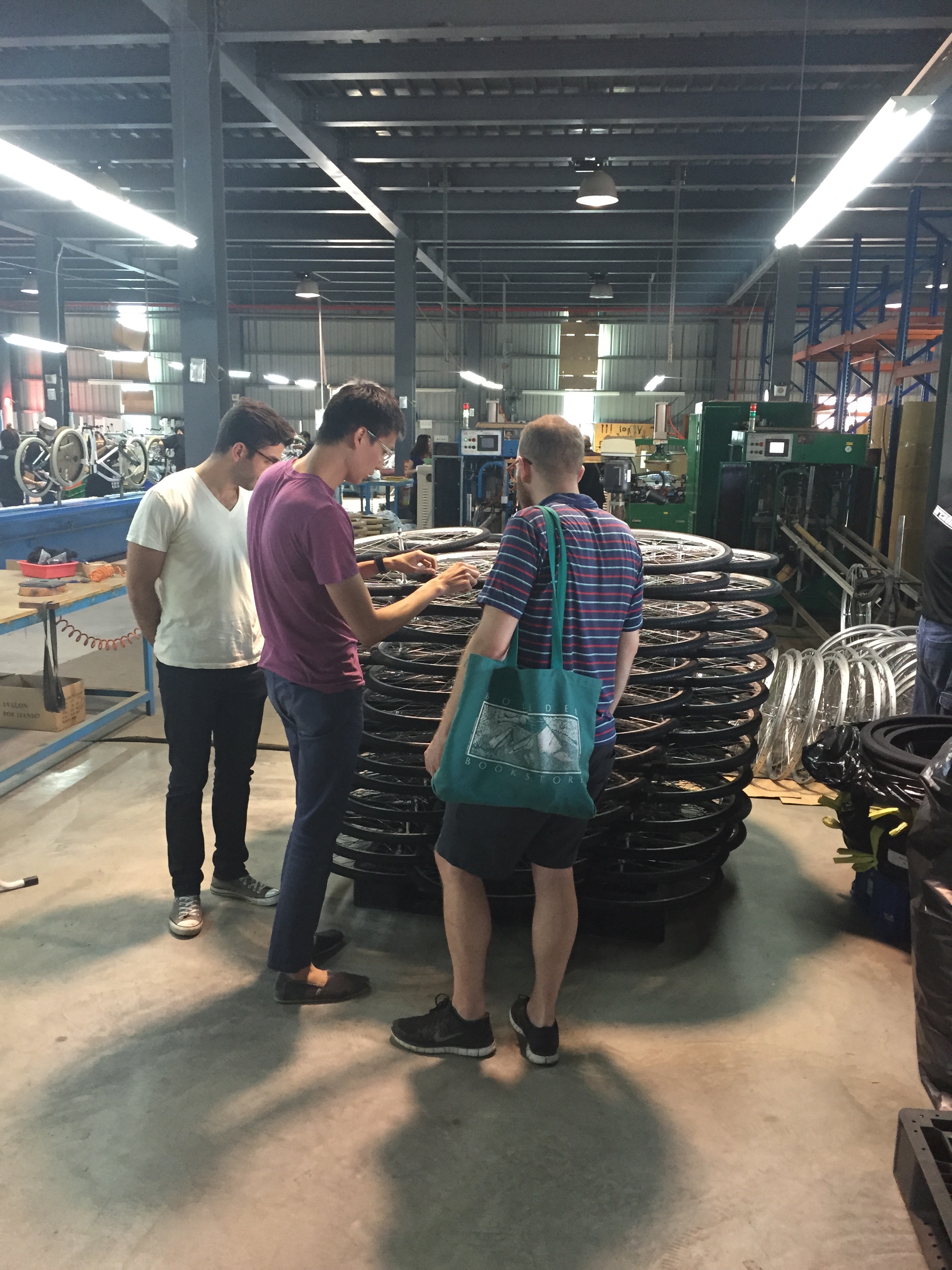
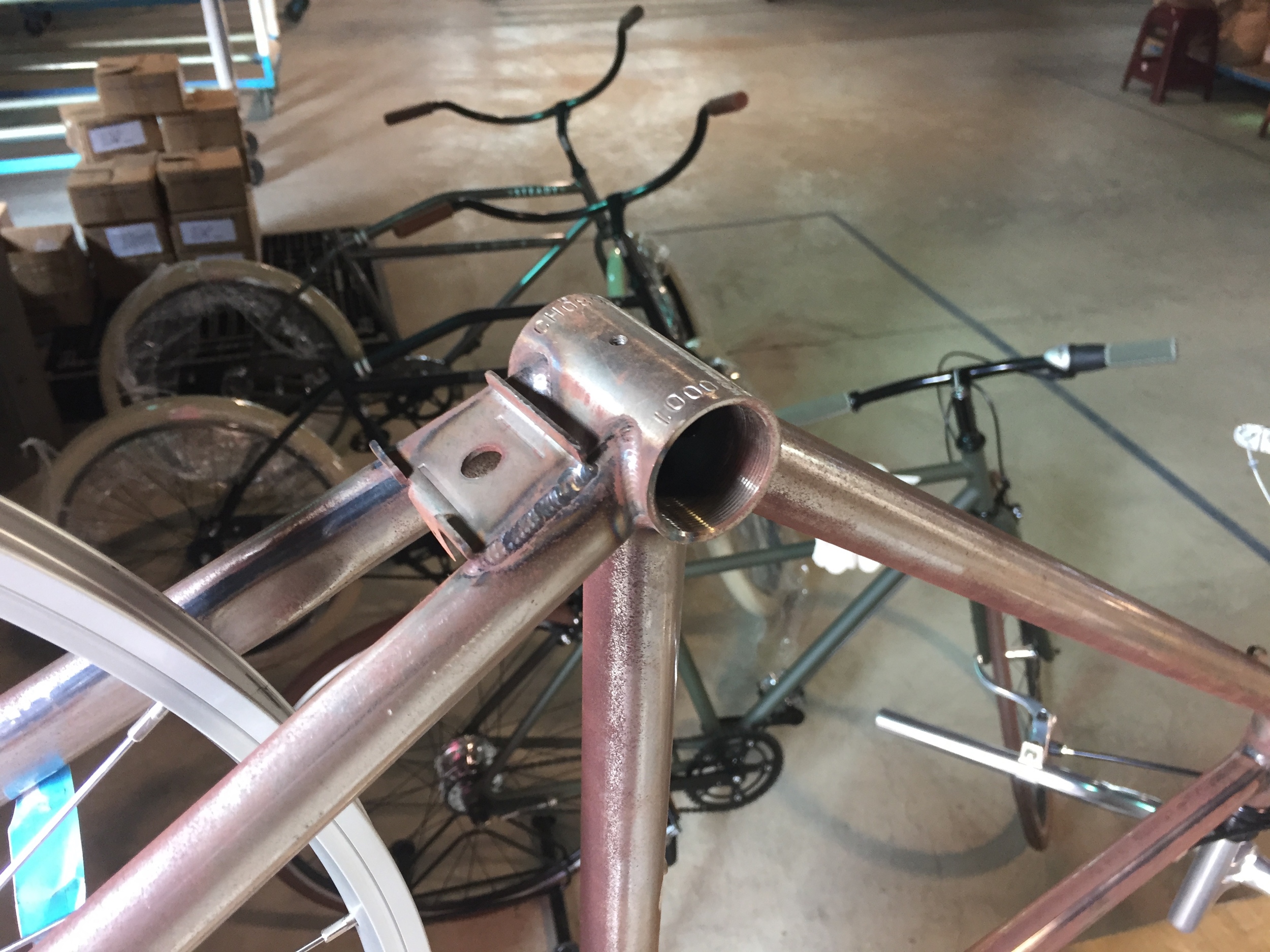
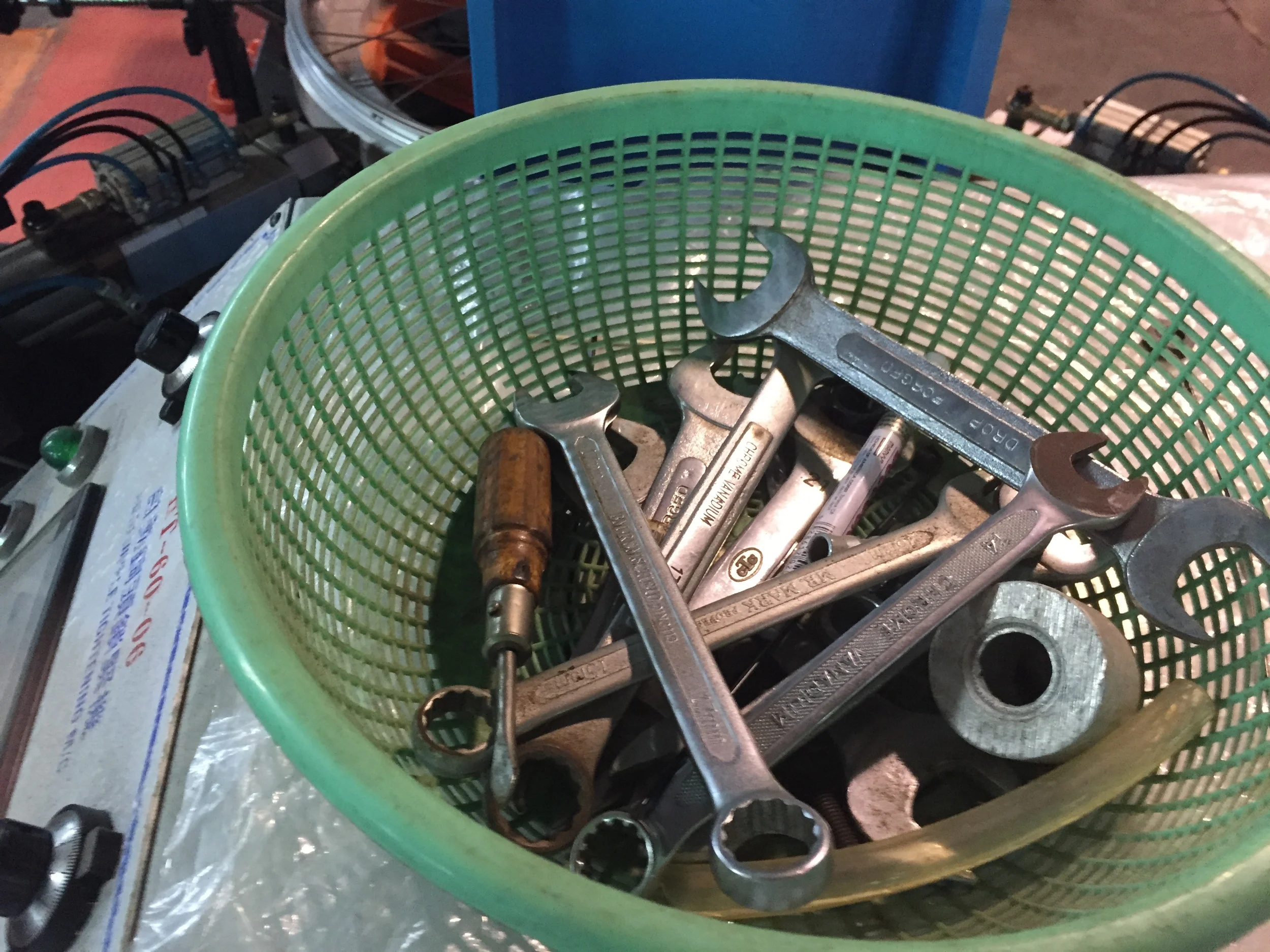
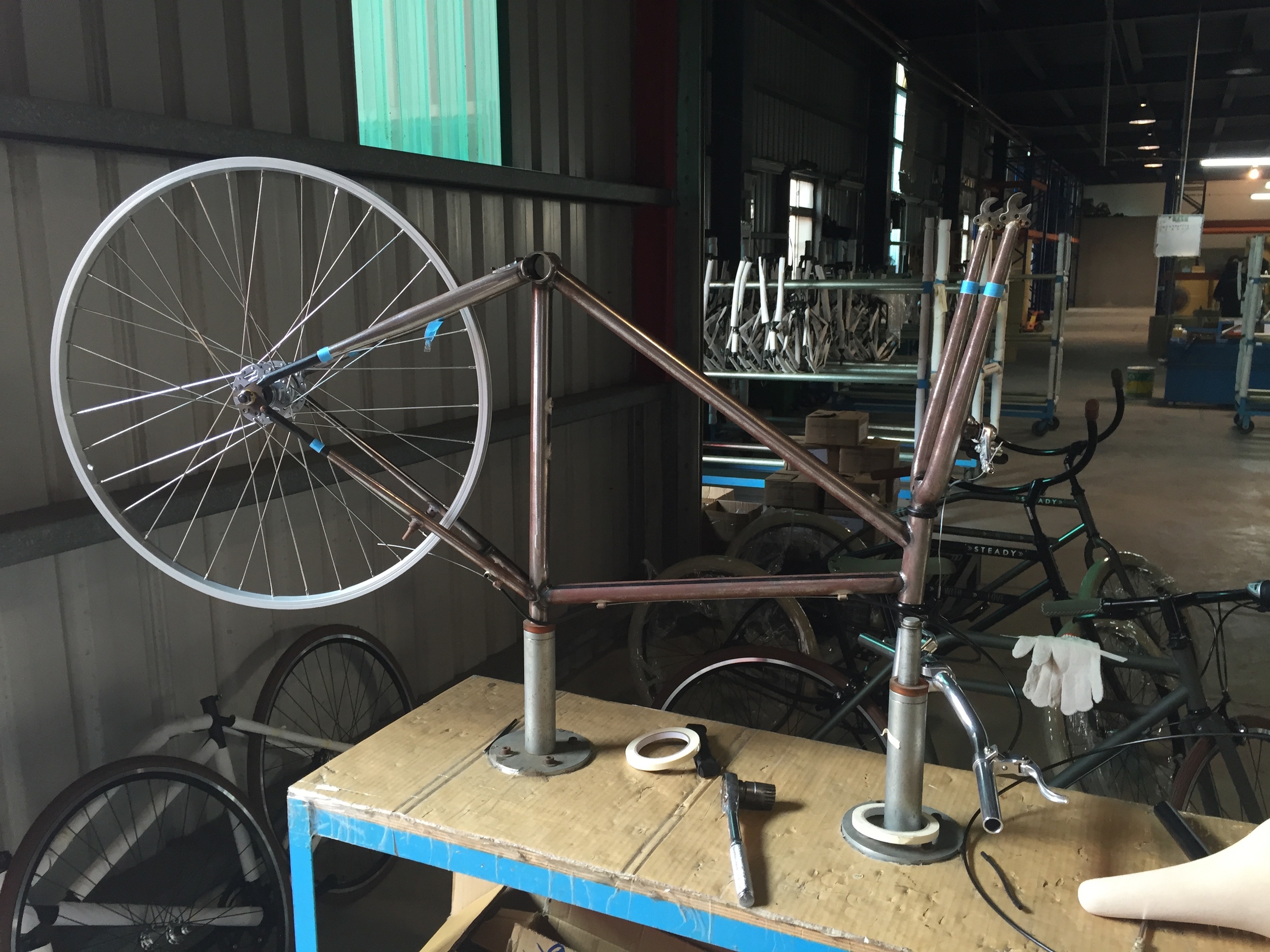
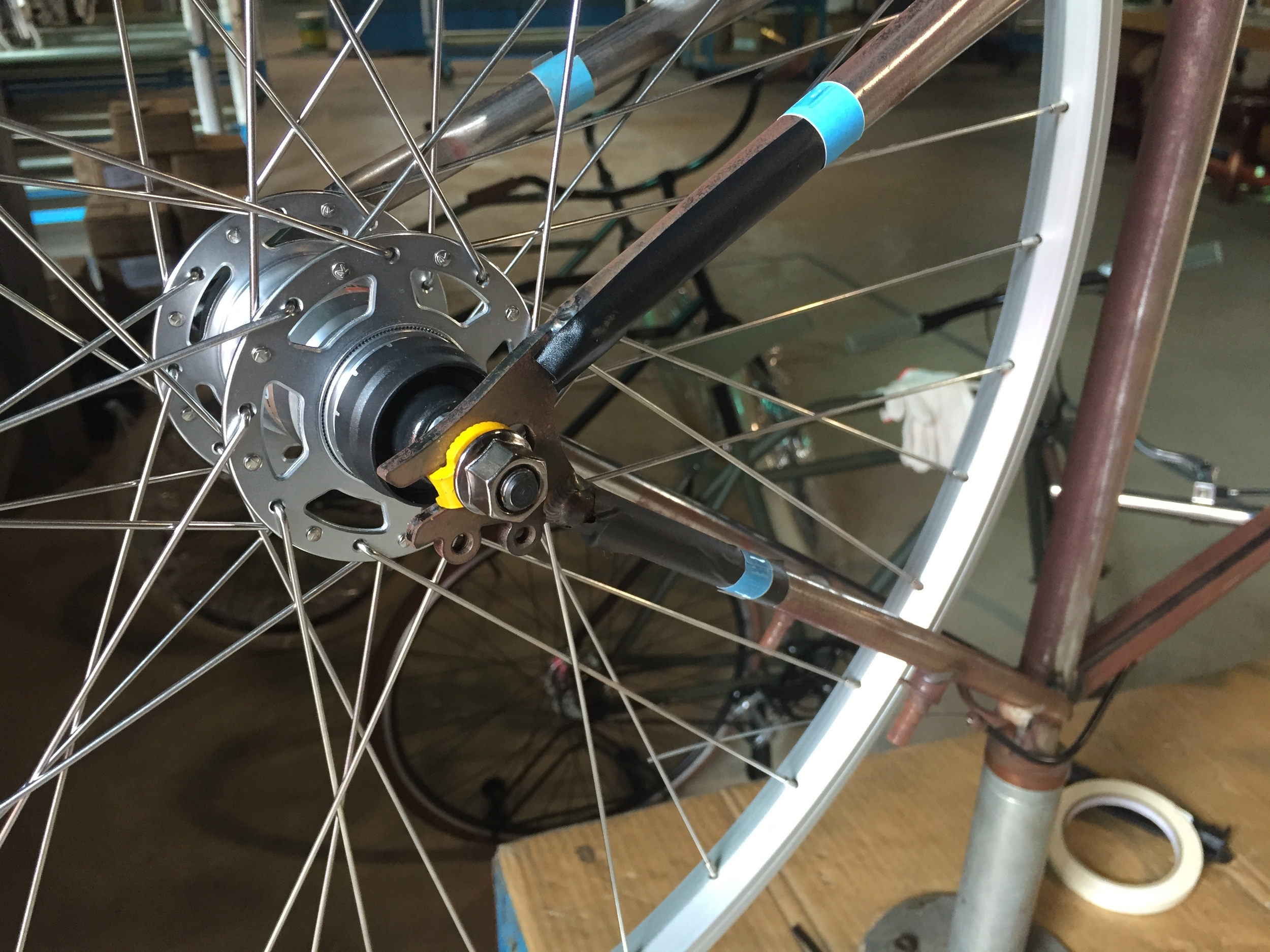
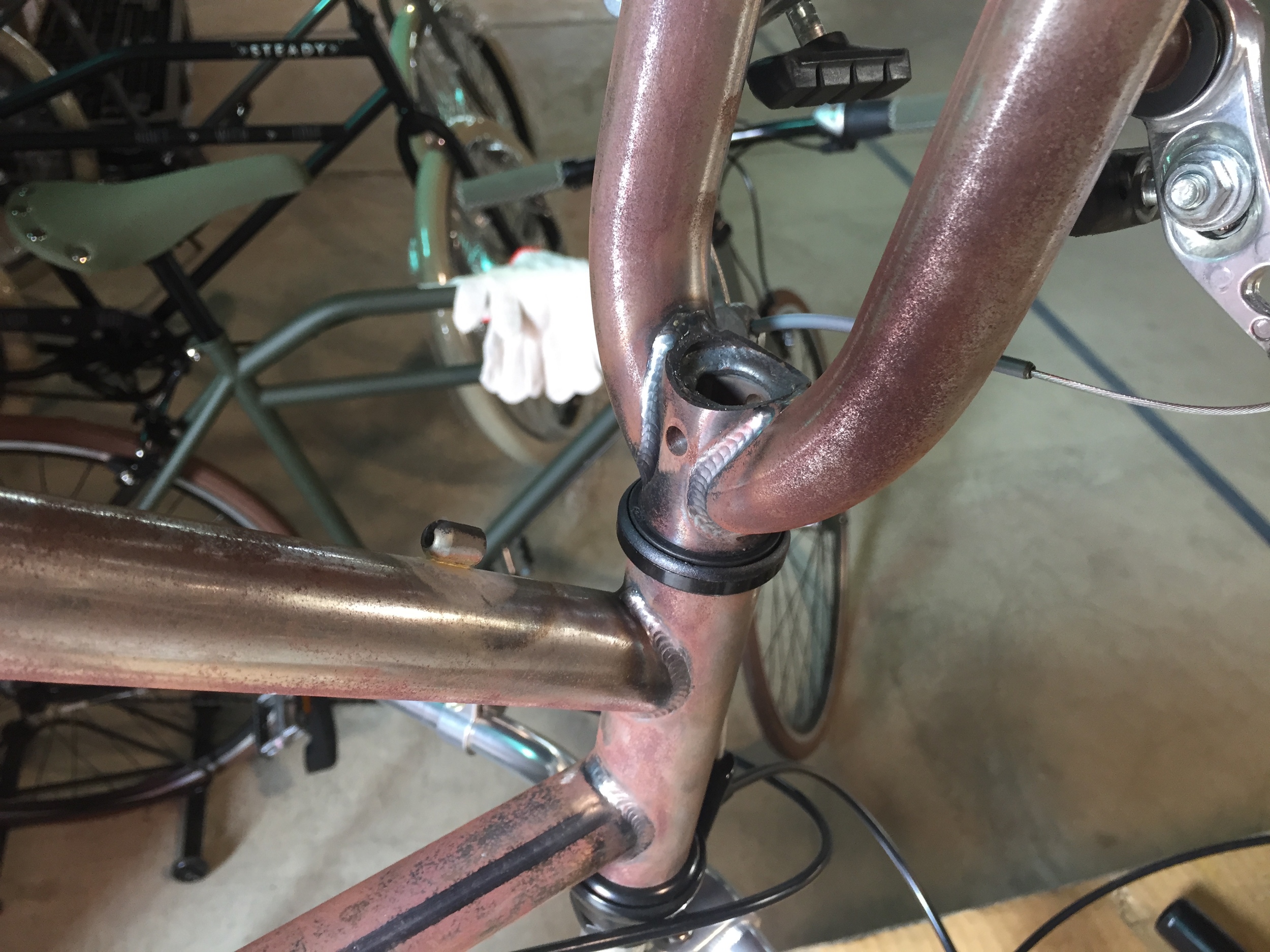
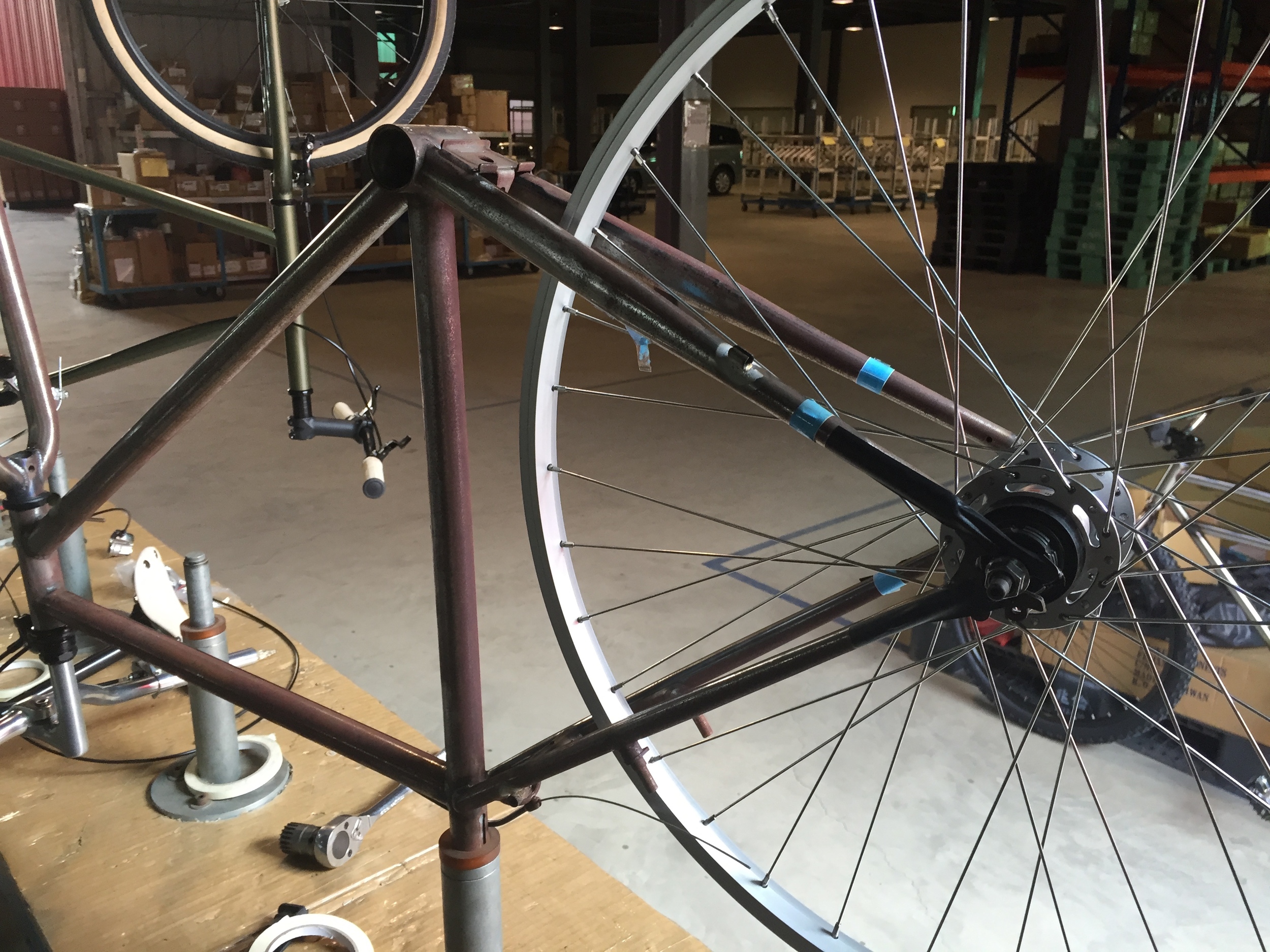
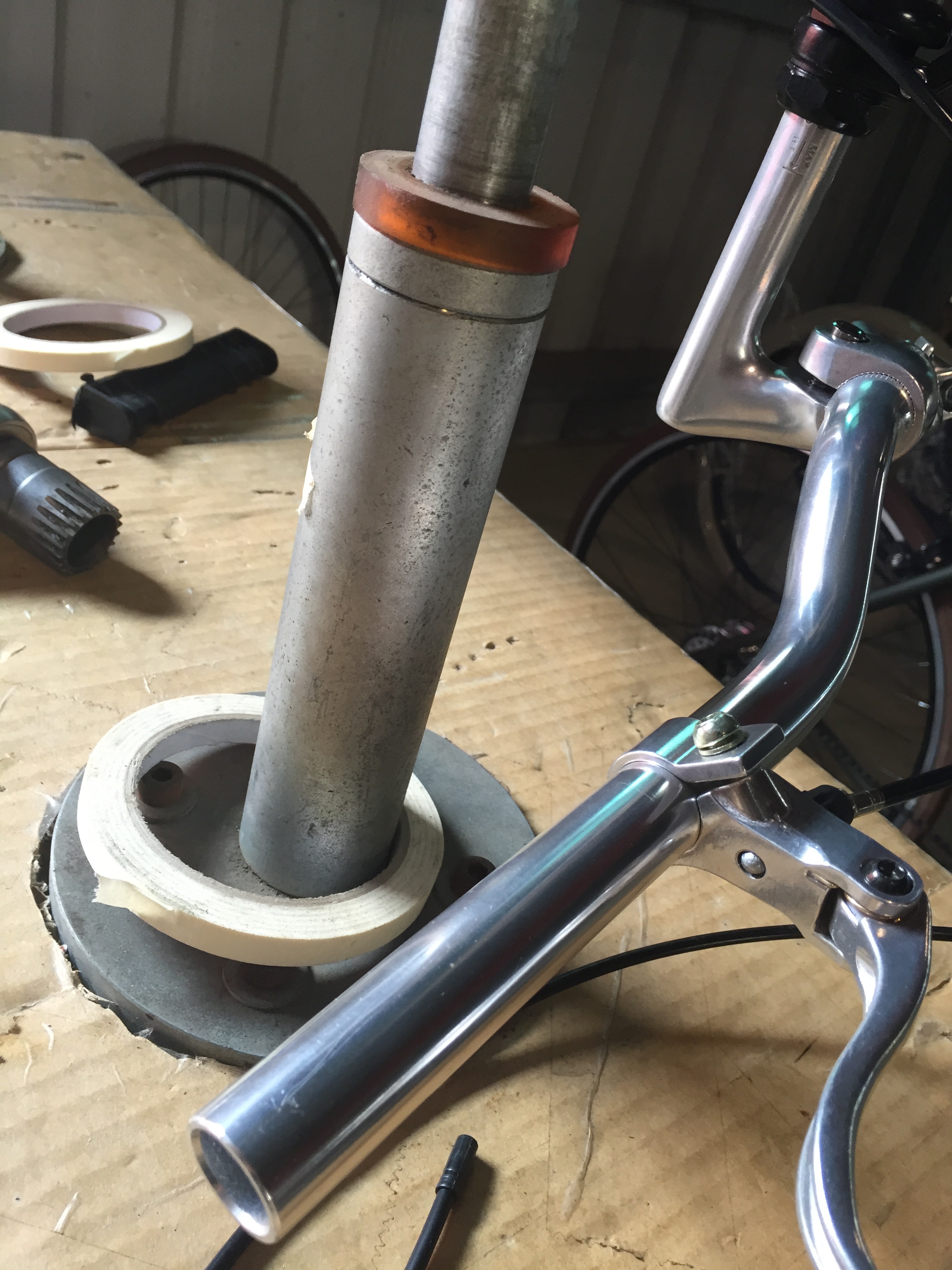
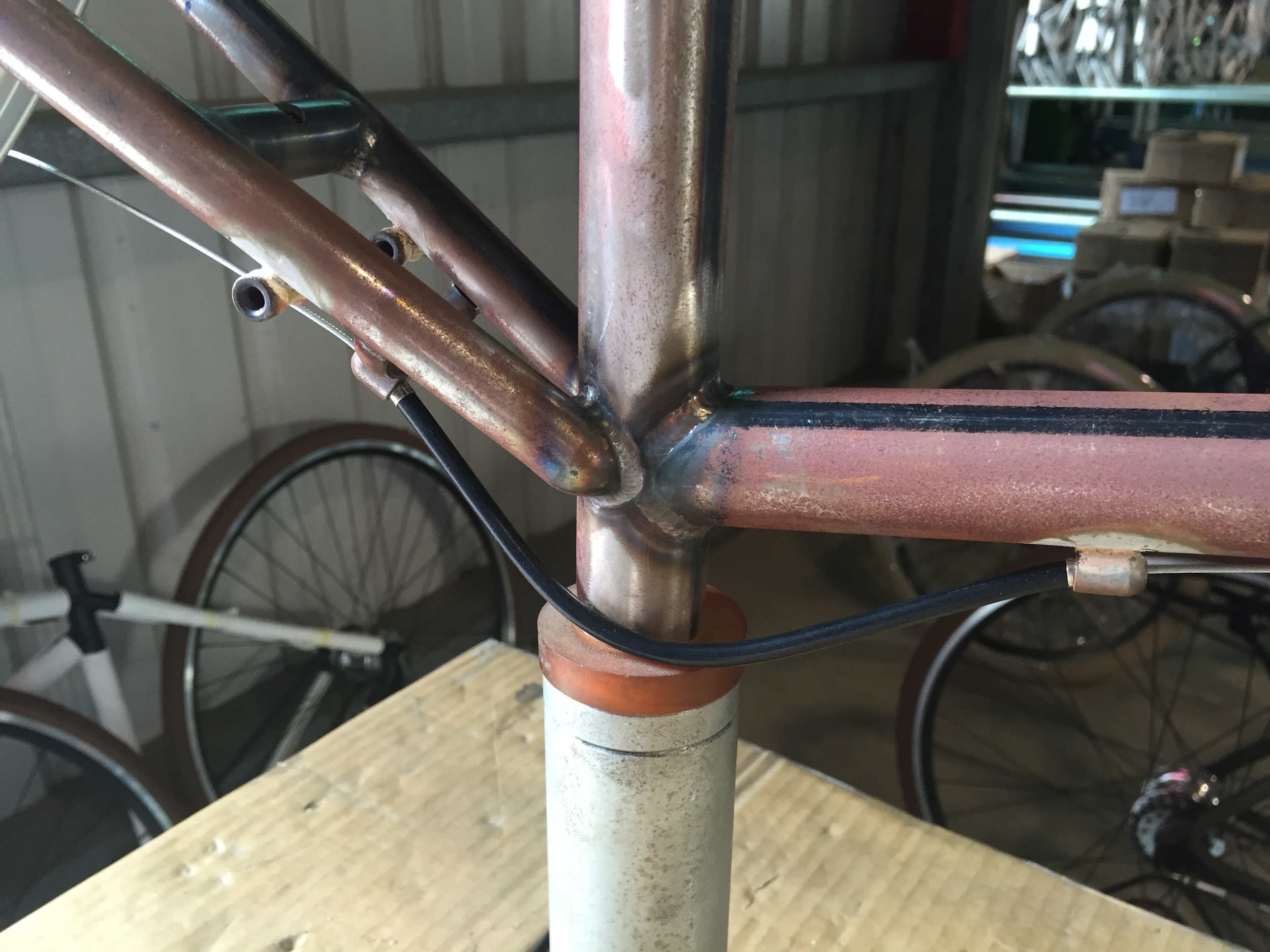
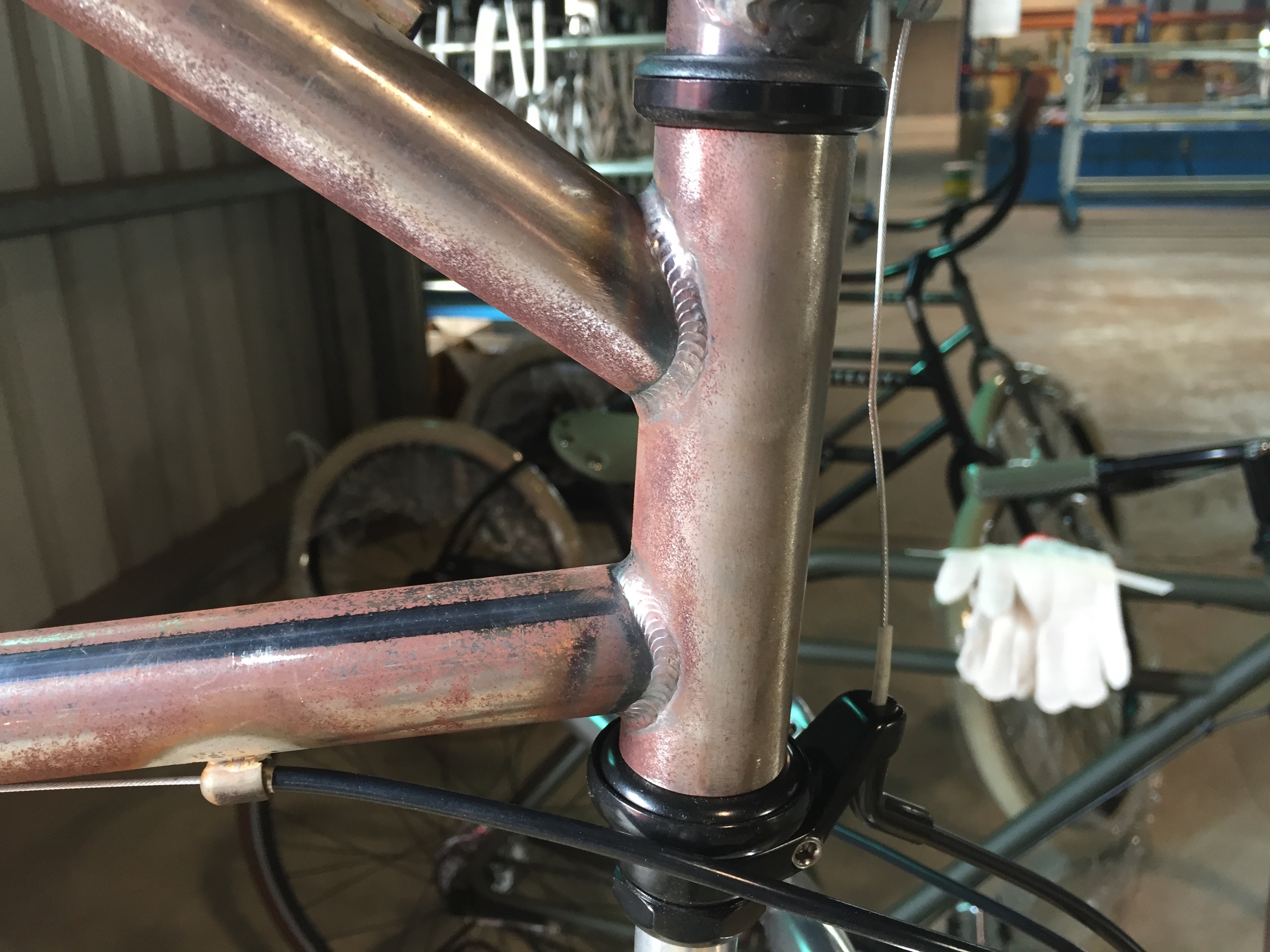
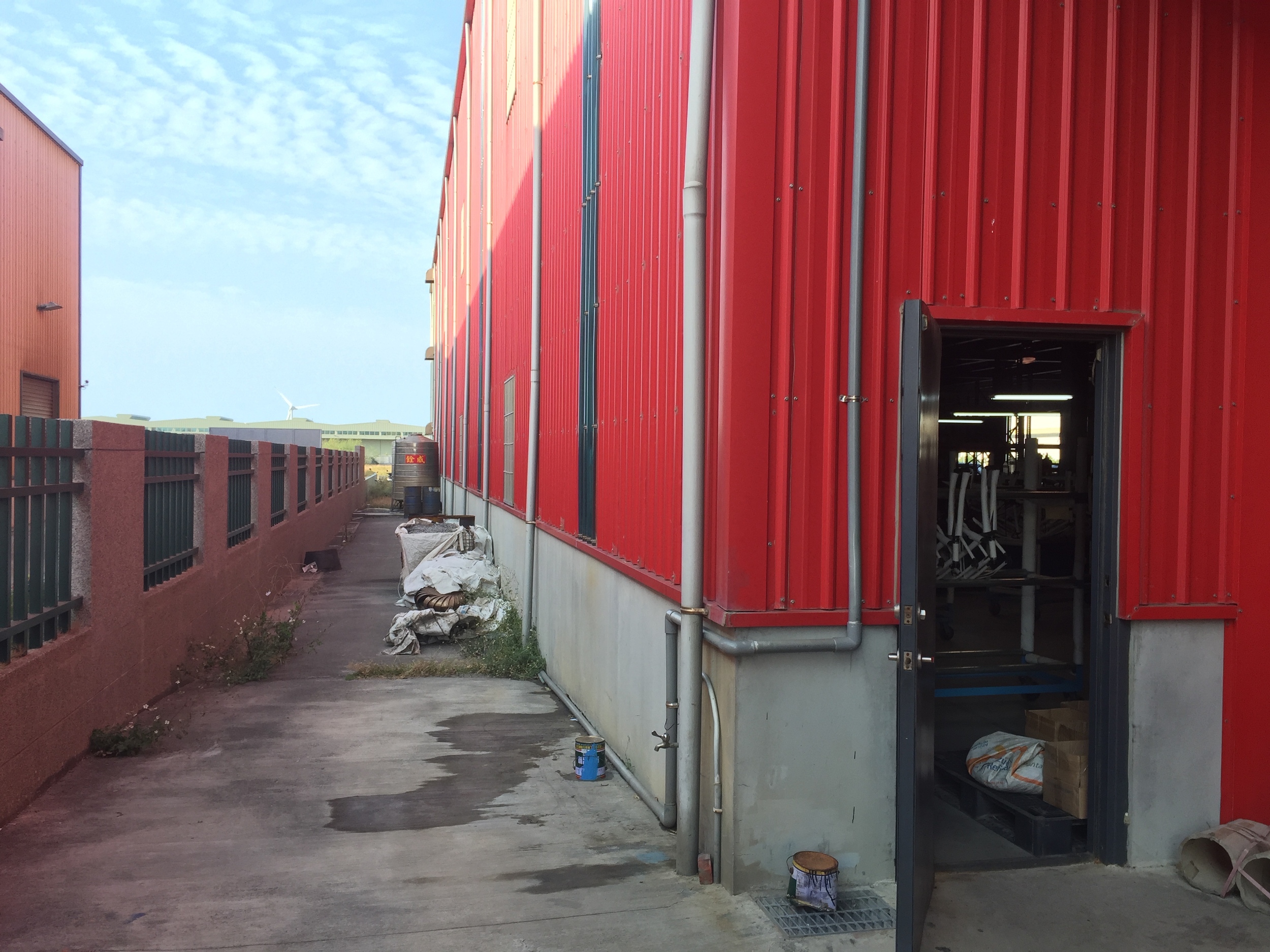
Last October I visited Universal Speed, the assembly shop that Brilliant Bicycles are built by. A few notes:

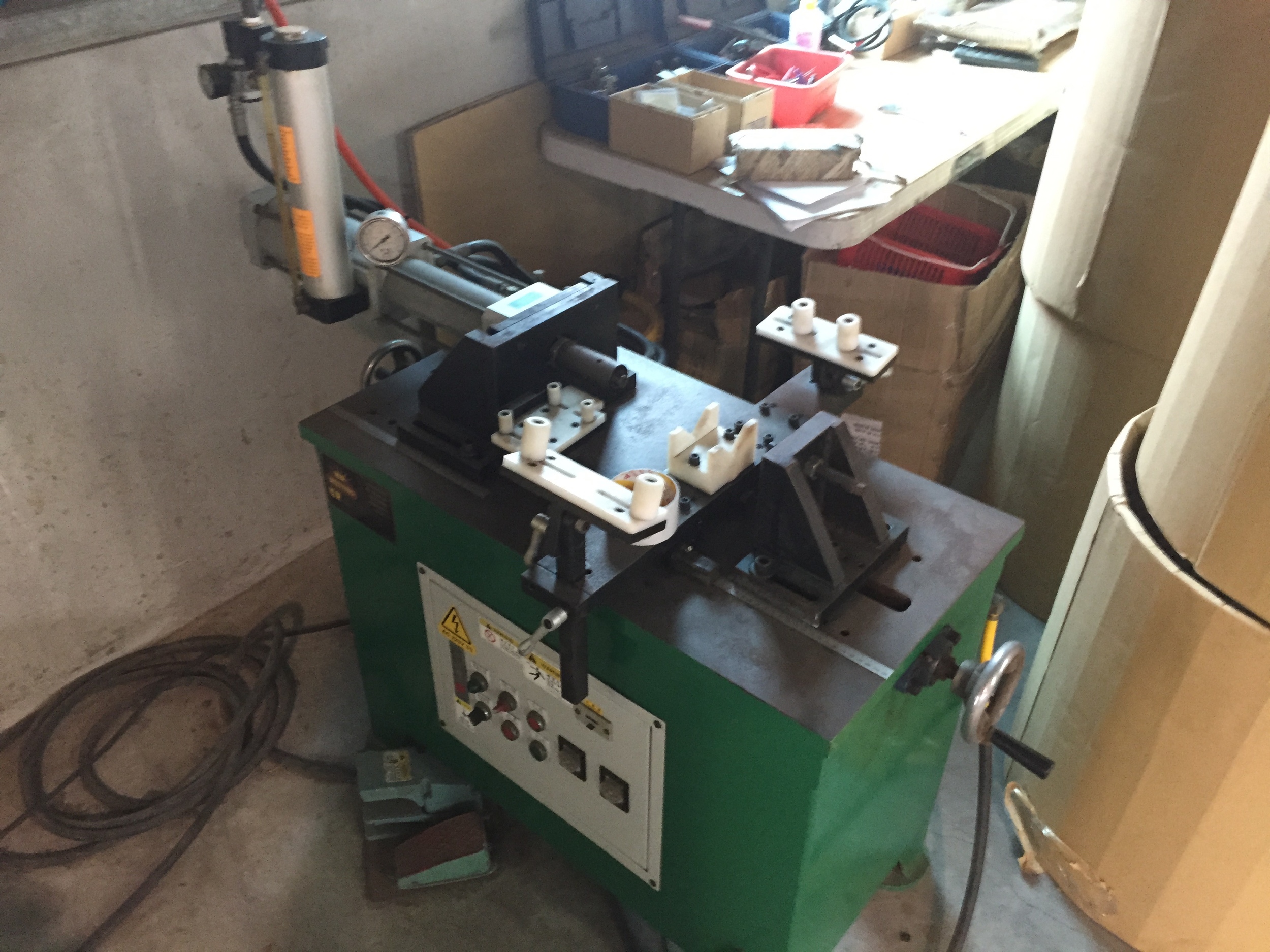
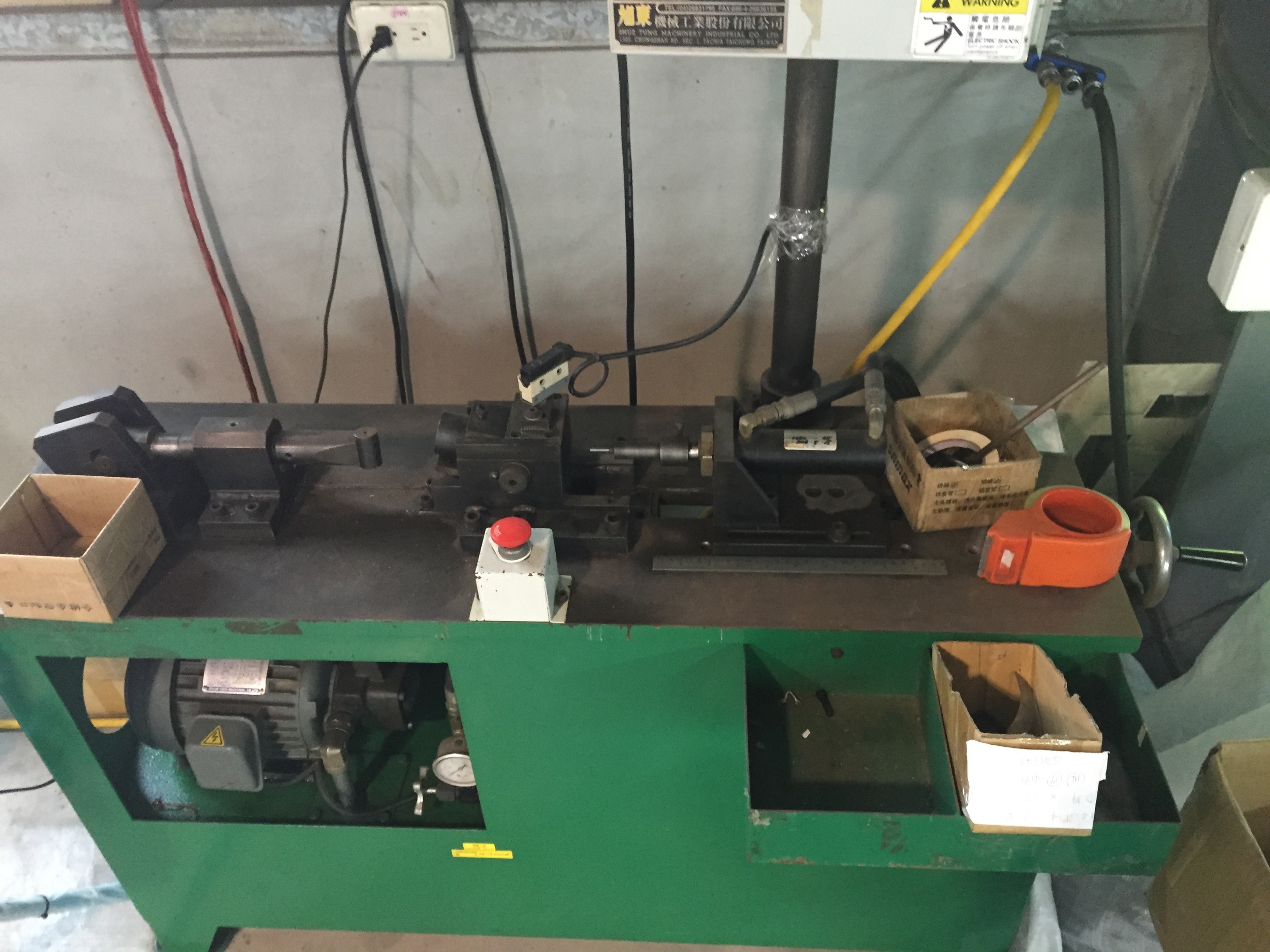
  • The dedicated tooling to do frame prep operations (bearing pressing, etc) was *cool.* Most of it was made by Shuz Tung, a Taiwanese company.
  • The wheelbuilding line was the single biggest part of the operation. The truing machine especially was impressive (videos below).
  • They build everything upside down! I can't imagine doing this, but the advantages re: not touching the paint are really big.
  • It was a really big facility - tens of thousands of square feet. 
  • The moving assembly line was fun.

Here are the wheels being built:

And here's the wheel truing machine in more detail:

Here's the whole shop (ish):

The Public Radio dev boards

Added on by Spencer Wright.

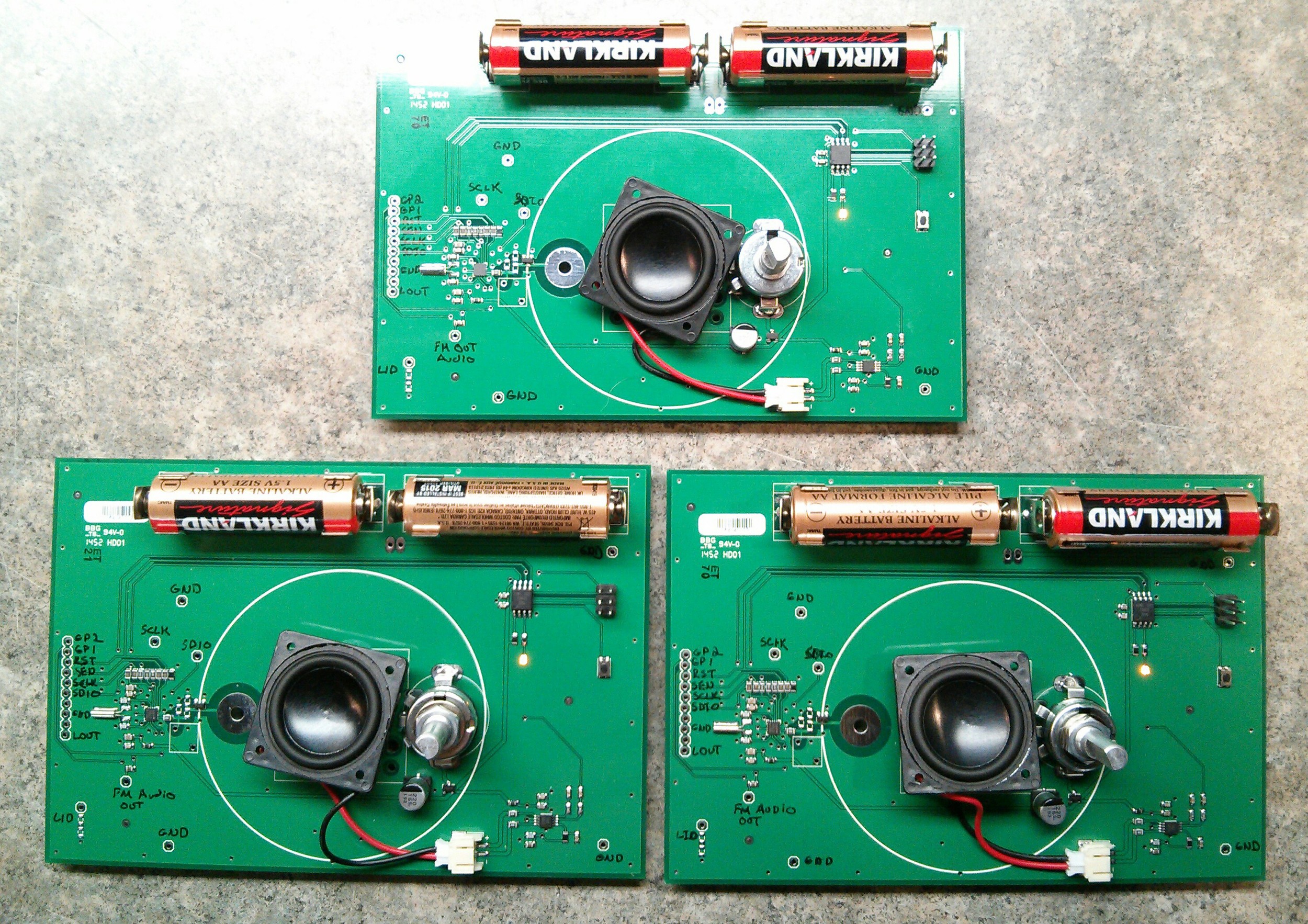
Over the past month, we've been hustling *hard* to re-engineer The Public Radio's circuit design. We knew we needed to do this in order to transition to a digitally tuned FM IC, and budgeted enough time to go through two or three final prototyping rounds. The first round was the hardest - we wanted to be making as few changes as possible on the second, so balancing speed and accuracy this past few weeks has been a real challenge.

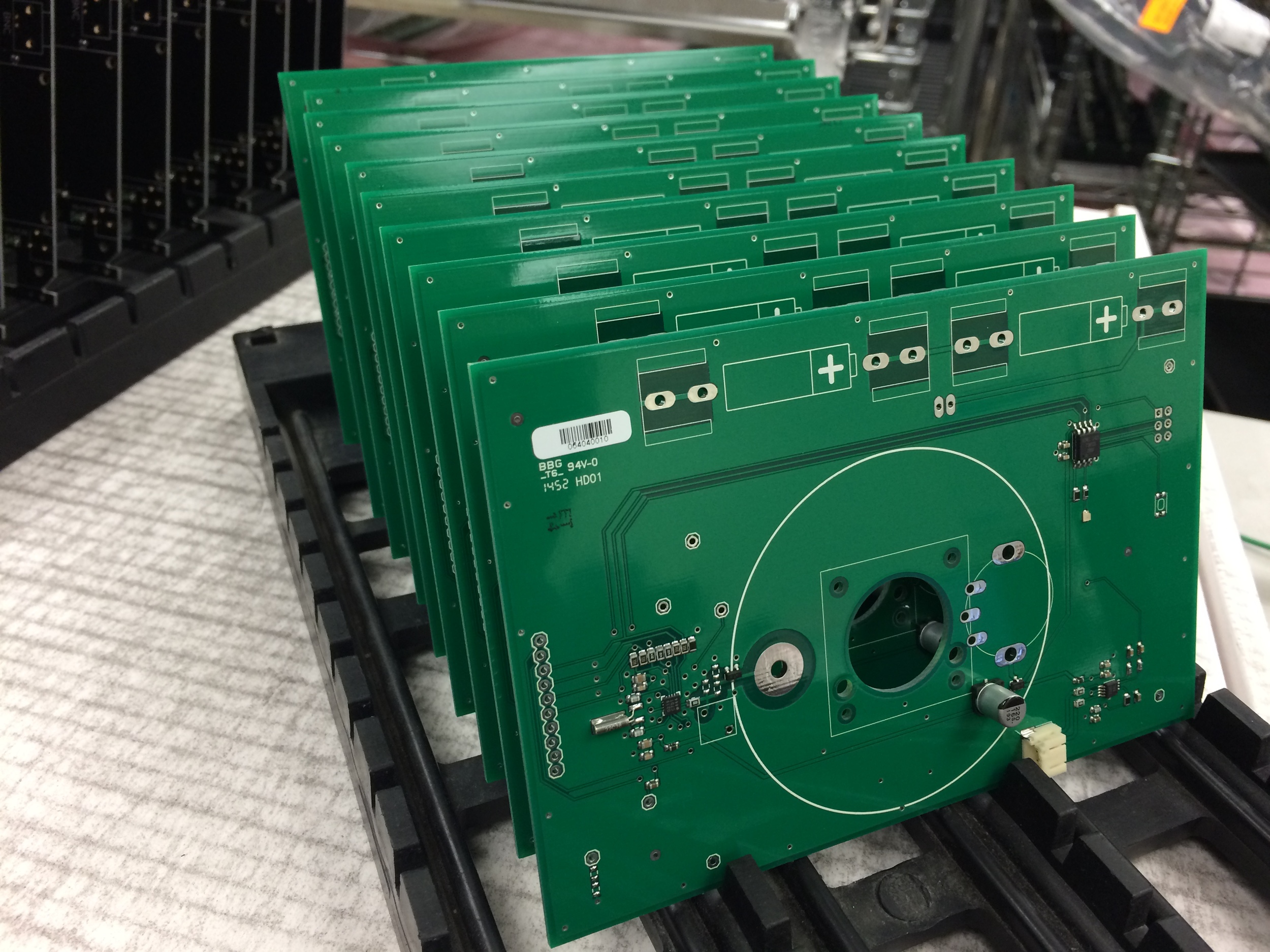
But it's coming together well, and we received our first development PCBs the other day. Our prototyping partner, Worthington Assembly, did all of the SMT components, and Zach added the thru-hole parts on Thursday.

We already found a few minor errors - two of our part footprints were a bit off - but they're all easily fixable and not an issue for working on the development boards. 

Over the next week we'll be putting these through the ringer, and making any small changes we need to make the circuit fully optimized. Then we'll shrink the board back down to production size and will get one more prototype run built before placing our final orders.

More updates soon!