Manufacturing guy-at-large.

Don't even try

Added on by Spencer Wright.

Paul Graham:

Don't even try to build startups. That's premature optimization. Just build things that seem interesting. The average undergraduate hacker is more likely to discover good startup ideas that way than by making a conscious effort to work on projects that are supposed to be startups.

Power switches

Added on by Spencer Wright.

From Business Insider's good, long profile of Larry Page:

In 1999, for instance, the method by which large Web companies such as eBay, Yahoo, and Google added server space had become fairly routine. They purchased servers and installed them in cages at giant warehouses owned by third-party vendors. The warehouse companies would pay for the power that kept the servers running and the air conditioning that kept them cool, and the website owners would pay for space by the square foot. Page figured if Google was going to pay per square foot, he was going to stuff as many servers into that space as he could. He took apart servers and began hunting for ways to shrink them. The first thing to go? All the off switches.

“Why would you ever want to turn a server off?” he reportedly asked.

Stripped of useless components and fitted with corkboard to keep wires from crossing, Google developed new super-slim servers. They looked ugly. But before long, Google would end up paying the same price to host 1,500 servers as early rival Inktomi paid to host 50. As a result, Google’s search ran a lot faster, and Inktomi, along with many of Google’s other search rivals, was left in the dust.

Topper progress

Added on by Spencer Wright.

This is still happening.

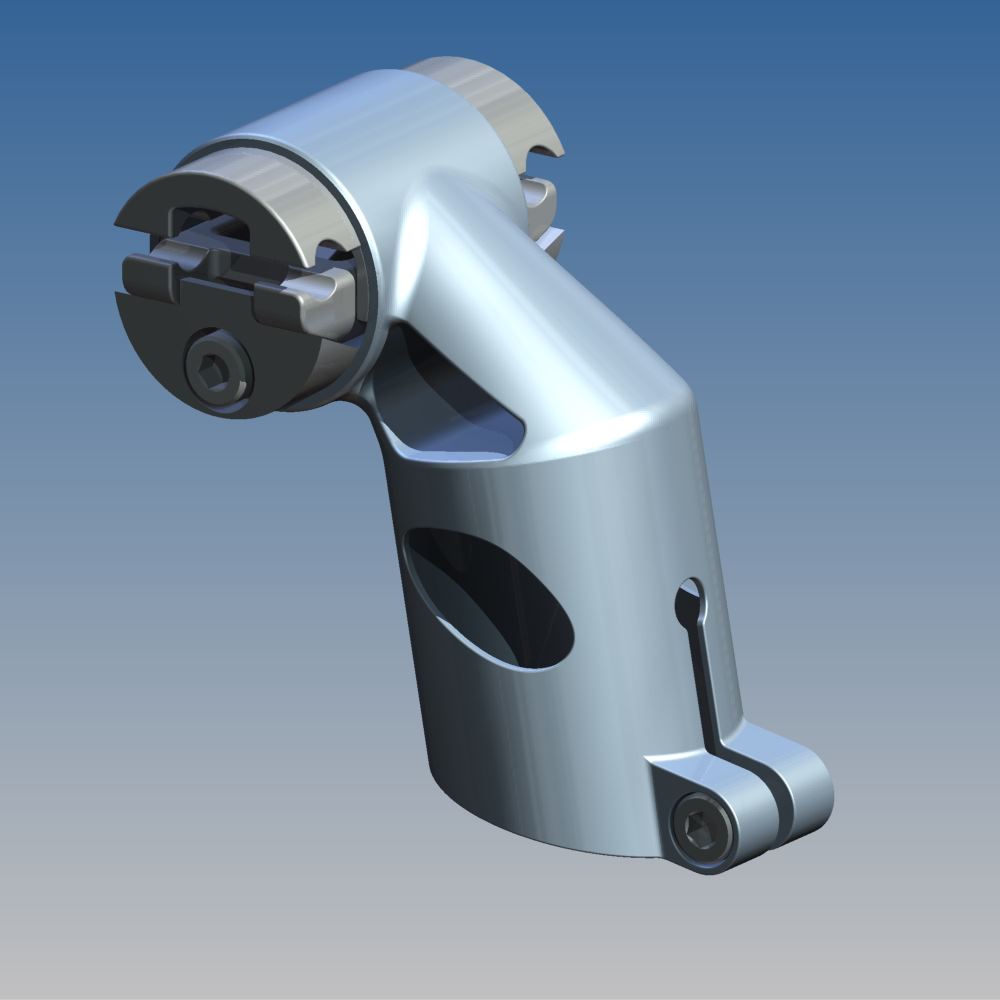
It's been slow, but my metal powder bed fusion (aka DMLS, LaserCUSING, selective laser sintering, etc.) seatmast topper is moving forward. With any luck, I'll have a part in production in a week's time.

I've made some small changes to the design. The biggest thing is the hole in the back of the part, which is meant to reduce mass. I also modeled the threads in the clamp, which will help my manufacturer print the threads.


Choosing a job shop for this has been interesting. Since my post on DMLS pricing, I've had a bit of interest on my project. My hope has been that I'd be seen as more of a partner than a customer,  but the extent of that remains to be seen. Selling a partnership is something I'm green at, and companies that deal mostly with corporate and institutional buyers don't necessarily think of investing time into a project that has an indirect upside.

Nonetheless, I think there's something to it. This project is partly product, partly experiment in advanced logistics. The information I'm learning on the subject is free for anyone to see, but the partners that I'll end up working with will develop unique experience working on a thin-wall, consumer facing part. There aren't a ton of people working on that kind of thing, but I expect that'll change in the near future. My hope would be that my partners would agree with me, and would see this project as an opportunity to develop additional capabilities at a relatively low expense. 

Nevertheless, I'm determined. And I'm looking forward to having a piece of laser sintered titanium in my hands, too :)

Tony Hsieh

Added on by Spencer Wright.

Zappos CEO Tony Hsieh, from a talk given to the Long Now Foundation: 

A company's culture and a company's brand are really just two sides of the same coin. The brand is just a lagging indicator of the culture. And with social media, and everyone being hyper connected, that brand is actually [lagging] less and less. So for example, if you ask a random person off the street "what do you think of the airline industry," you'll probably get back responses about bad customer service or apathetic employees and so on. And like it or not, that is the brand of the industry, even though no airline obviously set out for that to be their brand. 

Arbitrary and meaningless

Added on by Spencer Wright.

Squarespace CEO Anthony Casalena, talking with First Round Review about developing a high quality product:

We tend to see a lot of deadlines as arbitrary and meaningless. At their worst, they compromise design quality and burn people out so much that they stop having good, creative ideas. Sprinting is not our core differentiator.

Ahh, product life :)

But seriously: Remember that not all successful companies sprint. Develop products how you want to, and reflect on whether it's going well. 

Thumbrest

Added on by Spencer Wright.

Got this back from Shapeways a week or so ago. 

To recap, this is designed to be installed in the hotshoe of a Sony A7, in order to improve the grip stability & feel.

I still need to do some post-processing & try the part out. I'm excited to put it together.

Shop Visit: EXOVault

Added on by Spencer Wright.

Today I met up with an internet acquaintance to drop off some of my rack ends. I needed to do a bit of lathe work, so we met at a shop that he's associated with, which is also the manufacturing facility for EXOVault.

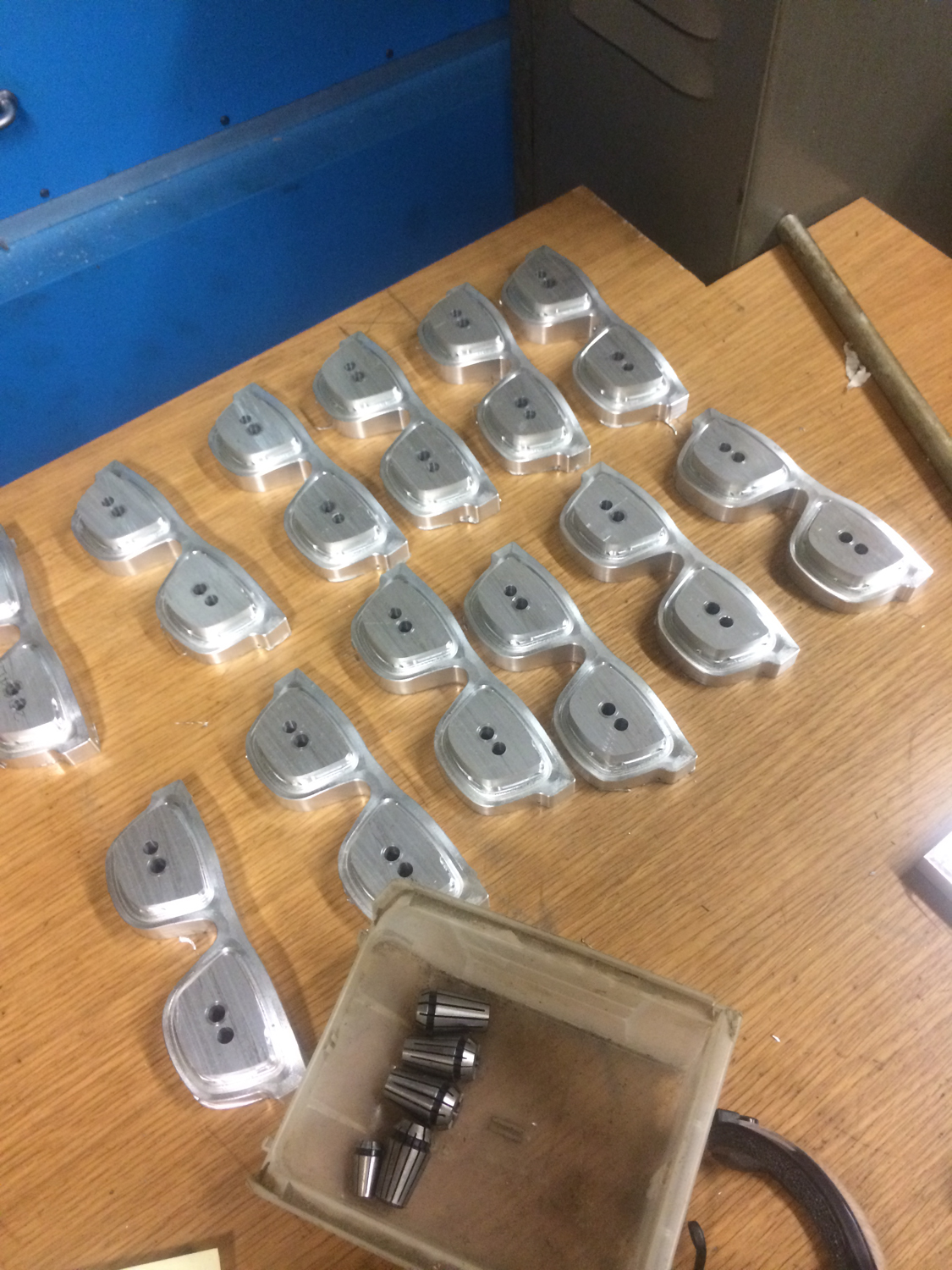
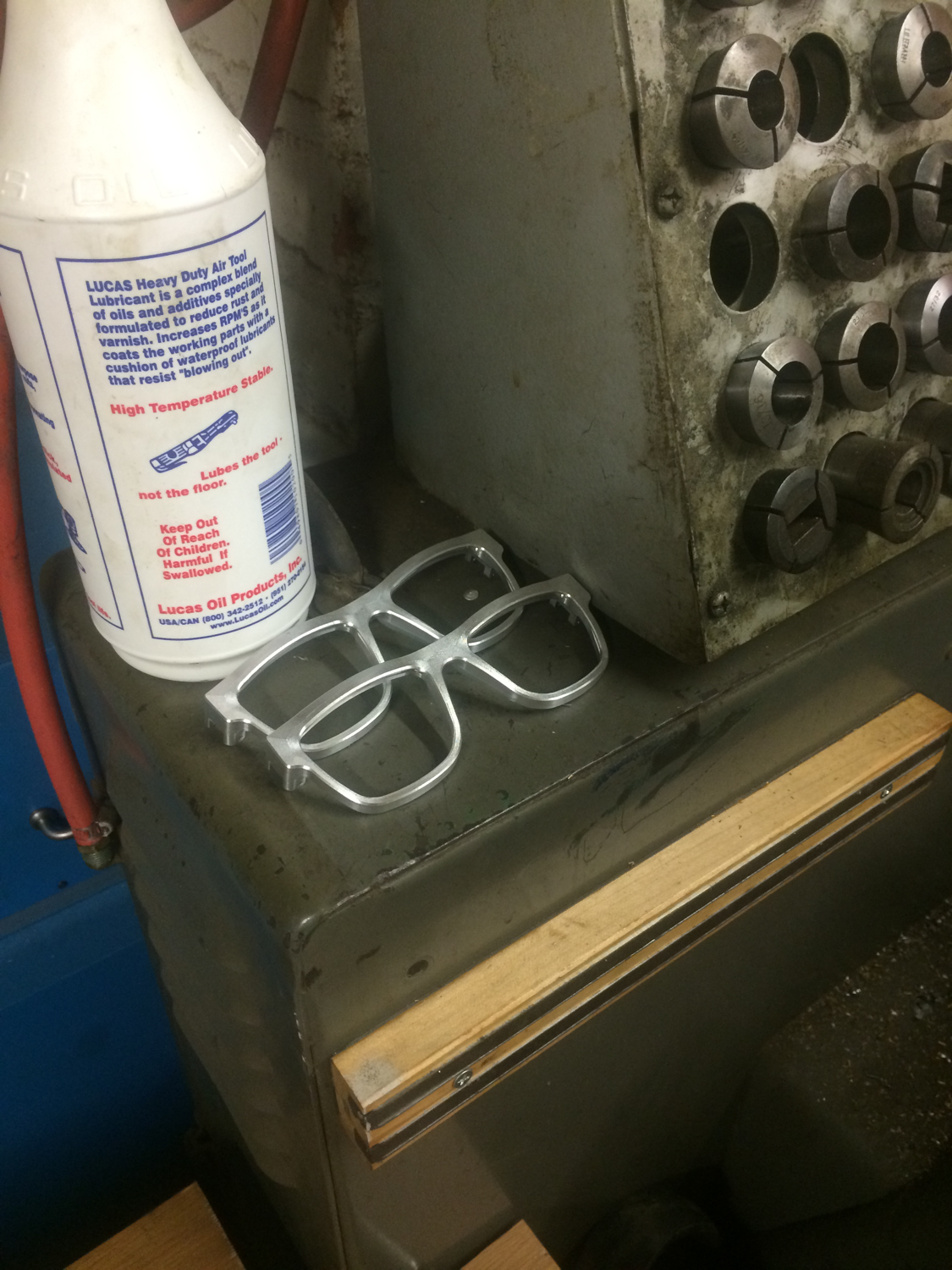
Besides their crazy iPhone cases, EXOVault makes some really interesting CNC machined aluminum eyeglass frames. It was *really* cool seeing their build process around the shop.

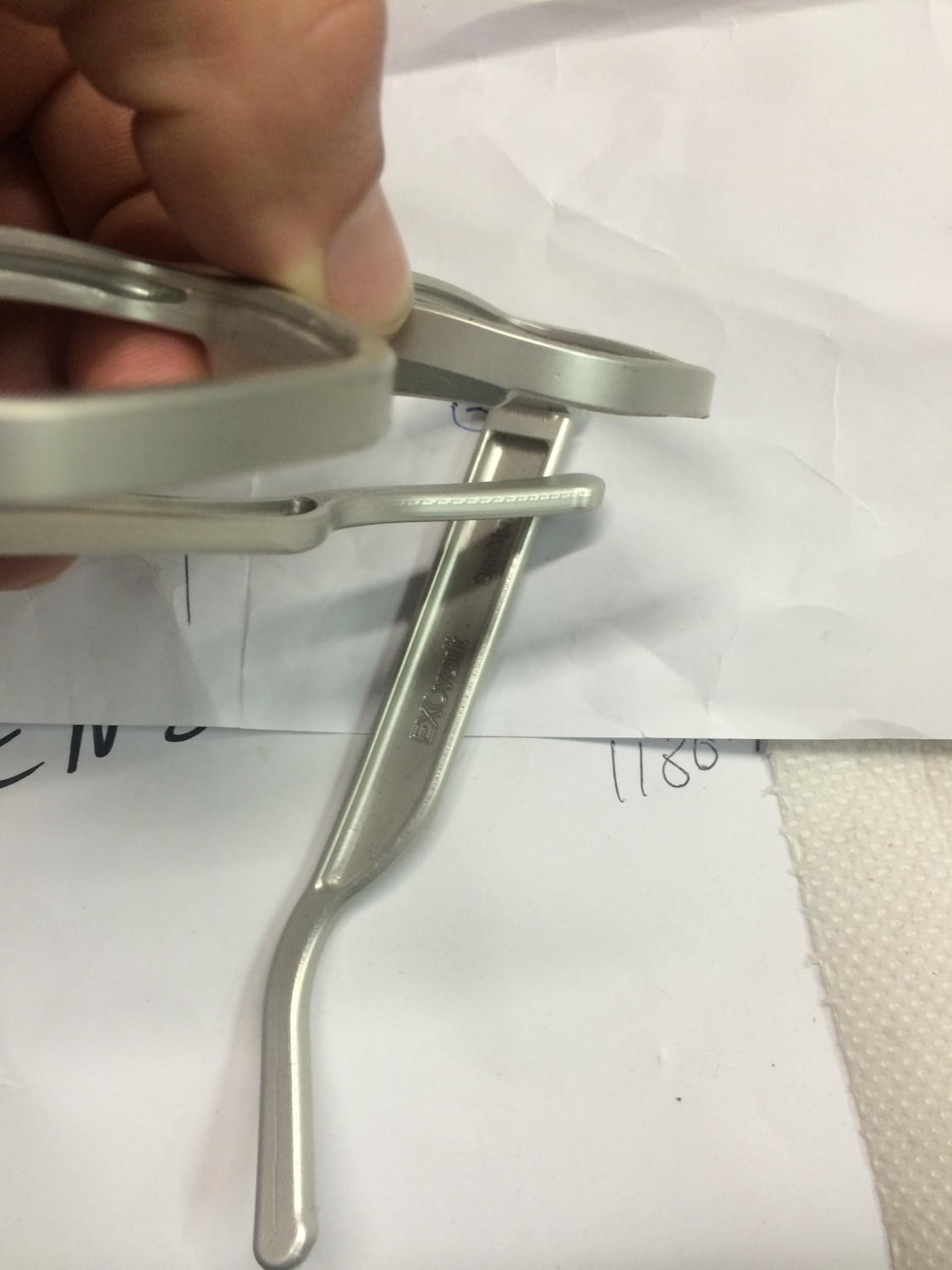
Their fabrication shop was a treat to see, and had a couple weird things hanging around - like this:

exovault-1.jpg

I love seeing shops. If anyone knows of a shop that I should see, please let me know!

Frosh > Frish

Added on by Spencer Wright.

Dan Jurafsky, writing about the phonetics of the names we give ice cream flavors. Emphasis mine. 

In one marketing study, for example, Richard Klink created pairs of made-up product brand names that were identical except for having front vowels or back vowels: nidax (front vowel) verus nodax (back vowel), or detal (front vowel) versus dutal (back vowel). For a number of hypothetical products, he asked people which seemed bigger or smaller, or heavier or lighter, with questions like:

Which brand of laptop seems bigger; Detal or Dutal?
Which brand of vacuum cleaner seems heavier, Keffi or Kuffi?
Which brand of ketchup seems thicker, Nellen or Nullen? 
Which brand of beer seems darker, Esab or Usab?

In each case, the participants in the study tended to choose the product named by back vowels (dutalnodax) as the larger, heavier, thicker, darker product. Similar studies have been conducted in various other languages.

The fact that consumers think of brand names with back vowels as heavy, thick, richer products suggests that they might prefer to name ice cream with back vowels, since ice cream is a product whose whole purpose is to be heavy and rich.

Indeed, it turns out that people seem to (at least mildly) prefer ice creams that are named with back vowels. In a study in the Journal of Consumer Research Eric Yorkston and Geeta Menon had participants read a press release describing a new ice cream about to be released. Half the participants read a version where the ice cream was called "Frish" (front vowel) and the other half read a version where it was called "Frosh" (back vowel), but the press release was otherwise identical. Asked their opinions of this (still hypothetical) ice cream, the "Frosh" people rated it as smoother, creamier, and richer than the "Frish" people, and were more likely to say they would buy it. The participants were even more influenced by the vowels if they were simultanously distracted by performing some other task, suggesting that their response to the vowels was automatic, at a non-conscious level.

People are *so* weird.

Accountability is a Team Concept

Added on by Spencer Wright.

From a piece in Fast Company about the (DoD-funded) Software Engineering Institute:

Importantly, the group avoids blaming people for errors. The process assumes blame - and it's the process that is analyzed to discover why and how an error got through. At the same time, accountability is a team concept: no one person is ever solely responsible for writing or inspecting code. "You don't get punished for making errors," says Marjorie Seiter, a senior member of the technical staff. "If I make a mistake, and others reviewed my work, then I'm not alone. I'm not being blamed for this."

It's my belief that organizations run best when accountability - for both failures and successes - is shared widely. At SEI, where NASA flight software is developed, big failures can be catastrophic. In order to ensure the overall project success, all individual output is reviewed at multiple stages of development; if errors are overlooked, responsibility falls to the team – not to any individual in the process.

Weak ties that last

Added on by Spencer Wright.

From a *long* article in TechCrunch about the San Francisco housing market. Emphasis mine.

San Francisco’s population hit a trough around 1980...But that out-migration reversed around 1980, and the city’s population has been steadily rising for the last 30 years.

This is a phenomenon that’s happening to cities all over the United States...

Its rapacious speed may even be accelerating. Witness hyper-gentrification in Brooklyn and Manhattan, or the “Shoreditch-ification” of London.

Why?

People are getting married later and are living longer. Nearly 50 percent of Americans, or more than 100 million people are unmarried today, up from around 22 percent in 1950.

The job market has changed as well. In 1978, the U.S.’s manufacturing employment peaked and the noise and grit of the blue-collar factories that once fueled the flight of the upper-middle-class disappeared. These vacant manufacturing warehouses turned into the live-work spaces and lofts that emerged in the 1980s and 1990s in cities like New York and San Francisco.

The concept of lifetime employment also faded. Today, San Francisco’s younger workers derive their job security not from any single employer but instead from a large network of weak ties that lasts from one company to the next. The density of cities favors this job-hopping behavior more than the relative isolation of suburbia.

Being Prepared.

Added on by Spencer Wright.

Links for the week! Sign up here.

Pathing.

Manufacturing.

Logistics.

Reflecting.

Stuff that doesn't fit into my dumb/arbitrary categories.

And.

 Love, Spencer.

ps - Thank you to everyone - especially my friends at Gin LaneUndercurrent, and on twitter - who referred me to everything here.

One Hardware Thing

Added on by Spencer Wright.

Please, leave comments on this post!

If you had a group of 20 or so intelligent, inquisitive people - but none of them have any experience with hardware writ large - what is the one lesson/exercise that you would run them through? Assume a 90 minute session.

My thoughts: 

  • Fix a flat on a bike
  • Just tighten/loosen screws/nuts
  • Overview of metric vs. English standards
  • Overview of hardness vs. tensile/compressive/shear strength
  • Basic solid modeling tutorial in Fusion 360
  • Basic mechanical feature overview (lever, gear, screw, etc.)
  • Industrial vs. Mechanical vs. Embedded design
  • Analog & digital circuits

What are your thoughts? 

"Quick, Big Wins."

Added on by Spencer Wright.

According to his LinkedIn page, Piet Morgan began working on Hammerhead in September 2012. Hammerhead went on to raise $190K on Dragon in October of 2013. Immediately afterwards, they entered the R/GA+Techstars accelerator, where they received a $20K stipend + (I'm guessing here - it's a safe bet) an additional $100K convertible note.

Hammerhead matriculated from R/GA in March, and today TomorrowLab announced that they've been hired by Hammerhead to "get to market by September 2014."

They also have Brad Feld and Scott Miller as advisors - two consummate hardware startup experts.


Things take time. Developing products is hard. Sure: money, guidance, and a space to work in help. But product development is still time consuming, and quick, big wins don't come easily.

As a cyclist, I must say that I'm not particularly interested in Hammerhead; it's just not my style. But I saw their pitch in person at a meetup a few months back, and I must say that it was very good. Piet seems really smart, and the team appears to be down-to-earth and rather personable. We've got friends in common, and from everything I know about their team it seems like they're kicking ass.

But launching things is hard, and quick, big wins are elusive. Remember this, and don't trick yourself into thinking you're above it.

Personal OKRs

Added on by Spencer Wright.

First: You should know what OKRs are. I'm not saying there the end-all be-all, but they're totally a thing.

Yesterday I updated my personal goals in the format of OKRs and habits. Here they are.

Objective 1:

Be smarter than I really am.

I use this as a euphemism for formidability & staying on top of shit.

Key Results:

  • I’m more organized, and hence more at ease.

  • My output results in more inbound traffic.

  • My relationships are strengthened through my reliability and ability to communicate effectively.

Habits:

  1. Keep a daily checklist & maintain a high “done” rate.
  2. Pitch something unironically on a weekly basis.
  3. Ship my newsletter weekly.
  4. Post 250 words publicly on a weekly basis.
  5. Post 750 words publicly on a monthly basis.

Objective 2:

Broaden and deepen my perspective and skillset.

Key Results:

  1. A full stack of maker skills.
  2. A continually broadening knowledge base.
  3. A continuous stream of completed & documented projects.

Habits:

  • Lunch/coffee/drinks with someone outside of my immediate sphere on a weekly basis.

  • Show continued progress on extracurricular projects on a monthly basis.

  • A half-hour of terminal time on a weekly basis.

  • One unstructured weekday on a monthly basis.

These will change over time - perhaps sooner than later - but I feel good about them. Wish me luck.

When the Leadership can fail

Added on by Spencer Wright.

Astro Teller, talking about the culture of failure at Google X:

When the leadership can fail in full view, "then it gives everyone permission to be more like that."

Cultures that allow for failure at the top are (in my experience) extremely rare. Success and age breed risk adversity (cf. this excellent post by Felix Salmon), and leadership positions tend to be filled by successful people. 

Willingness to fail is also, in my mind, the single most important factor to long term success. Failure offers lessons which are more learnable - and more causal - than success does. In the absence of failure, one's ability to learn is highly compromised.

To me, willingness to fail should be a top priority to everyone. Discussions of risk should be between all parts of an organization. A company's policy on risk & failure should be explicit, and its implications should be clear to all employees and stakeholders.