Manufacturing guy-at-large.
Ballmer on meetings and powerpoint
from a 2009 interview in the nytimes; found on Edward Tufte's excellent blog.
Q. What’s it like to be in a meeting run by Steve Ballmer?
A. I’ve changed that, really in the last couple years. The mode of Microsoft meetings used to be: You come with something we haven’t seen in a slide deck or presentation. You deliver the presentation. You probably take what I will call “the long and winding road.” You take the listener through your path of discovery and exploration, and you arrive at a conclusion.
That’s kind of the way I used to like to do it, and the way Bill [Gates] used to kind of like to do it. And it seemed like the best way to do it, because if you went to the conclusion first, you’d get: “What about this? Have you thought about this?” So people naturally tried to tell you all the things that supported the decision, and then tell you the decision.
I decided that’s not what I want to do anymore. I don’t think it’s productive. I don’t think it’s efficient. I get impatient. So most meetings nowadays, you send me the materials and I read them in advance. And I can come in and say: “I’ve got the following four questions. Please don’t present the deck.” That lets us go, whether they’ve organized it that way or not, to the recommendation. And if I have questions about the long and winding road and the data and the supporting evidence, I can ask them. But it gives us greater focus.
i am not enthusiastic about powerpoint, though my reasons are an admittedly weak combination of stubbornness and blind adherence to Tufte's critiques, which i've found very compelling.
pivoting
summer approaches, and the current phase of my life has begun to take some shape. my life, and direction, is largely in flux, a fact which i have respect for - and some uneasiness about.
i've been going on my share of job interviews lately. i've also been dating, and talking a lot - to friends, acquaintances, and anyone who will listen - about the recent disruptions in my life, and the tack that i have taken as a result. i talk a lot about startups and new technologies, and inevitably i'm asked (often with a touch of skepticism), "so, why do you want to work in tech?"
in february, i quit my job on short notice and packed up my life to move to new york. my immediate goal was to explore areas of the world that have, for the past five years, been largely missing from my day-to-day life. i was primed for a pivot, and put much of my energy into discovering what was out there. since i graduated from college, i have worked primarily in construction, design and manufacturing, and these areas have been highly rewarding to me. i have had the opportunity to see significant projects to completion, an experience which has enriched my sense of accomplishment, strength and self worth. i have transformed physical space. my efforts - my sweat; my mental, emotional and corporal commitment - have enabled real people to engage in real interactions. my ideas - things i dreamed up - have been transformed into objects that my contemporaries use in their daily lives.
but i have also, to some extent, sat by as my generation has explored a collective interest in new modes of experience and interaction. every time someone would remark at how cool my bicycle framebuilding business was, i couldn't help but feel that their romantic appreciation of my craft carried with it a degree of unintended condescension. my thing, as it were, was cute. regardless of the personal satisfaction i gleamed from the work i did, my craft was mostly just a mimicry of a process that has been largely unchanged for a century. put more directly, nothing i was doing was changing the world.
another of my frustrations came from the risk inherent in a career in design. early on, i realized that the bicycles i built were only marginally better than their commoditized equivalents. sure, i had an aesthetic perspective, and there certainly are framebuilders who have built successful careers by differentiating their product in interesting ways. but income distribution in design professions tends to be long-tail; one needs to be very good - or at least very lucky - to be successful. in the bicycle industry, my career prospects were generally poor. whatever direction urban transportation is heading in, custom bicycle frames will forever be a niche product, and my impression remains that the industry is just about as flooded as the market for microbrewed beer.
so, GTTFP already: i want a pivot.
i have spent a while recently thinking about what, exactly, i have liked about my career. a few points:
- i like being appreciated.
- i like being compensated.
- i like being a little over my head. i prefer to stay right on the edge between the things i know i don't know and the things i don't know that i don't know.
- i like collaborating with people who are better at what they do than i am.
- i like having an understanding of long-term objectives, and i like being a significant factor in the achievement of those objectives.
- i like working with people like myself.
- i like being fully responsible for the execution of a project, however large or small.
- i like working on a new thing that will change some part of the world.
- i like working in emerging markets.
- i like working on things that people like me want, and want to interact with intimately.
- i like for the product values and interests that i have to overlap significantly with those of my collaborators and our product's users.
- i like being rewarded for my ability to identify, assess, analyze and solve problems, and i like it when those problems require me to learn about a new area of the world.
- i like clear objectives - and clear metrics by which they can be judged - over aesthetic, or "gut" feelings.
- i like working on general purpose technologies.
- i like working on cross-functional teams, and having responsibilities in many categories of business
some of these items depend largely on my position in an organization and the state of the project. some are temporal and are will change as industries shift. some are my own temporary baggage and will, given enough time, become less important.
but overall, the list reflects ideas that have been simmering in my mind for a long time. and they're things i feel strongly about. and looking back on my short career, i know that i have missed a few of them completely.
my career in construction, manufacturing and design has offered me appreciation, compensation, and challenge. it has offered me opportunities to work with bright, intelligent people on projects that i could conceive of both in close and far perspective. i have been rewarded for my analysis and problem solving abilities. i have been able to exercise a broad array of skills on a day to day basis.
but i have not, for the most part, worked with my contemporaries; nor have i worked for them. i have not changed the world, or been able to implement - and live by - the kinds of quantitative metrics that i would prefer be the measure of my project's success. in critical ways, my career has split me from my generation and the activities it values. and despite the fact that my career has offered me many opportunities to work with intelligent, interested people, it has more often put me in a place where the mere mention of wikipedia draws silence.
in short: i don't want to be the guy who knows how to attach a picture to your email.
i would prefer to be the guy who emails you to ask why the jQuery code he borrowed shows popups with 90% opacity in one context and 100% in others - and then figures it out on his own :). i want to be the guy who struggles to restore the firmware on his inherited XBee. i want to be the guy who doesn't really understand why you like Vesper so much. i want to be the guy who quizzes you about whether you would ever accept SLA parts as everyday objects.
it'll likely be a little while before the shape of my pivot's arc becomes defined. the list above represents what i know i don't know, and i'm still working out the boundary of that region and optimizing where i want to be in it. but i'm working on it.
-
i prefer Paul Graham's excellent definition:
A startup is a company designed to grow fast...For a company to grow really big, it must (a) make something lots of people want, and (b) reach and serve all those people." ↩
-
some months prior i had indicated my intention to move on, and i had been in communication with my boss regarding a six-month transition schedule. but as these things go, our interests were not aligned. my departure was a surprise to some, but not to my immediate counterparts or anyone in upper management. nevertheless, this specific aspect of the arc i now find myself following is one which continues to impose itself in my mental and emotional space. ↩
-
i did not consider myself to be a physical person until well into high school, when i began working - during spring and summer breaks - as a laborer for my father's construction company. the act of busting one's ass for eight or ten hours was powerful, and transformed the way i thought about my body and my level of toughness. ↩
-
even after i became fairly proficient, and even if i kept my living expenses low, it was essentially impossible for me to sell a bicycle for less than $2k. at that price, even my closest friends couldn't justify buying from me, and i took to admitting that most taiwanese made bikes were, really, just fine. ↩
-
cf. my recent post about Adam Davidson's fantastic nytimes piece. ↩
-
according to the Brewer's Association, the number of US breweries has gone from just 89 in 1980 to over 2400 in 2012. cf. also this beautiful graphic (taken from the same Brewer's Association data) from the New Yorker showing brewing industry change in 2012 by state. ↩
-
cf. the following excerpt from MGI's report on Disruptive Technologies:
General-purpose technologies also tend to shift value to consumers, at least in the long run. This is because new technologies eventually give all players an opportunity to raise productivity, driving increased competition that leads to lower prices. General-purpose technologies can also enable — or spawn — more technologies. For example, steam power enabled the locomotive and railroads, and the printing press accelerated learning and scientific discovery. General-purpose technologies can take many forms — including materials, media, and new sources of energy — but they all share the ability to bring about transformative change. ↩
-
i reject the argument that the hobbies popularized by greater hipsterdom, e.g. beermaking, are genuinely valued; ultimately, society just isn't willing to pay a brewer the same salary that they'll pay a software developer. ↩
-
i have, after all, fixed my footnote opacity problem; i've got a plan for how to troubleshoot my XBees; i've got (and have mostly determined not to use) Vesper; and i'll go ahead and assert that most people don't want SLA parts on their desk, and won't change their minds about that anytime soon. ↩
commonplacing
i had no knowledge of this term until reading it today in Stephen Johnson's Where Good Ideas Come From. I like it; it certainly sounds less quaint than blogging. (note: emphasis below is mine.)
Darwin’s notebooks lie at the tail end of a long and fruitful tradition that peaked in Enlightenment-era Europe, particularly in England: the practice of maintaining a “commonplace” book. Scholars, amateur scientists, aspiring men of letters—just about anyone with intellectual ambition in the seventeenth and eighteenth centuries was likely to keep a commonplace book. The great minds of the period—Milton, Bacon, Locke—were zealous believers in the memory-enhancing powers of the commonplace book. In its most customary form, “commonplacing,” as it was called, involved transcribing interesting or inspirational passages from one’s reading, assembling a personalized encyclopedia of quotations. There is a distinct self-help quality to the early descriptions of commonplacing’s virtues: maintaining the books enabled one to “lay up a fund of knowledge, from which we may at all times select what is useful in the several pursuits of life.”
Each rereading of the commonplace book becomes a new kind of revelation. You see the evolutionary paths of all your past hunches: the ones that turned out to be red herrings; the ones that turned out to be too obvious to write; even the ones that turned into entire books. But each encounter holds the promise that some long-forgotten hunch will connect in a new way with some emerging obsession. The beauty of Locke’s scheme was that it provided just enough order to find snippets when you were looking for them, but at the same time it allowed the main body of the commonplace book to have its own unruly, unplanned meanderings. Imposing too much order runs the risk of orphaning a promising hunch in a larger project that has died, and it makes it difficult for those ideas to mingle and breed when you revisit them. You need a system for capturing hunches, but not necessarily categorizing them, because categories can build barriers between disparate ideas, restrict them to their own conceptual islands. This is one way in which the human history of innovation deviates from the natural history. New ideas do not thrive on archipelagos.
commodities dressed up in premium packaging
Adam Davidson is one of my favorite journalists. the NPR podcast he co-hosts, Planet Money, is consistently entertaining and insightful, and his nytimes pieces are similarly compelling. last week, he published a piece on the 2013 Brooklyn Baby Expo, which explored the ways in which consumer products - specifically those geared towards expecting parents - differentiate themselves.
Nearly every product we buy — from coffee and cereal to hotel rooms and cars — is a commodity dressed up in premium packaging, Oster pointed out. But with baby products, the process is intensified. Kellogg’s, Ford and Starbucks can spend years tempting a consumer, but baby companies have a short window — often just the few weeks before a due date — to capture expecting parents’ attention.
paying attention to the methods by which the products i care most about keep my attention has, for me, been highly rewarding, and has informed my own ideas about the products I have created. i encourage you, dear reader, to consider the extent to which the products you offer (and we all offer products, in both our personal and professional lives) are differentiated by their content, as opposed to just by their packaging.
meetings/decisions
Most importantly, decisions should never wait for a meeting. If it’s critical that a meeting take place before a decision is made, then that meeting needs to happen right away.
-Kristen Gil, VP of Business Operations, Google, in her insightful thinkpiece on the speed at which startups operate.
spielberg
You shouldn’t dream your film, you should make it! If no one hires you, use the camera on your phone and post everything on YouTube. A young person has more opportunities to direct now than in my day. I’d have liked to begin making movies today.
-Stephen Spielberg
vonnegut on practicing
Practicing an art, no matter how well or badly, is a way to make your soul grow, for heaven’s sake. Sing in the shower. Dance to the radio. Tell stories. Write a poem to a friend, even a lousy poem. Do it as well as you possibly can. You will get an enormous reward. You will have created something.
-Kurt Vonnegut. Via A Conversation on Cool.
days
for a few years i've been keeping daily task lists in Field Notes notebooks. my style has developed into a form, and this page is kind of exemplary of that form.
workflow
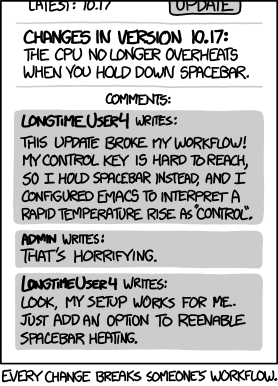
it's old, but i love this. to me it really captures something about how arbitrary design is. because, so what if your workflow is horrifying? if it works for you, have at it - but don't expect anyone else to build their products around your weirdass ticks.
if you're not listening to
this Sonny and the Sunsets track, you're out of your mind. this whole album is great.
edit: the track above crystallizes a lot of things for me. the one below isn't quite so prescient, but it's weird and honest and really fun all the same.
ideas in development
i have not figured out how to keep track of ideas that i'm developing. Evernote is (despite its features) imperfect and expensive. Vesper doesn't really have that many features. paper is impermanent and prone to being lost. Trello is a little overkill, and iOS Notes is as underkill as Vesper without being pretty.
nevertheless, one needs to save ideas. so here, in Evernote OSX screenshot format, is a list of ideas i've been developing.
a few of them are deeply related and will likely be condensed. it's also possible that some will be need to be broken down and/or expanded. some are just tweets, some are soliloquies, some are blog posts, some are just things i mull over or have some indeterminate/passionate feelings about. with any luck, they'll all be showing up here soon.
galloping gertie
it's an engineering legend, but the fate of the Tacoma Narrows bridge isn't exactly fossilized into American Cultural Heritage.
you should totally know about it, though, if only because the film of its demise is so visually weird.
of all the gin joints
i was in mixed company a few days ago and was shocked to learn that i was the only one who got (my own) reference to Casablanca. i try not to be prescriptive about cultural knowledge, but at the same time i greatly enjoy understanding cultural references, and have found that Casablanca is one of the richest source of them.
you really should see it for yourself, but i'm collecting a few key clips below.
here's lookin' at you, kid.


if you're not listening to
the new Mount Kimbie album. on repeat, pretty much always, in my head right now.
the public radio progress/mvp
last week. some real text is sorely needed at this point, but it'll have to wait for now :(
anyway, we're making some real progress. the physical enclosure is mocked up and we've got a good acoustic test going. we should have the actual amp mocked up in a few days, and will be working on the rest in the coming week or two.
the mvp is an off-the-shelf amp circuit, an ipod, and a speaker (the volume potentiometer isn't connected to anything), housed in a mason jar. it sounds pretty great, though it's tough to change tracks/channels on the ipod. luckily that won't be an issue on v1.0, which will have a fixed band FM tuner only.
test ride.
last week.
encounters in sinophobia
"hey, well - china sleepy."
as a recently freelance guy who's looking for some extra cash and every-possible-way to network, i've been moonlighting (daylighting) as a bike mechanic. this is not exactly a career move for me, but it turns out that working on bikes is something i'm halfway decent at - and, moreover, that diagnosing customers' reported issues is something that i'm well suited to. and anyway i do need the cash.
despite myself, i enjoy working there. the clientele are high end and polite, and my coworkers are totally pleasant people. they're kind, thoughtful, and respectful of each other and myself; i would even go so far as to say that i like them. i bring value to the shop, and the shop brings me value too, and there's a mutual respect that's important to have in one's life.
in a lot of ways, though, i'm not exactly one of the dudes. the kinds of things that i'm most interested in - structured systems; means of production; frameworks from which to assess the world - don't always fit into the shop discourse. i'm a stickler for argumentative reasoning, and in my experience, bike mechanics tend towards a top-down distribution of knowledge. it's not an uncommon or surprising tendency, and is one that i think is pervasive - to much benefit - in many industries. manufacturers distribute specific guidelines for how parts should be installed, used and serviced, and individual users are instructed to follow those guidelines closely. it is not a system that rewards innovation. then again, neither is commercial airline navigation, and as Atul Gawande has documented so well, the track record of professions which implement and follow preplanned procedures usually have lower levels of failure.
i hesitate to say that i pick fights about, for instance, whether a torque wrench should be stored at its lowest setting regardless of the consequences. more likely, i suspect, is the exact opposite relationship. i consider the null hypothesis because of the consequences. not only does a rigorous examination of an argument or statement of fact ostensibly increase the likelihood of my making an accurate judgment, but it has a significant social effect as well - and not one that is exclusively positive. and while i can't accurately say that i enjoy being alone in insisting that a particular widely held opinion might be wrong, i also can't deny that i have tended to put myself in that position time and time again. what this says about me and my ultimate desire to be liked - or disliked, as the case may be - i can only surmise.
- - -
i can't say why i chose to take a class in contemporary Chinese film my first quarter at college, but i did, and my decision to do so is something i have returned to often since. it's not that i took the class itself particularly seriously, but i found the content to be highly compelling. i would go on to largely ignore China for he rest of my college career, but i always took an interest when anyone i met had been there or spoke Mandarin. my enthusiasm for the history of the group of civilizations comprising what we know of as China is largely unconstrained, a fact that i have made real (and somewhat pitiful) efforts to encourage in myself and those around me. when my sister spent a year in Beijing, i downloaded some Mandarin instruction tapes and made lame attempts to get through the first couple of lessons. when i worked with a Tibetan carpenter (and friend) for the better part of year, i pestered him to tell me about his life and travels, and encouraged him to bring in some Tibetan music. and to his credit, he did - and to the discredit of the shingling contractor i had hired, an awkward period ensued.
it's tough being a bike mechanic. wages are generally low. the work is dirty and requires both technical knowledge and (unlike many auto mechanic jobs) a significant amount of customer service. moreover (unlike most construction jobs), information turns over rapidly, and mechanics are expected to keep up with new technologies as they develop.
as a part time employee whose specific intent is to be just passing through while i figure out my career, these factors don't particularly bother me. besides, i've made my peace (after years of frustration and hurt) with the bicycle industry. at this point in my life, it's just a skill i have, and a way to support (part of) my lifestyle. it also serves as a place where i can test my ability to maintain a positive outlook and interact pleasantly with a wide variety of customers - not skills i have spent much time developing in the past few years.
and so, when a job i'm working on offers resistance to my efforts, i react mostly with bemusement. not surprisingly, i have opinions about the quality of the bikes i encounter, and much of the stock product that even the nicest shops (of which my employer is certainly one) carry falls below my personal standards. i find working on these bikes to be a particular pleasure, specifically because i would, generally, consider them unacceptable for my own use. for despite my (arbitrary and capricious) standards, most bikes are simply a pleasure to ride. this fact has been a revelation to me: i will, regularly, find myself genuinely enjoying the test-ride of a bike which, just minutes earlier, i had proclaimed to be "complete crap." to be totally fair, it is the case that i have a history of taking pride in accepting my own wrongness - a phenomenon that an astute critic might point out is equivalent to acting more right about my own mistakes, and hence more right generally, than even my most astute critics. regardless, i revel in my own ability to truly enjoy the bikes that i, from a technical standpoint, like the least.
and all of this, of course, is from the standpoint of the mechanic. from a consumer's perspective, the case is even more stark. crappy product is, often times, far and away the best option. if you disagree, i would be happy to up-sell your $800 Felt for a $10K American-made bike, but i can tell you with all honesty that the incremental return on investment will be infinitesimal.
it is my impression that these facts are highly troubling to most mechanics. anyone scraping by in NYC working for $15 an hour knows that there are a few billion people in the world that would kill for a fraction of that wage, and i think it's not lost on such Americans that their hold on such relatively high wages is precarious. sure, many of these people have delusions of grandeur as likely - or unlikely - as my own (it's not only i that am making a stop as a grease monkey on my way to a career). but i have put in my time defining myself as someone of the bike world, and after i was done, i put in my time defining myself as someone apart from it - and now i'm just a guy who can, if called upon to do so, build, diagnose and fix bikes. it's possible that some of my coworkers feel similarly of themselves, but i have seen no indication of that.
viz. their highly confused attitudes towards Chinese production. keep in mind, these are, from all appearances, totally kind and fair-hearted people. a few of them speak Spanish fluently and are fond of conversing with the delivery guys (who ride, almost without exception, bikes that are dirty, poorly maintained, and generally unpleasant to work on) in their native language. certainly, nobody would think of making derogatory comments about blacks, Native Americans, or homosexuals in the shop. and yet, when the issue of the poor quality of inexpensive stock bicycles come up, they find it acceptable to deride not the Western companies that sell and distribute the product, but its country of origin.
"china sleepy" is the most succinct manifestation of their sentiments. the phrase apparently is meant to reference the laziness, or perhaps exhaustion, of the individual Chinese worker who produced the item in question.
i had not heard the epithet until recently, and it reminded me of one i encountered on jobsites many years ago: afro-engineering. i can't say i'm a fan of either phrase.
it would be one thing if these kinds of slurs were simple racism, but they're not; they are pointed criticisms of the purported inability of a culture (or, more often, group of only marginally related cultures) to produce product of a particular quality. never mind that manufacturers like Foxconn build some of the most technologically advanced devices in the world. disregard similarly that the pyramids at Giza (located wholly in Africa) remain some of the most fantastic engineering feats in history, involving a peak workforce of perhaps 40,000 workers. these sentiments ignore all reason to the contrary: the other is incompetent. end of story.
drill down a little, and you'll find the speaker will shift from the individual worker to the planners of China's economic policy. and sure, the Chinese government pegged the yuan to the dollar for about a decade. but that relationship has, since 2005, changed, and the result (as documented by Edward Lazear in the Wall Street Journal) is interesting:
The dollar-yuan exchange rate did not change from 1995 to 2005, and during this period China's exports to the U.S. increased sixfold, or at a rate of about 19.6% per year. Then, from 2005 to 2008, the value of the yuan relative to the U.S. dollar appreciated by about 21%. China's currency was "stronger" and its exports in dollars were more expensive—so Chinese exports to the U.S. should have fallen. Instead, China's exports to the U.S. continued to grow at about the same pace, averaging 18.2% per year.
The only period during which exports from China to the U.S. fell to any significant extent was during the recent recession, dropping by about one-third from late 2008 to early 2010. The dollar-yuan exchange rate was unchanged throughout this entire period. The obvious explanation for the decline in Chinese exports to the U.S. was the decline in demand for consumption goods in general.
clearly, these are complicated issues; far be it for me to attempt to reach any meaningful conclusion, here or elsewhere. my policy is simple. if you don't understand it, be interested in it - not scared of it.
a few nights ago, i was riding through the East Village and decided to stop into Dumpling Man for a quick dinner. i normally prefer the grittier spots in Chinatown, but Dumpling Man was on my way and i wanted to double-check my initial impressions of it, which was that it was okay (they serve fucking dumplings, after all, and i love dumplings) but not great.
i ordered some seared pork dumplings (texturally interesting but not particularly flavorful) and some xiaolongbao (which were abysmal) and sat on the street. the chef appeared to be Han Chinese, but the manager (or anyway the man at the counter) was white, though he seemed to speak Mandarin fluently. about halfway through my meal, a couple of girls walked up and, after some hesitation, entered the small restaurant. i could hear them discussing options with the manager, who advised them on filling options and order quantity before breaking off the conversation to holler out the window to the chef, who was leaving. they yelled back and forth, laughing at each other - completely in Mandarin - for a minute or two, and the girls stood at the counter in amazement.
i don't know what they really thought, and it would be dishonest for me to speculate. moreover, it's not as if my position - the enlightened westerner, just here to experience all the cute foreign ways of other cultures - isn't problematic.
i went to Shanghai in 2011, for an expenses-paid work trip. i had wanted to travel to China for years, and the opportunity to do so - and to visit factories there, no less - was a gift. the trip was organized by mfg.com, a website whose service is essentially linking buyers of manufactured goods with job shops capable of providing those goods. the buyer base is, as i understand it, largely Western, but it seemed to me that mfg.com's real customer base is worldwide suppliers, and that the product that they sell those customers is access to the eyeballs of a Western clientele.
the trip was fairly busy, but i found plenty of downtime - not least because i never acclimated to the time difference during my five-day trip. and so i explored on foot, visiting a variety of what seemed to be normal Shanghainese neighborhoods. i walked down sleepy streets lined with old sycamore trees. i found little food courts and gestured at crisp sesame pancakes and greasy dumplings, and found myself in low-slung slums where public services were totally ad hoc and sheet metal was the primary construction material.
i was a bit astounded that my tripmates didn't act similarly, but try to this day to understand and appreciate their methods of approaching the culture. they were mostly confined to the hotel restaurant - a place i eschewed - and squirmed as we were served eel and turtle at dinner on the town. to be fair, many of these people had worldwide procurement experience that my small-time resume couldn't touch, and many of them were able to capitalize on the opportunities the trip provided in ways that i certainly didn't. nonetheless, i got the feeling that they viewed the country as an other place, where i tried to see it as just another one.
it wasn't until my last day there that the most significant reason for this difference occurred to me. the trip organizers had scheduled a van to take a few of us across the sprawling city to its airport, and i met up with my vanmates in the hotel's parking lot ten or fifteen minutes before our departure time. the hotel was new, modern, and nice. my room cost about $200 per night, but the equivalent in New York would likely have been double that. the neighborhood was clean and had plenty of amenities acceptable to both Western and Chinese visitors. and parked in the small driveway in front of the hotel was a shiny red Ferrari. the car likely had a sticker price in the $200K range, though who knows how much the import to China cost. it was a nice vehicle, but not one that struck me as particularly unique.
i spent my formative years in Southampton, New York - one of the most vibrant resort communities in the US. in the summer, Ferraris were almost ubiquitous, and one learned to recognize cars that were interesting, as opposed to just expensive. but my vanmates - who were by all appearances intelligent, informed, and even worldly people - didn't have such a sense. and so it was i who snapped the photos of a woman from Atlanta, leaning gingerly over the hood of an Italian supercar in a nice neighborhood in Shanghai. who else was going to do it?
the previous night, i had taken a subway, and then a bus, to a decidedly normal neighborhood in Pudong, Shanghai's rapidly developing expansion zone. my companion, a Shanghainese college student who had been hired as a translator for our trip, had somewhat awkwardly agreed/suggested (we were both being a bit coy) that it would be fun to take me to Pudong for my last afternoon in town. we were both exhausted, but i was enjoying my last few hours in the country, and as she went up to her parents' apartment (i wasn't allowed), i must have looked like some weird caricature of a tourist, far from his hotel but seemingly unbothered.
she took me to a greenmarket and helped me buy mangosteens. we walked past open air restaurants, ate noodles from a cart, and went to a supermarket, where i browsed wide-eyed and insisted on buying green tea oreos. and then we returned to her street, where she asked for my business card and i awkwardly (and perhaps inappropriately) hugged her. i was emotional. i liked her, and i deeply appreciated her willingness to befriend me despite the fact that i was, for all intents and purposes, just some Western businessman in China for a few days.
- - -
ultimately, my gripe with "china sleepy" is that i don't understand who it's meant to be a criticism of. the factory workers i encountered in Shanghai, Suzhou and the surrounding area certainly didn't seem sleepy. their bosses - enthusiastic business owners, desperate for Westerners to come in and justify the doubtlessly large investments they had made in their factories - weren't sleepy either. and the companies - Western, Chinese or otherwise - that contracted the factories we saw to make parts? they're getting ahead any way they can, just like the rest of us.
the last thing i want is to condone, wittingly or not, the mistreatment of workers. and i'm no more likely (my enthusiasm for cheapish bikes notwithstanding) to buy inferior product than the next guy; i surround myself with the same collection of silly knick-knacks that one would find on Kaufmann Mercantile and Canoe. but to denigrate the work ethic of more than a billion people, and to categorically label their collective output as "crap," seems to me an injustice of equal magnitude.
and ultimately, it's more productive - and more fun - to like, and to be genuinely interested in, China. a culture doesn't survive four millennia, and multiple fractures and reunifications, without developing at the least a compelling storyline or two. it behooves us to appreciate China for that, and it behooves me to appreciate its people for the kindness and generosity i experienced there - if not for the opportunity to ride an affordable bike around the block (after a little fiddling, of course) on a beautiful afternoon in june.
-
i quit my job and relocated in early february. ↩
-
cf. The Checklist Manifesto, or, for a quicker read, his 2007 New Yorker excerpt from the same. ↩
-
you should totally know about the null hypothesis. from wikipedia: In statistical inference of observed data of a scientific experiment, the null hypothesis refers to a general default position: that there is no relationship between two measured phenomena, or that a potential medical treatment has no effect. ↩
-
n.b., "Chinese" isn't a language; you probably meant Mandarin. or Cantonese, or Shanghainese, or the five or so other linguistically distinct languages spoken in China. ↩
-
if indeed.com is to be trusted, bike mechanics (a.k.a. "bike shop;" "bicycle shop") make $20-32K annually, and are subject to significant market volatility. my current wage, were i working full-time, would annualize at just over $30K; well below what MIT claims to be sufficient for one adult and one child in NYC. it's not exactly a position you build a family on. ↩
-
i was self employed, building custom bicycle frames, from 2008-2011. my business had some limited success, but my concept, as it were, never really blew up, and in the end i mothballed it. it was a painful, but in the end appropriate and informative, decision. ↩
-
as estimated by Craig B. Smith, mark Lehner et al and reported in a 1999 report of Civil Engineering. ↩
-
the Wall Street Journal, 2013.01.07: Chinese 'Currency Manipulation' Is Not The Problem. google cached copy downloaded 2013.06.06. ↩
-
mfg.com's representatives on the trip were rather cagey about their business model and the quid pro quo relationship that they seemed to have with the suppliers we visited in and around Shanghai. nevertheless, it was clear that someone was paying for the trip, and the two buses full of buyers - whose employers had only bought them plane tickets to Shanghai (the rest of the trip, from transportation and lodging to hotel buffets and dinners at classy Shanghainese restaurants, was paid by the organizers) - certainly weren't footing the bill, at least directly. moreover, at times i had the distinct feeling that i was being courted, and that the suppliers who were courting me had been promised something in return for whatever cost of entry that mfg.com had stuck them with. ↩
-
the development of modern Pudong is legendary. in 1990, the area was low-lying and largely undeveloped; in 2010 it was home to some 5 million residents. i saw a small fraction of the city; its size is astounding. cf. this magicalurbanism.com post, with pictures. ↩
-
read: she was a girl, maybe twenty years old, who came on the trip with us for no explicitly specified reason. i have no reason to think that anything even vaguely sexual transpired between her - or any of the other handful of similar girls who came along - and my Western counterparts, but the fact remains that the relationship between the two groups was somewhat troubling. i would like to think that i related to her on a genuine and friendly level - we became friends on facebook, and i received a postcard from her a few months after my trip - but in all honesty i can't say what her (or my own) intentions were. for what it's worth, it was genuinely interesting to gleam her reactions to the factories we visited; she provided a perspective i could not have seen otherwise. she also humored my pronunciation questions quite charmingly, and, as described further here, invited me into her neighborhood and showed me a totally compelling view of her city. ↩
why conservatives hate citibike
from new york.
how to carry things on your bike
creatively.
as summer1 progresses and the weather gets warmer, my modes of transportation shift dramatically. i love proper, miserable East Coast summers, and revel in the fact that everyone is uncomfortable all of the time. i even revel in the shear hotness of movement; in the fact that just walking turns you into a wilting rag on legs. but socializing with a rag on legs isn't all that impressive, and so i try to take measures to mitigate the weather's affects on my lifestyle and appearance.
a year or two ago, i bought a nice book bag for carrying things around on foot. i like it a lot, but backpacks fare poorly on a bike, especially one with an agressive cockpit geometry. i also own an old and not-too-big messenger bag, and use it whenever i absolutely need to carry any significant payload. regardless of the context, though, i take whatever measures i can to keep myself light, nimble, and well prepared. i keep a tool pack and some sort of lighting with me at all times but don't usually carry water, which is ubiquitous and (relatively) inexpensive. my everyday bike is sturdy, simple, and maneuverable, and i try to keep my person and personal belongings that way as well.
the actual clothing you wear is relatively easy - you wear as little as possible, and as little cotton as possible. capilene (ish), nylon and merino are my go-to options. shoes can be tricky but i have good luck with my Jordan 1s (i've put significant thought into my pedal setup for this) and am likely to ride with Sidis and Time cleats for much of the season.2
but wearing cycling specific clothing, however casual, leaves you looking like a cyclist (let's face it: not a good look) when you arrive. moreover, i find that no matter how much i plan, getting on a bike without a lock is a dangerous proposition.3
if i'm wearing jeans (the only pants i'll wear on a bike these days), i carry a mini u-lock in my right pocket.4 otherwise it's in my left hand, which tends to be fine for short distances but shitty over long periods of time. one deals.
my toolkit lives in an Ortlieb seat bag, and i generally can fit something extra - about the volume of a wallet and a phone - in there if i need to. but anything beyond that - clothes, a laptop, sunglass cases, etc - get tricky. sure, my timbuk2 is fine, but it's a nuisance when i'm not actually riding and generally leaves me sweaty as hell. i like it when it's necessary, but the rest of the time i avoid it like the plague.
one approach i've taken is to carry one of my many giveaway Rapha musette bags in my saddle bag. volumetrically, they're somewhere between a sugar packet and a wallet when folded, but they'll hold a six pack and a rolled-up t-shirt in a pinch and can be slung over the shoulder easily. they're totally convenient and very useful as an impromptu shopping bag.
otherwise, i've been getting some use out of these Velco one-wraps recently, and am keeping a few of them in my saddle bag as well. you could do a lot worse than strap stuff to your toptube, and they do a decent job at that.
ultimately: we'll all have drones. i know this sounds silly, but as the price drops i can envision even small employers buying - or better yet, renting - access to small private drones for day-to-day use. during the day they can be used to send packages around from office to office, and in the evening they can be used to drop bins of employees' work clothes off at their homes for laundering and reuse. forget the impracticality of installing showers and lockers at work; just lay out your outfit a night in advance and schedule the company drone to pick it up and leave it at the office for you to put on after your ride to work.
what, you think amazon isn't thinking of this too? it's the future, baby. and it'll be cool.
nb - as you may have noticed, i'm working out my annotation and formatting skills. thanks for humoring me.
-
you know, civil summer - the time of the year when it's really hot. don't pull that "between the solstice and the equinox" shit on me.↩
-
i ride road shoes. i have little understanding why anyone would ride anything else. you're going to clunk around either way, so just deal with it and get something unfashionable. besides, do you think your Chromes look cool?↩
-
except training rides. no locks on training rides.↩
-
i keep my wallet and a notebook in my left back pocket and keys & a pen in my front left. my phone is in my front right while on foot, but sometimes stays in a shirt pocket while on a bike.↩