Manufacturing guy-at-large.

One type of swing, etc.

Added on by Spencer Wright.

A number of things struck me about this Cubed podcast from a week or two ago, which was primarily a discussion about Apple's place in the market. They're all a bit non sequitur, but I think there's a lot of insight here. Throughout, emphasis is mine.

The discussion started out with Horace Dediu talking about what he calls "the innovator's curse." He applies it to Apple, with the point being that although Apple has repeatedly demonstrated an ability to produce massively successful products, financial analysts use that fact against them - expecting a regression towards the mean. He cites a quote by Steve Jobs as a jumping off point: "Babe Ruth only had one home run, and he kept hitting it over and over." The conversation takes off from there; here's Dediu:

So, Apple is in the business of hitting home runs. And I would use the analogy of Pixar, which only makes blockbusters - they are just a blockbuster manufacturing company. If you *knew* that any company was only in the business of making only home runs, then you would conceivably price them as a discounted current value of all of the home runs they might hit. Why is it, then, that Apple isn't valued at even the net present value of all of the current products that they have? And actually, the expectation is that the iPhone will diminish, and go to zero, and thereafter the company will be worth nothing. That is indeed what you would get if you did the simple arithmetic of their P/E ratio...So my point was that if [Apple's ability to produce successful products] was a repeatable process, then why doesn't the market believe that it's going to actually repeat? ...so [the innovator's curse] is that you've proved that you can do something over and over again, but nobody believes you. In other words, you've done five home runs in a row, and the expectation the next time you're at bat is that you will never hit another home run, *ever.* That's how the market thinks, and it's believable to think that way. Because they say "it's hard enough to hit *one* home run - how do you expect that you can hit *six*?"

So if you use the markets as they were originally conceived, as a source of funding, and you've had six home runs in a row and you go back to the market to raise money and say "give me the chance to hit seven," and they say "no way - we're not going to give you a penny."

The more successful you are, the more likely it is that you won't be to get funding going forward. And that's why Apple needs so much to have the [financial] resources internally - because no one will trust them.

The consensus on the podcast is, of course, that Apple's success *is* repeatable, and that the market has it wrong. 

Later, Benedict Evans on Apple's resurgence:

One of the things that strikes me is that in a sense, Apple has been doing the same thing for 30 years - it's just the market's changed. So Apple has always been about product fit & finish and the user experience, and not going below a certain level of quality in order to hit a certain price point where there's a market opportunity. And in the days of the PC industry, that model didn't work, because that wasn't how PCs were bought. They were predominantly bought by corporate buyers who wanted 500 with a certain number of features and a certain price and they were going to go under the desk so they didn't care what they looked like and they were never going to be configured after they were bought, so they didn't care what the user experience was. So Intel had product-market fit, but Apple didn't.

As we've now come around to the smartphone and the tablet world, products are bought in line with Apple's values - with the way that Apple tries to make products. And so part of the reason that Apple has been winning for the last ten years, say, is that the market came around to where Apple was, rather than that Apple created out of thin air some amazing product that nobody could have conceived of before.

Next, Evans again on Apple skeptics:

If you don't see what the common thread is between Apple's products, then you will think that each one of them was somehow some unique stroke of genius. And it's only if you see what it is that unifies all Apple products, and their approach - and it's not unique to Apple, you see the same kind of product quality in Nokia Lumia phones, for example, which are lovely pieces of hardware which aren't selling for a bunch of different reasons; or you can see it in some HTC product, or in some Sony product, but you probably don't see it in some South Korean product.

But if you come from position which says "I don't see any difference between an iPhone and a high end Samsung and a high end Nokia," then you will look at the iPhone with a degree of mystification, and you will say that it's somehow because of marketing, and it's because Steve Jobs had some unique genius to create that product, rather than seeing that it flows out of an underlying approach to creating product. It's a bit like the way that communist governments used to explain failure by saying it was sabotage, because they couldn't actually understand what the real process was that was causing the problems. That wasn't something their mindset could deal with, so it had to be sabotage. So you get a class of minds that look at Apple products and say "Well it's all a fad."

And Ben Bajarin on the importance of having a shared vision, regardless of what it is:

They [Pixar] believe that they are making the best motion pictures on the planet. And what is key to that is [Pixar employees] believe that these things are the best, and their talent and skill sets validate that and actually create the best. And so it comes down to the talent thing: you've got to have the right people with a shared vision about what the best is. And the best is going to vary. What's the best for Google might be very different from the best for Amazon or the best for Apple. But the point is that you acquire these people who share a vision of what the best is. 

And so you read this article about John Lasseter and these guys at Pixar and they'll say "We were working on this movie and halfway through we realized it really wasn't what we wanted it to be. And so we said well, we could ship it, or we could work a *ton* of overtime and stretch ourselves and really it right." And that's what they did - whenever they saw those things happening, they worked their tails off to make it right. Because they were so proud of what they were creating that they basically said "If I'm not willing to put my name to that, then I'm not going to ship it." And whether that meant being patient, whether that meant a complete restructure...

The culture is both dependent on a shared vision of what the best is - so for Apple, it's "what are the best personal computers on the market," or "what is the best products on the market with the best experience" - like I said, their vision might differ from Microsoft's and others' - but it comes back to hiring the people who believe that that is the best, and who more importantly will not ship a product with their name on it unless they believe that [it is the best].

I really recommend listening to this show yourself - it's got a lot of really interesting analysis and dialog.

Laura Klein

Added on by Spencer Wright.

From a 2009 blog post titled "6 Reasons Users hate Your New Feature."

The truth is that users will often ask you for a solution when it would really be more helpful to tell you that they have a problem...users aren’t great predictors of which brand new features will be big hits. Sometimes users will tell you that they want a toaster in their car, when what they really mean is that they don’t have time to make breakfast in the morning.

Little American flags

Added on by Spencer Wright.

From "That 'Made in U.S.A. Premium," NYTimes, 2013.11.30. Emphasis mine.

“A while back, we thought we’d stick little American flags on the products made in America,” said Frank Blake, chairman and chief executive of Home Depot. He said he had figured, based on the prevailing marketing wisdom, that customers would flock to the items. “But whatever segment really cares about it doesn’t make much difference from a retail perspective.”

So retailers are focusing on the quality when trying to justify the higher cost of American goods. The exception to Mr. Blake’s rule comes when buyers are willing to pay more for perceived quality. A majority of consumers, rich and poor, say they believe that American-made products have higher quality than imports, according to the Times survey. Fifty-six percent of those making more than $100,000 said so, as did 67 percent of those making less than $50,000.

Lands’ End promotes its American manufacturers as “the highest-quality companies, working with vendors and artisans.” New Balance says its American products are made by “highly skilled craftsmen.” At L. L. Bean, bags are “still made by us here in Maine from practically indestructible cotton canvas.”

“With higher-end fashion goods, where it’s made is an identifying source of quality,” said Anthony Dukes, an associate professor of marketing at the Marshall School of Business at the University of Southern California. “But at the lower end, I don’t get a sense that people pay too much attention to where it’s made.”

Reclamation

Added on by Spencer Wright.

I believe this model was made by Paul Deyo; I grabbed the picture from this Fusion 360 hangout.

In the back is a mesh model, scanned from a physical part. The part was then brought into Mudbox and retopologized, then converted to a T-spline body before ending up as NURBS. 

The cool thing about this is that you start with a piece of extant hardware and end up with a well defined, symmetrical, editable part. This is really, really powerful. 

Get the Facelift

Added on by Spencer Wright.

From "Life Goals Matter to Happiness: A Revision of Set-Point Theory," published in 2006 by Bruce Headey, of the German Institute of Economic Research. Emphasis is mine; note that SWB is an acronym for subjective well-being.

SWB theory, as currently understood, has the depressing implication that one's level of happiness is extremely hard to change because it depends on characteristics one was born with or which are developed early in life. The most widely endorsed theory at the present time appears to be set-point theory...All these theories claim that a person's set-point or baseline or equilibrium level of SWB are near-automatic consequences of hereditary characteristics and personality traits. Conscious life goals play no role in these theories and major life events are viewed as having only a transitory effect.

In recent years there has been some questioning of set-point theory and its relatives. Some life events are so severe that victims never recover back to their previous set-point or equilibrium level. One such event is the unexpected death of a child...Repeated spells of unemployment, although not a single spell, have been shown to have a 'scarring effect' from which most people do not recover...Getting married temporarily raises the SWB of most people, but then most revert to their previous set-point. Entertainingly, the only positive life event which has been unambiguously shown to raise the SWB set-point is cosmetic surgery.

I should note that the takeaway from Headey's paper is that people who pursue non-zero sum goals generally have higher levels of subjective well-being. Basically, you're better off orienting your life towards family, health and altruism than towards financial success and social status. Heady also investigates internal locus of control as a factor in SWB:

People who have an internal locus of control believe that they can to a considerable degree control their own lives, that success or failure are in their own hands...There are theory-based reasons for believing that success in the pursuit of life goals may be related to internal locus. People with high internal locus tend to be persistent in pursuit of coals and have relatively good coping skills. By contrast, people who rate high on external locus of control tend to believe that outcomes are due to luck or the influence of powerful others.

So:

What makes for a happy person? Part of the answer seems to be a personality characterized by a high level of extraversion and a low level of neuroticism, coupled with a desire to pursue non-zero sum family related and altruistic goals...Such a person is likely to be happier in the first place, and to have a reasonable prospect of becoming happier over time. The role of internal locus s interesting in this context. Internal locus is probably best not thought of as a more or less fixed personality trait like extraversion or neuroticism. It is a disposition to take responsibility for one's own achievements and failures, and this is associated with persistence/perseverance and good coping skills. It is tempting to suggest that internal locus may be the link - the link in terms of perseverance and skills - between having non-zero sum goals, pursuing them effectively and increased life satisfaction.

So: Work on your priorities, and put family, friends, and health first. Take responsibility for your failures and accomplishments.

And in the meantime, get the facelift.

Public Radio hardware

Added on by Spencer Wright.

For a variety of reasons, the Public Radio was due for a complete hardware redesign (the potentiometer wasn't fitting, and so a smaller speaker was required... etc.). I got that mostly done this afternoon - modeled the new speaker and a knob, and redesigned the lid to fit them.

I'm not totally sure how I feel about the grille design, and if I had to bet I'd say it'll change soon. I'm also curious whether we can fit everything in the next size smaller jar, which is the same footprint but half the volume and *really* cute. Previously, we chose this jar so that a deeper speaker could be used, but the one we're planning for now is tiny - despite its good power output.

I'm hoping to get this new lid printed and delivered next week, which is about when the electronics should be coming together. Stay tuned.

Other stuff.

Added on by Spencer Wright.

Among various other things, I've been scheming with Christy on some leather based stuff. These parts are laser-cut, and will be assembled into pre-production samples of the wallet that I designed and made for myself in 2010. 

This project is likely to develop slowly over the next few months. I'm enjoying it, and looking forward to moving it forward.

Yeah.

Added on by Spencer Wright.

It's subtle if you haven't been looking at this the past few weeks, but this model has seen a bunch of improvement in the past two days. These interior surfaces, and the variable fillets connecting them, are pretty cool.

Update: The Public Radio

Added on by Spencer Wright.

I'm not going to go into the details here - it'll be posted on the Public Radio Tumblr soon - but Zach and I have spent a bit of time reconfiguring our MVP in the past week. The result should be done next week (pending a new 3D printed lid prototype, etc) and will cover all of the functionality of the end product. Right now it's a protoboard, an Arduino Pro Mini, and a couple of (meh) Sparkfun boards.

The shitty thing is finding a potentiometer that will work well. It should be a 10K pot, logarithmic (audio) taper, with a switch. Unless I'm missing some hidden trove, there are about 7 parts in the world that fit those criteria and are stocked in quantities of more than a dozen. And then 5 of those have PC pins, when I think I'll end up needing solder lugs... it's a huge PITA. 

Anyway, the project is moving along. More updates soon.

Also

Added on by Spencer Wright.

Variable fillets are cool.

It's a little hard to tell, but I'm filleting an edge on the interior of the part here. Because of the particular geometry, I really want the fillet to be big in the middle and small on the sides, so I define multiple points on the edge and tell Inventor to blend fillet radii along the edge.

It's worth noting that all of this is some decidedly 21st century shit. Which I think is cool.

Less sketches, etc.

Added on by Spencer Wright.

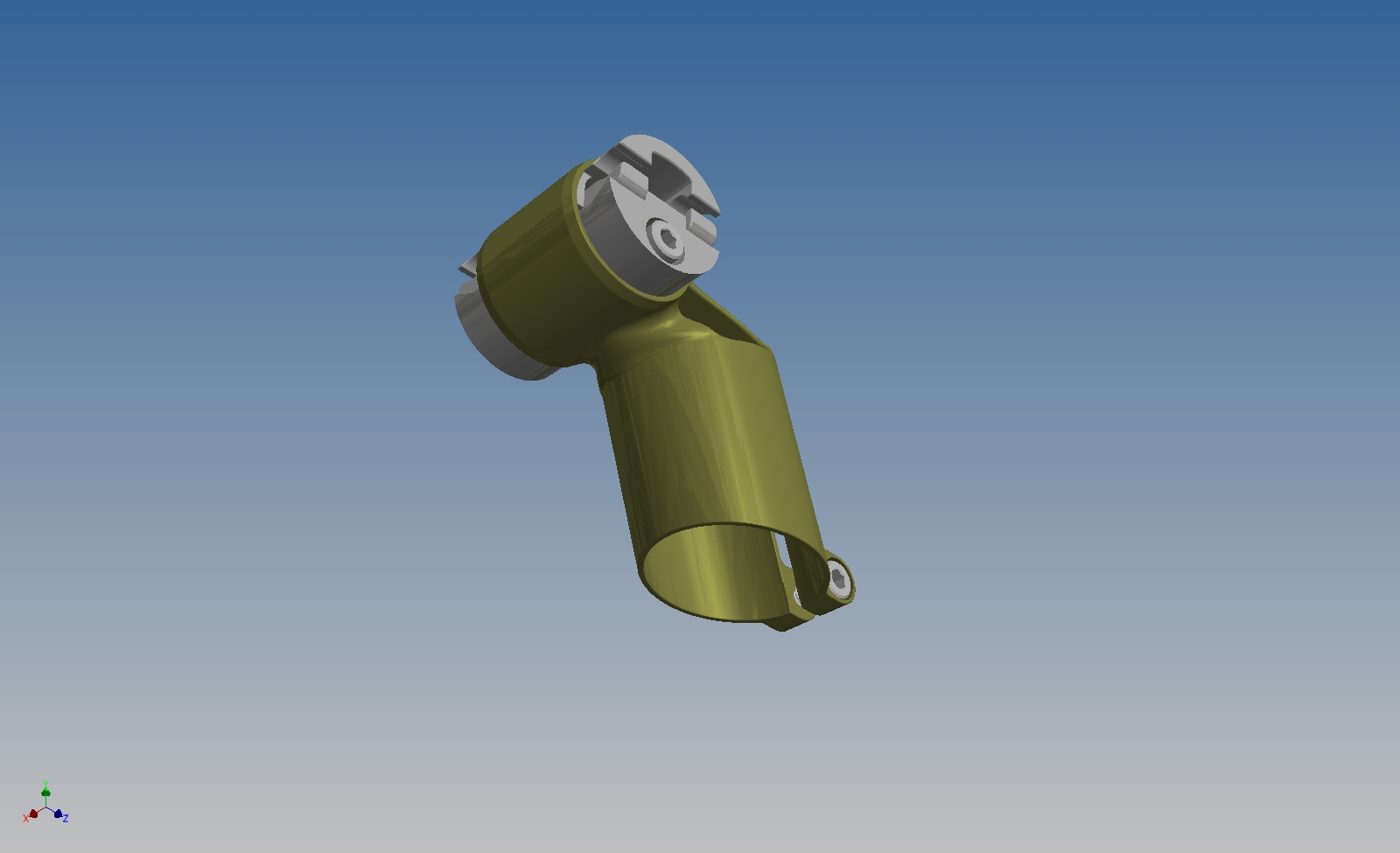
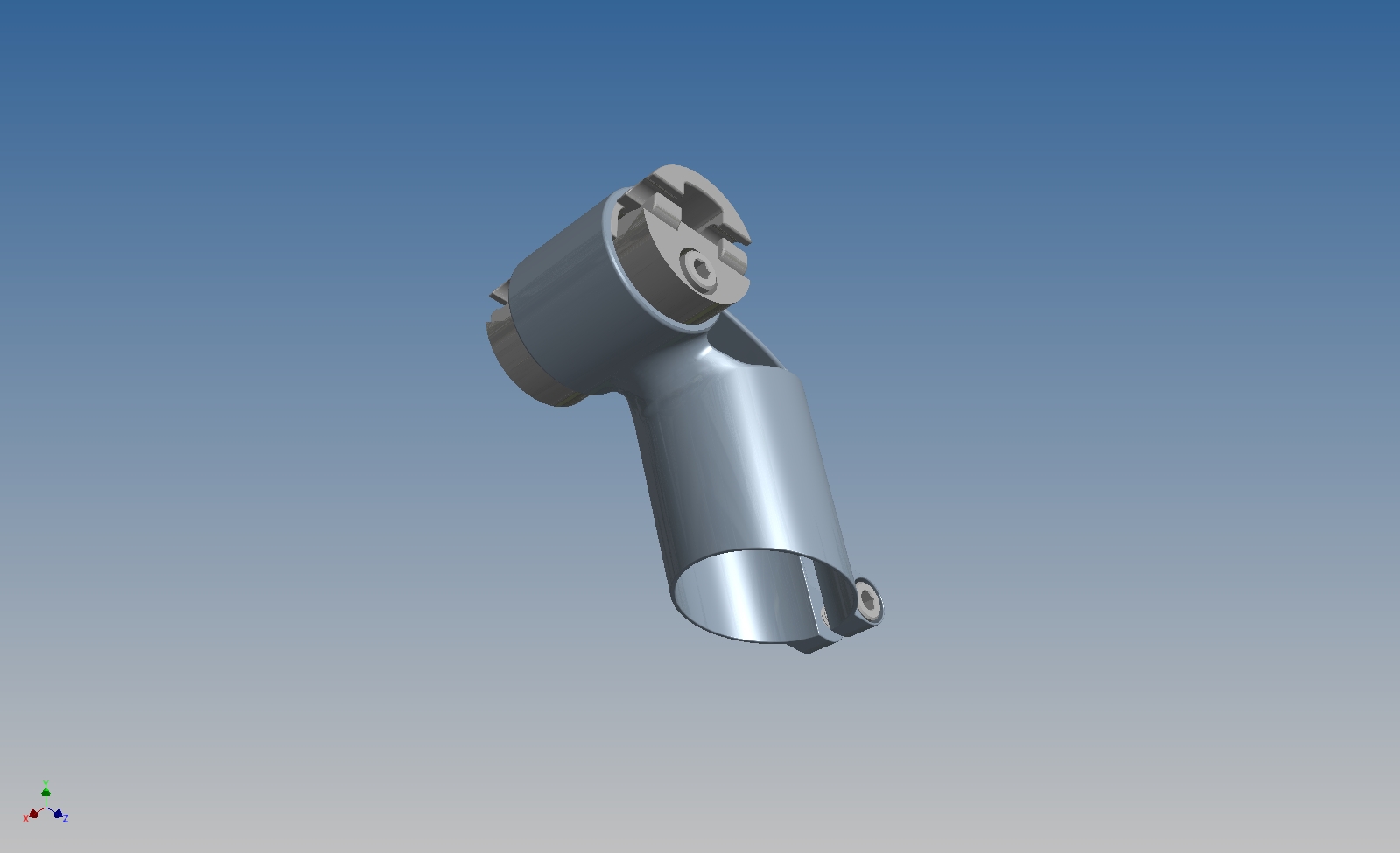
TOPPER PROGRESS UPDATE! Prettier, lighter, stronger.

I ended up rebuilding this model completely today. This is 100% NURBS surfaces, and is about 80% of what I want it to be... which is just about right, considering where the product is at, lifecycle wise.

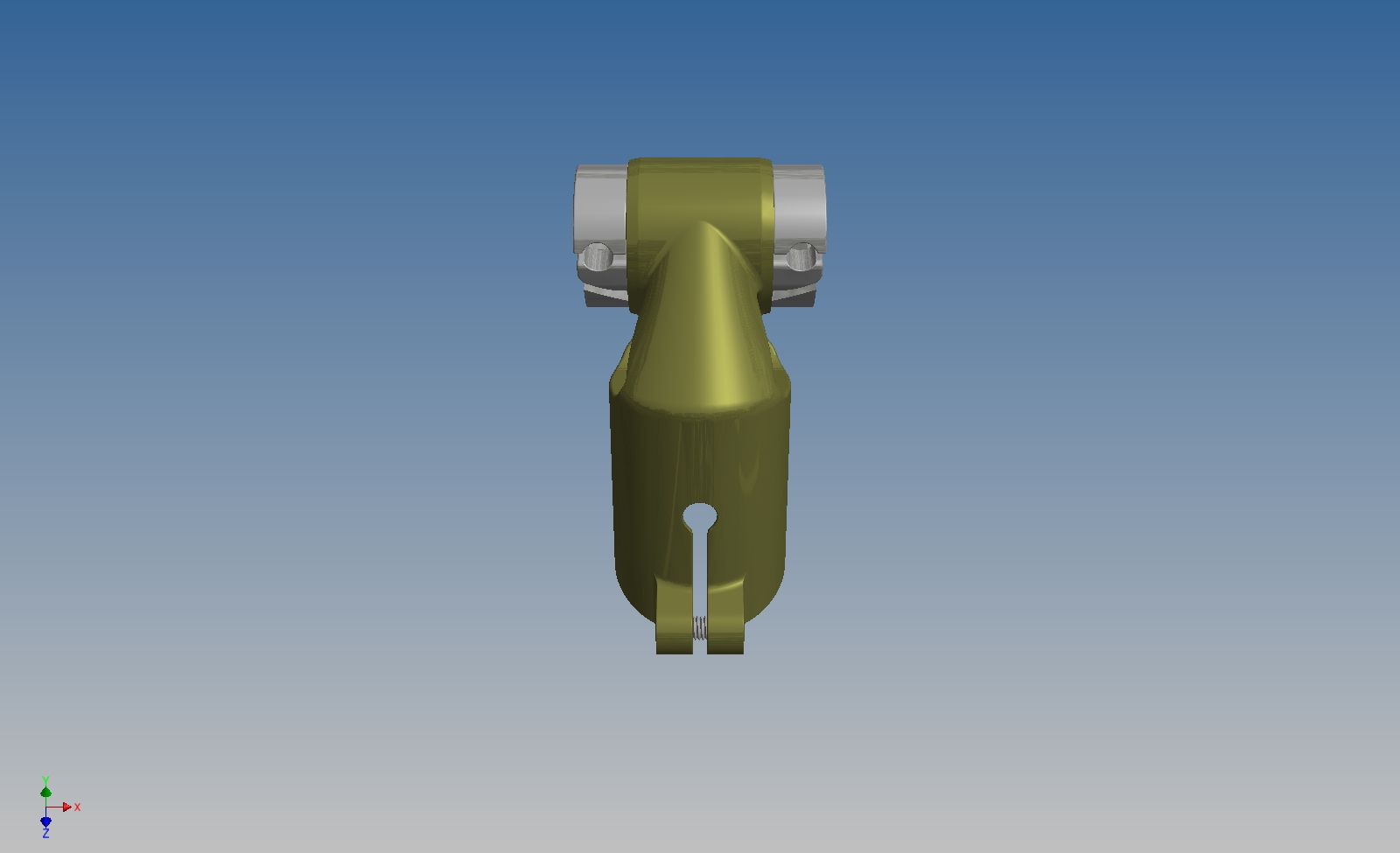
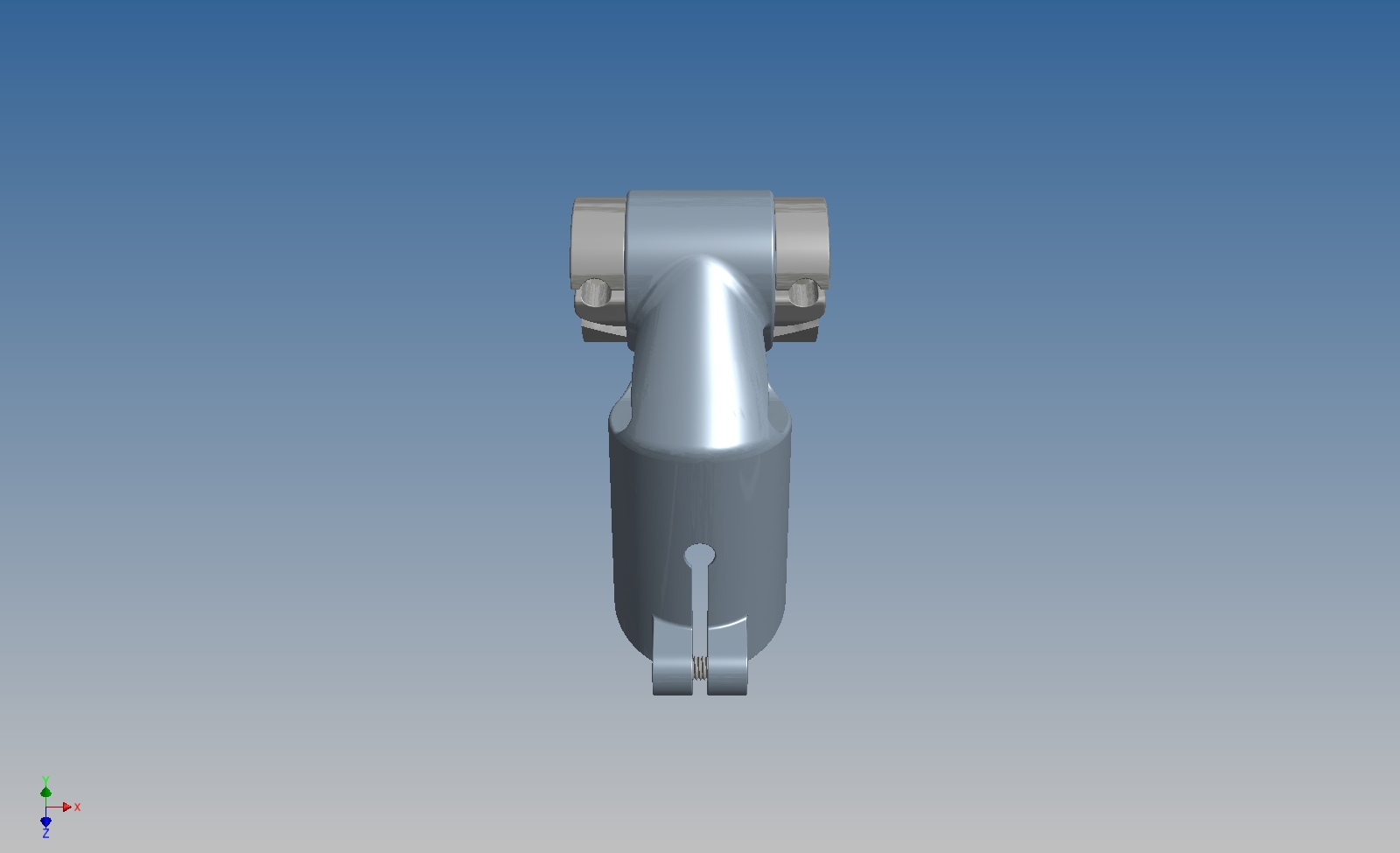
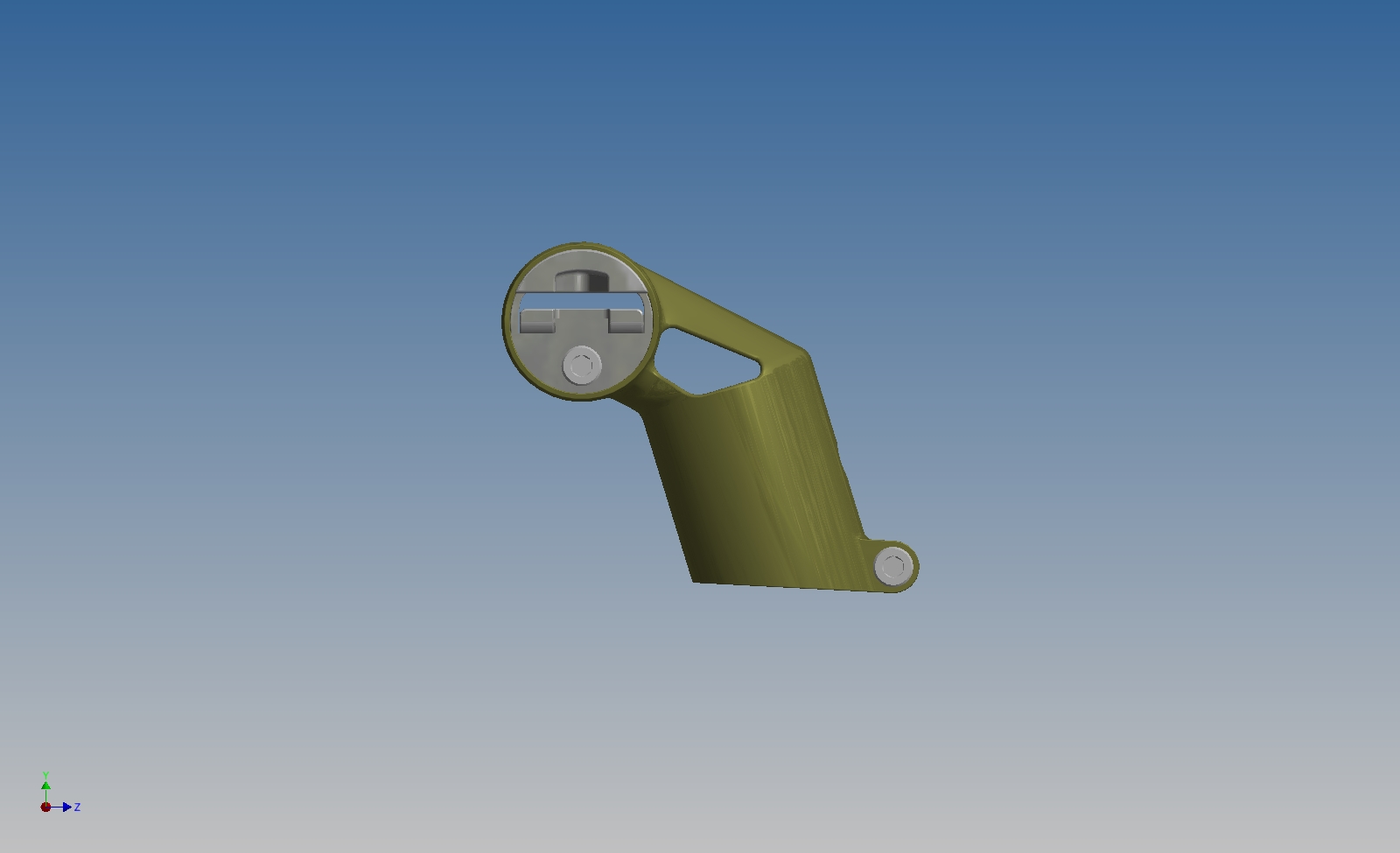
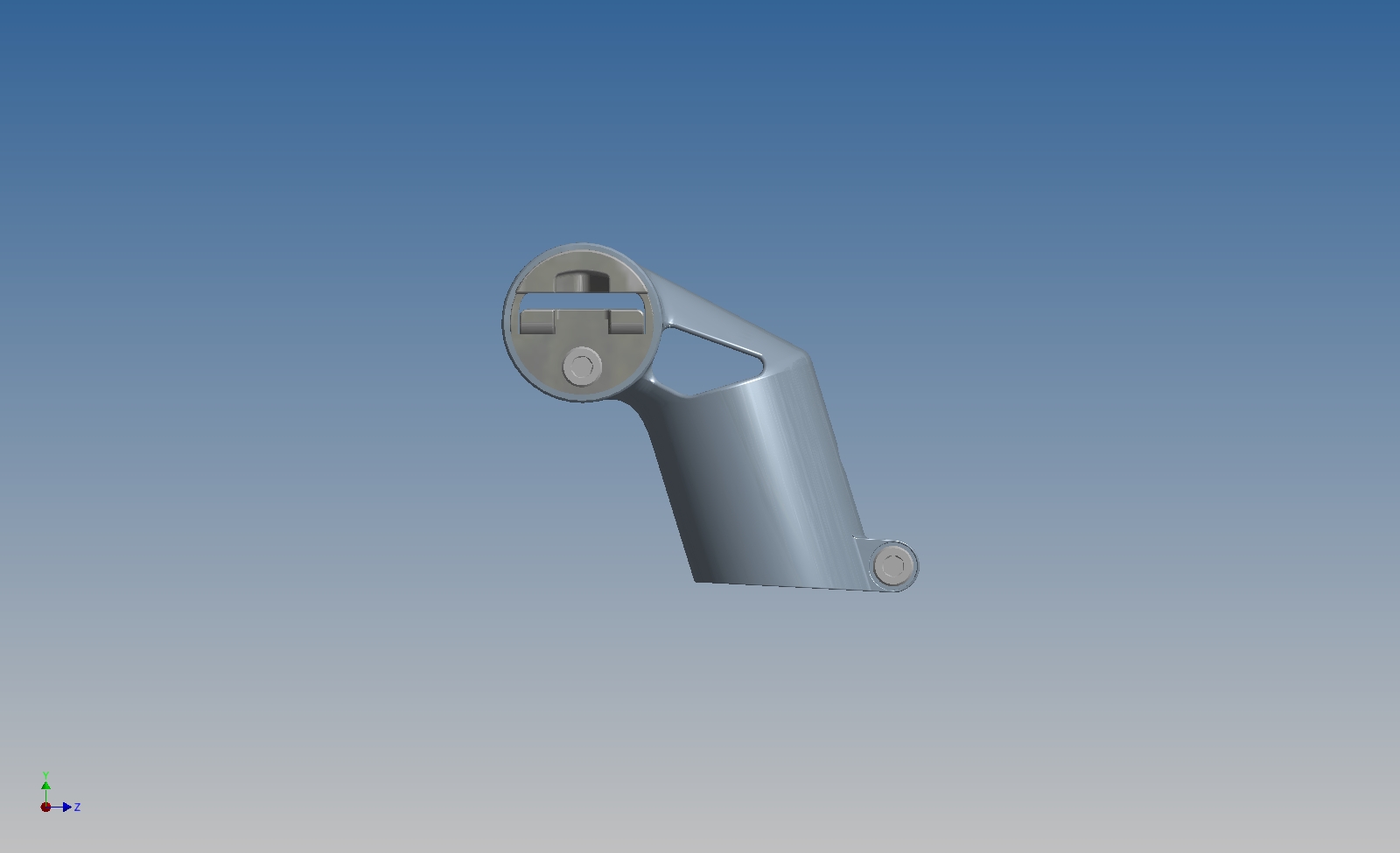
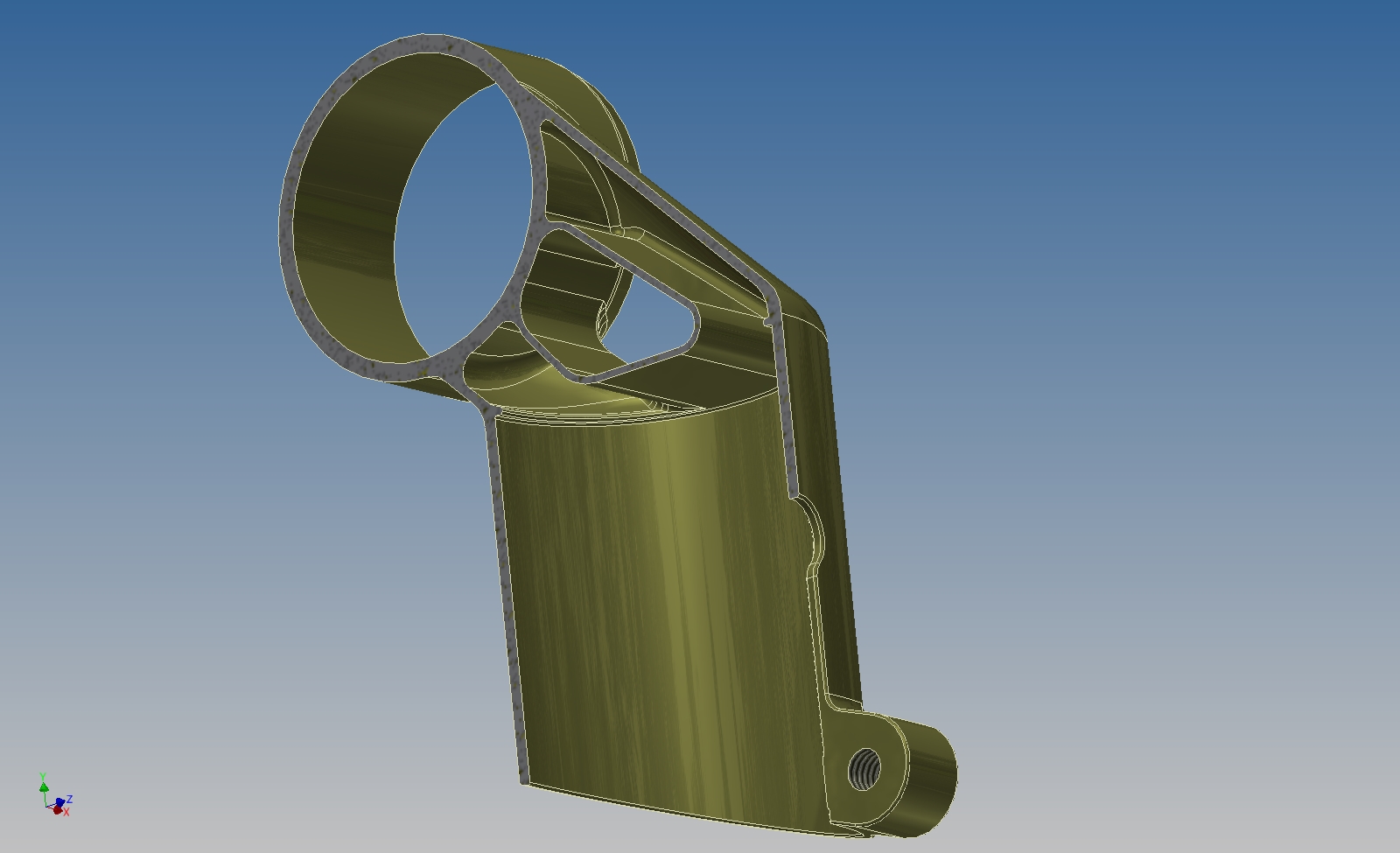
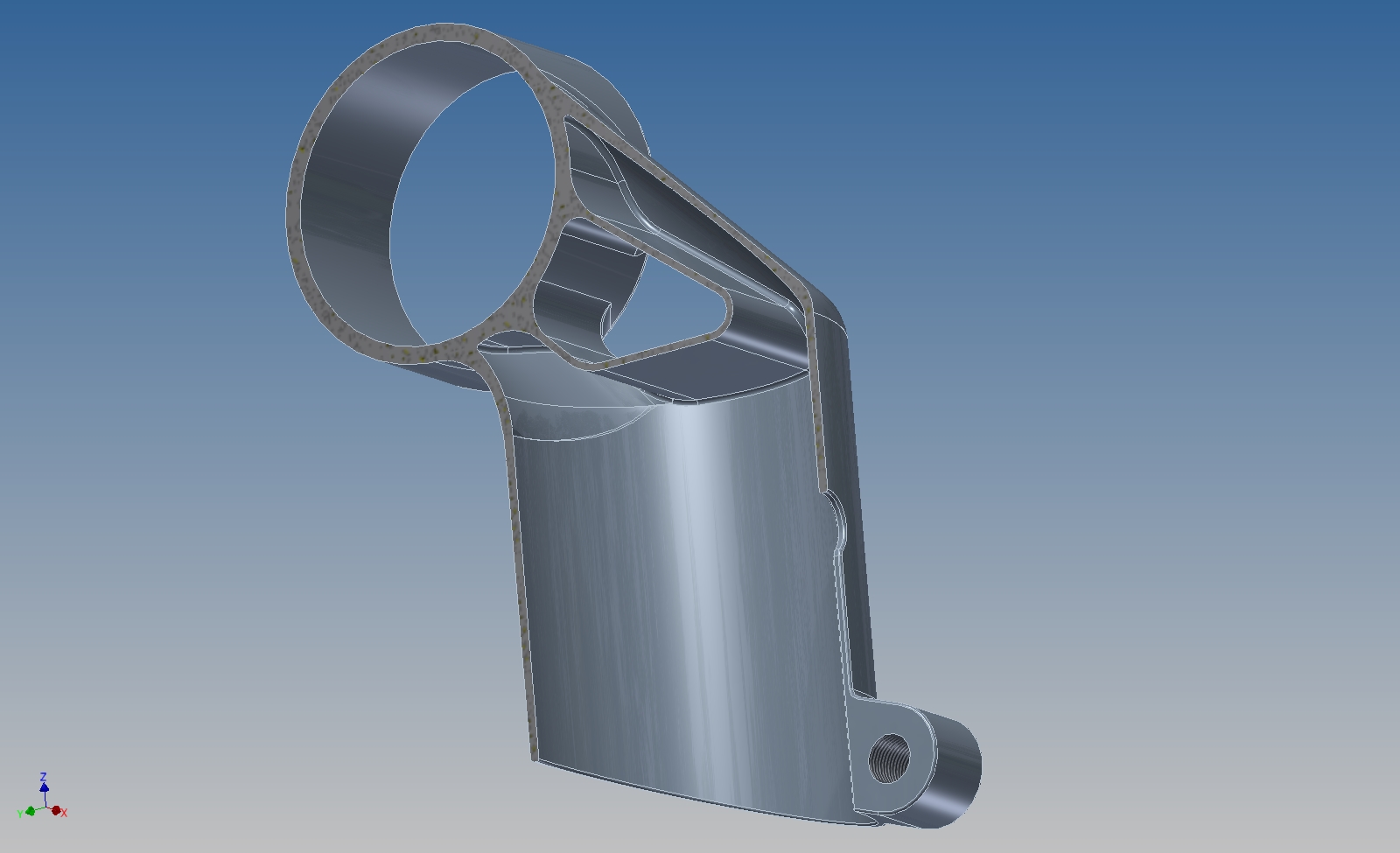
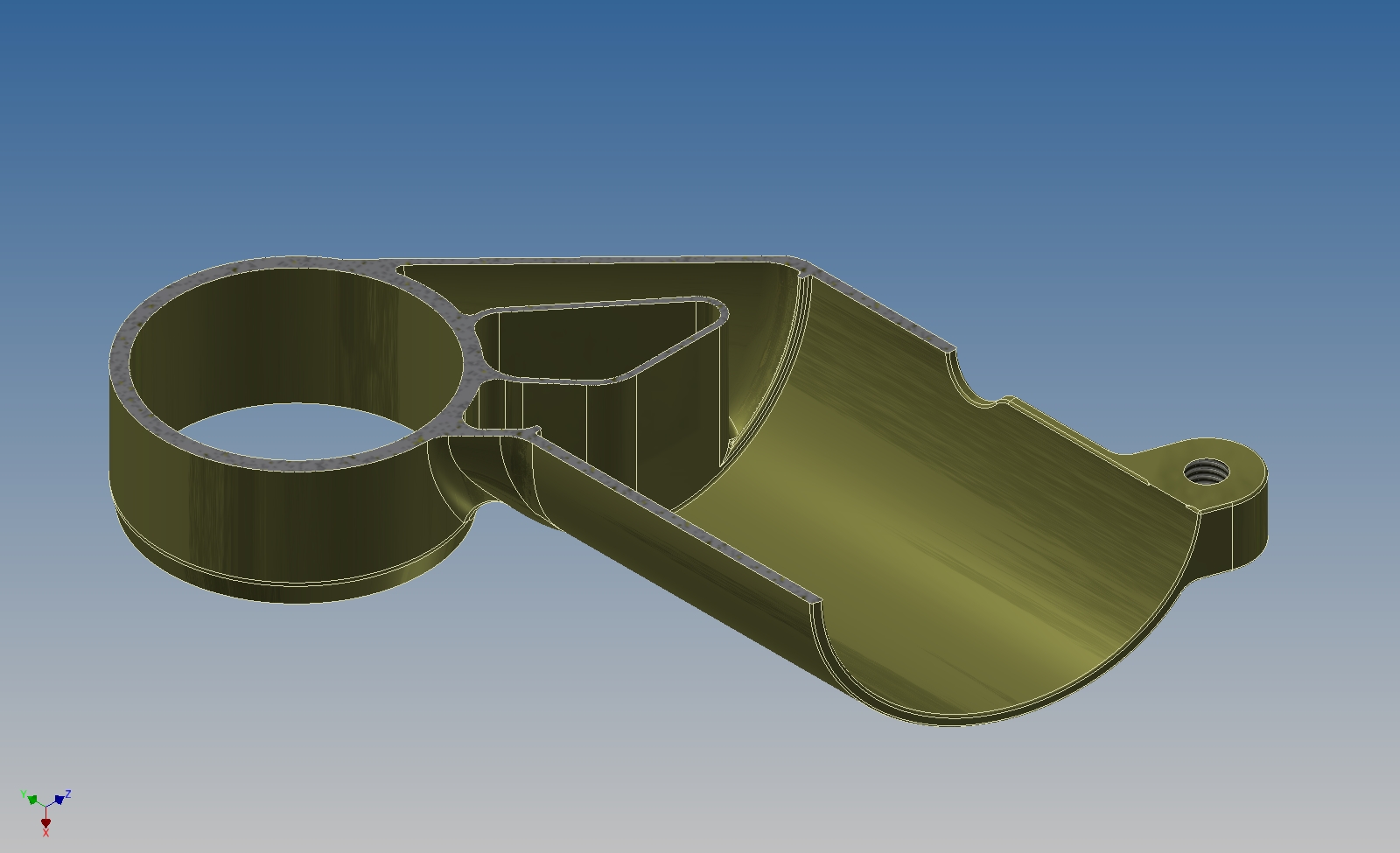
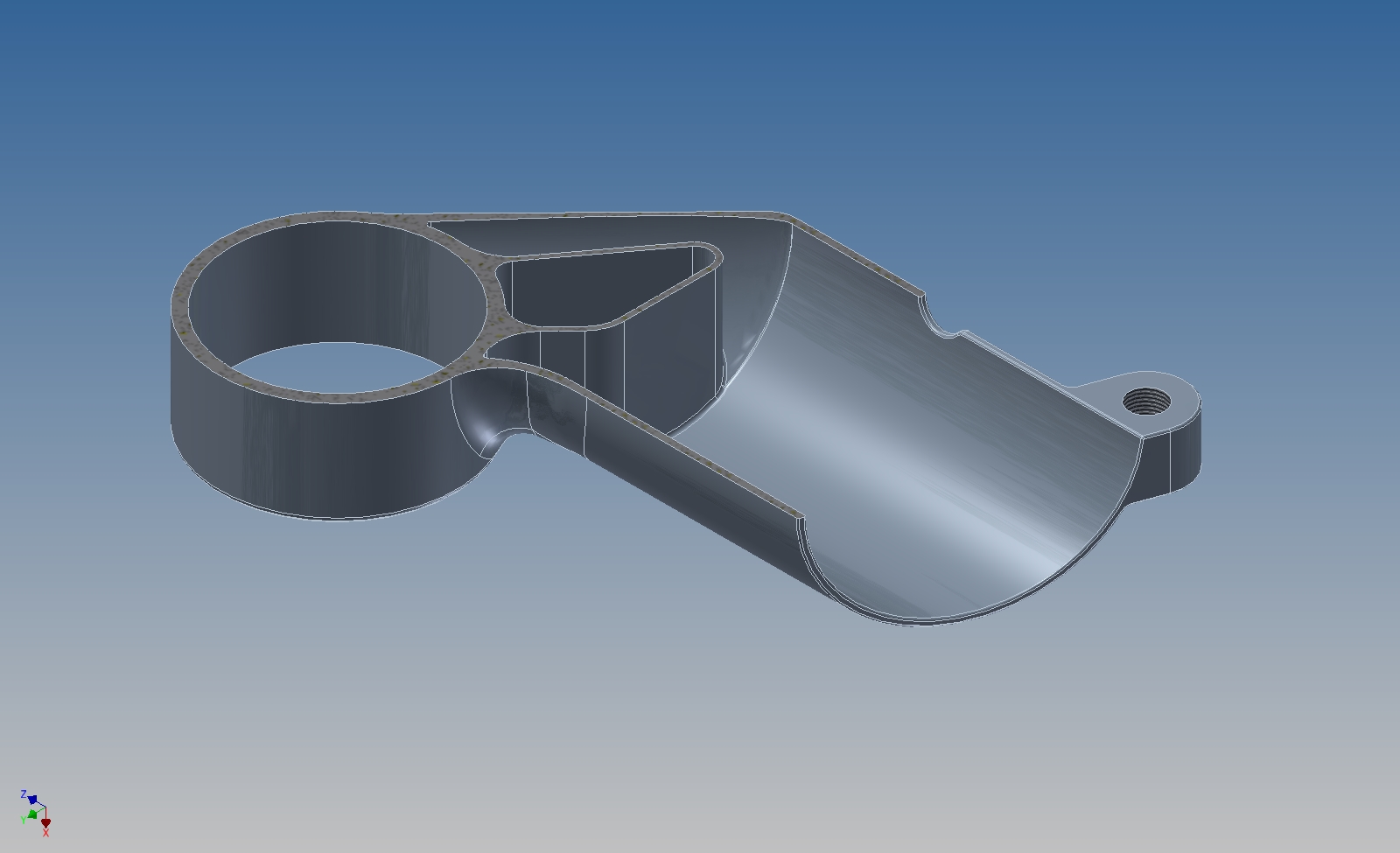
In all of the mini-galleries below, the new part is shown in blue-silver; the old model is gold. 

The most noticeable change is in the bottom/rear of the lofted middle portion. I added a few rails to guide the outer surface, and worked to blend the loft more with the clamp body - and the barrel.

The front of the part looks pretty similar, but the bulge in the back is now gone, and a number of the transitional surfaces are more fully blended.

I also optimized the window shape a bit in order to reduce stress in the corners. 

But the bigger changes are on the interior surfaces. There, I created fully tapered faces, which distribute material just where it's needed. The resulting structure is lighter and less prone to failure. It's a bit hard to see, but the new part has an arc-shaped inner wall on the top right, and the bottom left wall of the lofted transitional portion has a completely different - and much improved, I think - shape.

You'll also notice that I removed the little ledge around the perimeter of the inner diameter of the part. It was originally intended to be a hard stop for the seatmast to bottom out on, but I was able to eliminate it - while retaining the core function - but moving the window's bottom edge to the same plane. 

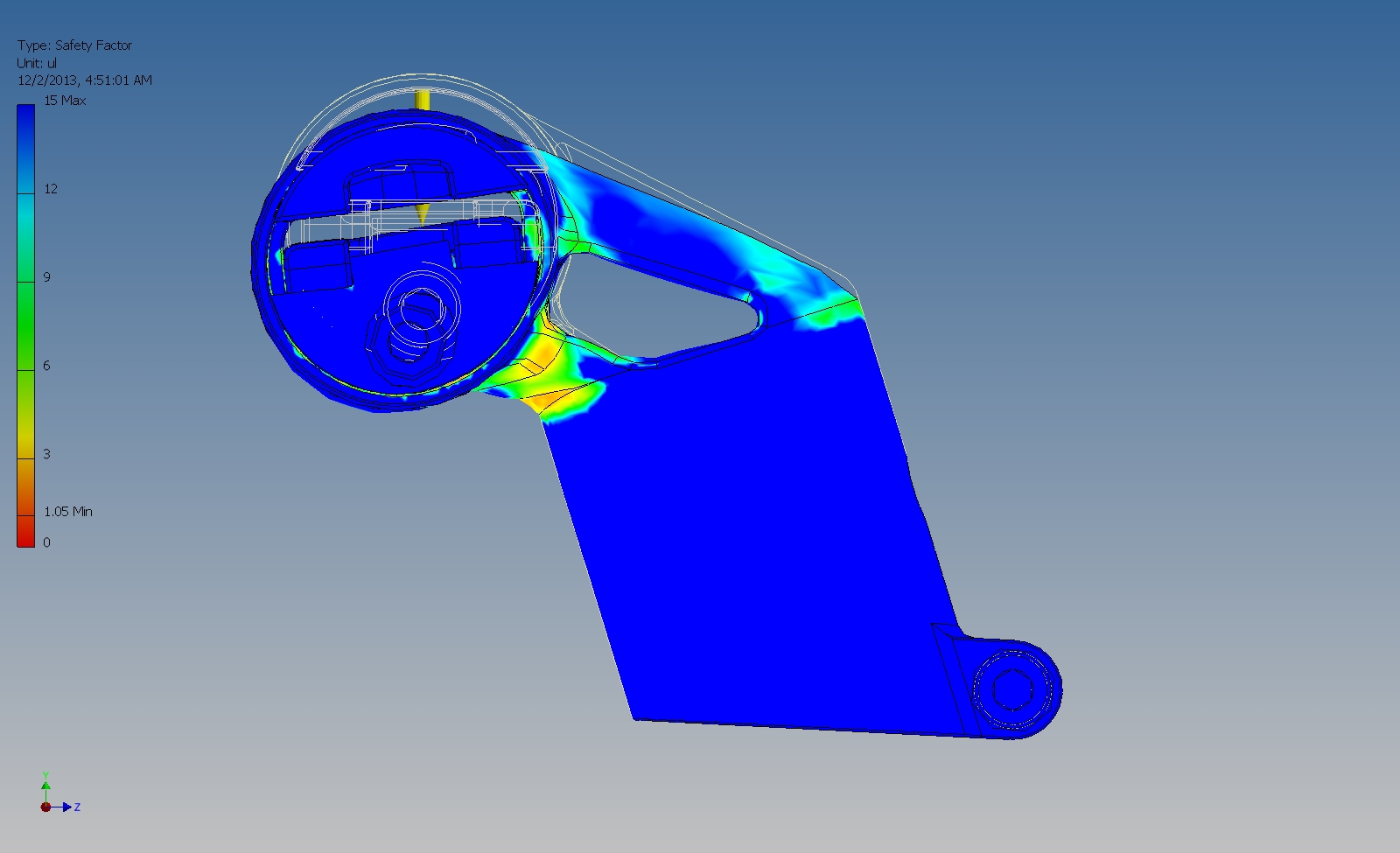
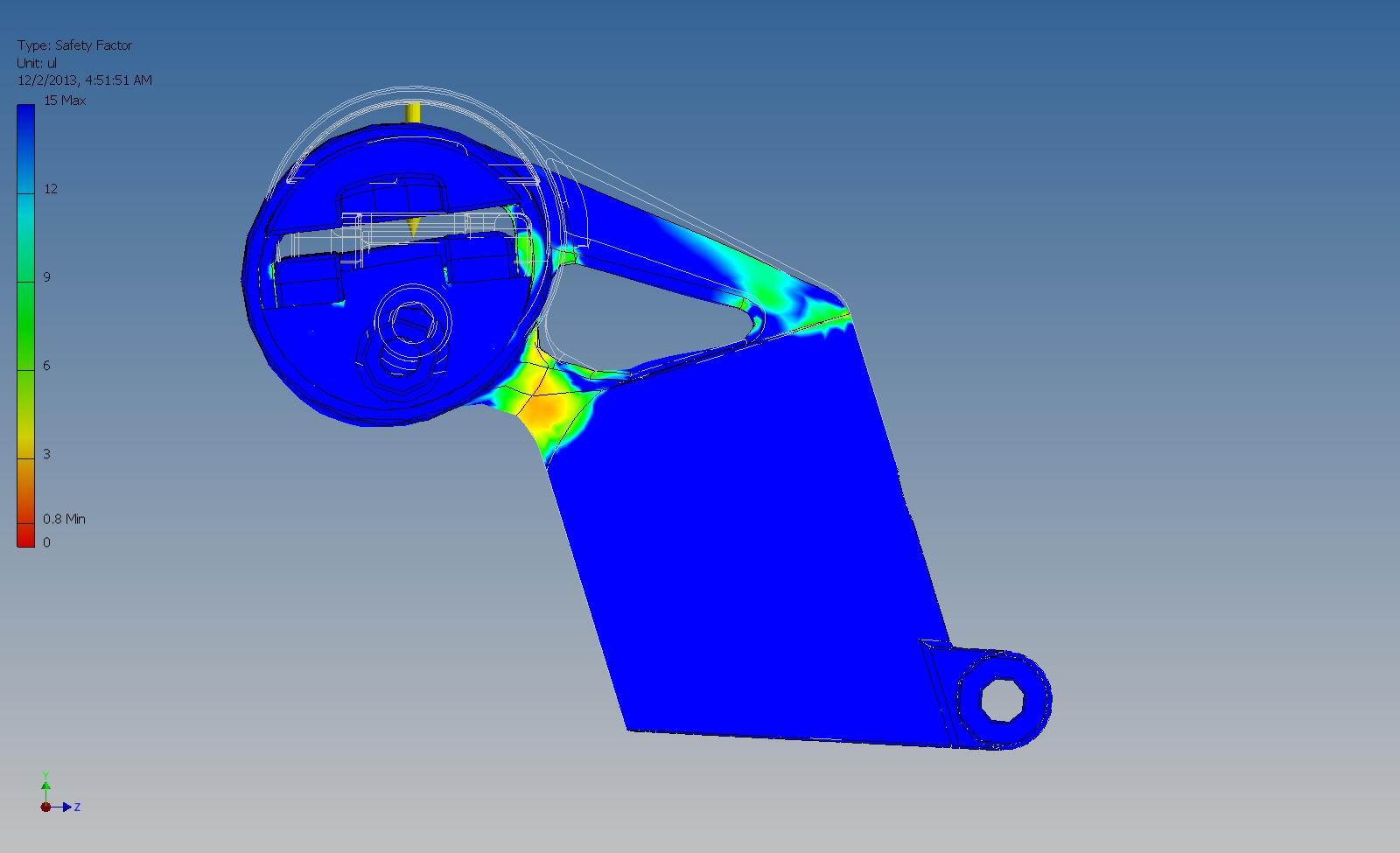
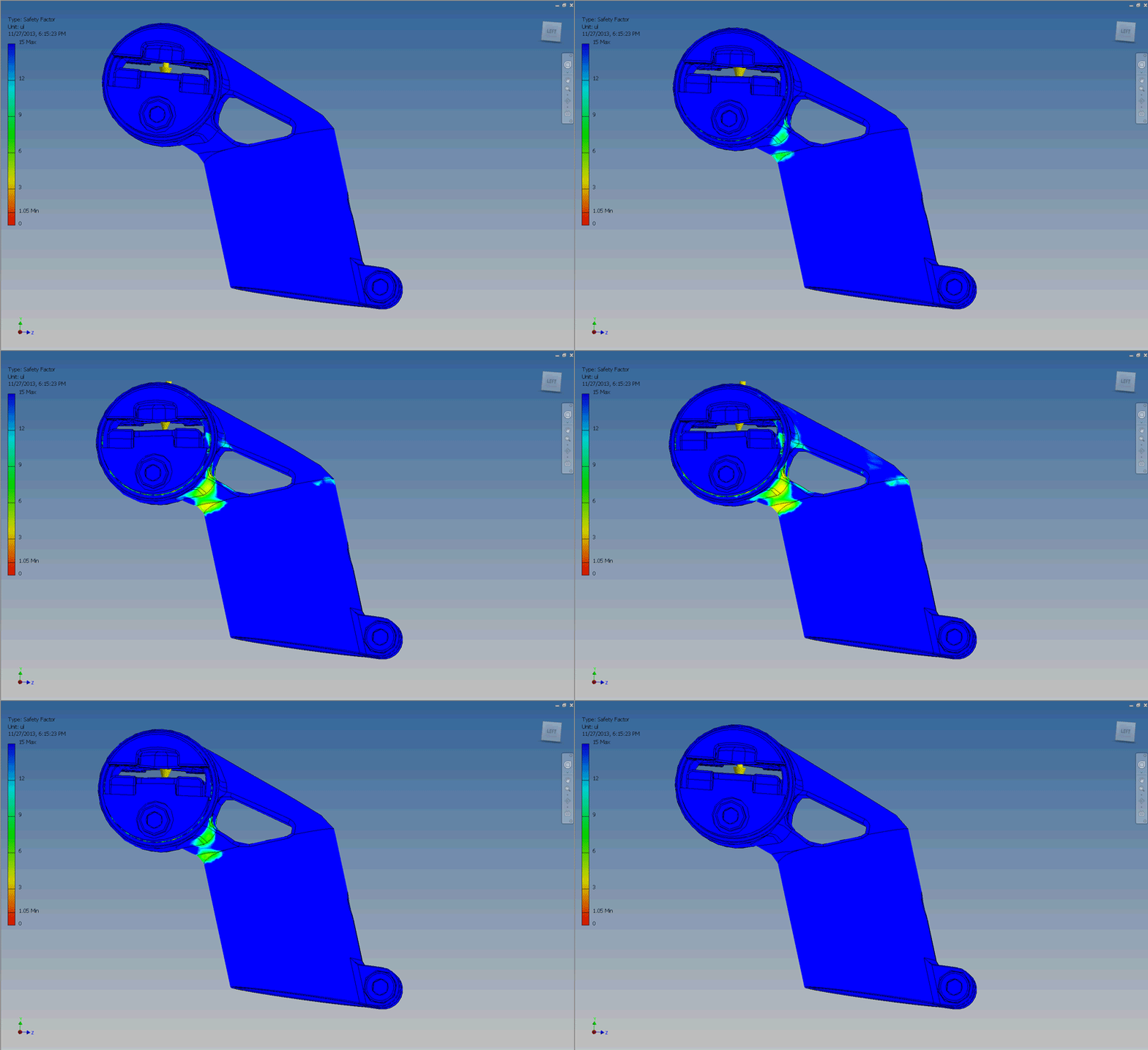
The result is much more organic, and distributes strain more evenly around the part. I'm not totally done fine-tuning it, but the initial FEA results are promising.

As you can see, the corners of the lower section are stronger now, and strain there is more evenly distributed. And because of the way I rebuilt the model, it shouldn't be too hard to beef up the necessary portions a bit.

Although I'd like to take another shot at some of the loft geometry, I've been thinking ahead a little too. I suspect that the clamp portion can be relieved a bit, and have been playing with some shapes... I rather like the result :)

Too Many Sketches

Added on by Spencer Wright.

I've been working on optimizing the Topper a bit, which has involved starting from scratch and remodeling the loft a little smarter. 

...But it's getting complicated. There's *way* too much here, and this is a stripped down version of what I had last night. 

Basically, NURBS surfaces kinda suck - building this loft is a PITA. I would try this in Fusion 360 with T-splines... but I'm hesitant. Last week's version was pretty close to where I wanted it, and I thought that I could rebuild it quickly and move on. My work this morning will tell whether I was wrong.

Quick Pitch: Moves App for Time Tracking

Added on by Spencer Wright.

I'm currently using Moves to track my physical activity. Moves uses motion & location data on my iPhone to see how far I walk, run, and bike during the day. It integrates with maps & the Foursquare API to add data about what locations I visit and my routes of travel.

I want the same thing, but for my desktop & mobile computer usage, with the end result being that I can track what projects and activities I'm working on. Let's call it Works. It's a tool for freelancers & employees to automate time tracking.

It's most important for me on my desktop computer. By tracking which processes are running and which windows are in the foreground, Works can tell me what work activities I'm engaging in. If I've got Inventor open, I'm 3D modeling; if it's Arduino, I'm programming. If my browser has Digikey and Mouser tabs open, I'm doing electronics research & procurement; if my Gmail tab is in the foreground, it's probably client relations. Etc.

Dig a layer deeper, and Works could start to analyze the displayed content of the applications I'm looking at. Using simple OCR, it could quickly determine part names of whatever I'm modeling; recipient names of the emails I'm composing; etc, and use that data to get an idea of what I'm doing and who I'm doing it for.

All of these datapoints are input into a time management spreadsheet with timestamps. Works could sample 'top' (the command line application) and a screenshot every couple of minutes, scan the relevant data fields, and return its guess as to what project & process I'm currently engaged in. At the end of the day, it could prompt me to confirm that it's on the right track - much like Moves allows me to edit location data from Foursquare.


Right?


Credit to Zach Dunham for most of this idea.

Charity

Added on by Spencer Wright.

Felix Salmon, from an excellent post arguing that privately-financed public parks (as Central Park mostly is) are a bad idea; emphasis mine.

Indeed, more generally, the big problem with the charitable-donation tax deduction is that it’s effectively a multi-billion-dollar tax expenditure on the rich, even as charitable donations by the majority of the US population don’t get subsidized at all. If it were abolished, or scaled back, the amount saved by the government would dwarf any reduction in charitable donations: in theory, the government could simply make up the entire shortfall and then some, and still come out ahead. As a rule, it’s always easier and cheaper for a government to subsidize something directly than it is to try to fiddle around with laws which have the same effect but don’t show up on the official accounts.

Sebastian Thrun on Education

Added on by Spencer Wright.

From Fast Company's interview with Udacity CEO Sebastian Thrun; emphasis mine:

Thrun's 5-year-old son, Jasper, is not yet old enough to be impressed by his father's work, but he's already starting his education. "In my son's kindergarten, they're telling us how to get him into Stanford," he says. "By their advice, I'm doing everything wrong, because I'm trying to make him happy rather than putting him through as many piano lessons as possible." He dreams that his son will take a less conventional view of education. "I hope he can hit the workforce relatively early and engage in lifelong education," Thrun says. "I wish to do away with the idea of spending one big chunk of time learning."

Stress

Added on by Spencer Wright.

This is modified a bit from last night. Fillets, window dimensions, and a few wall thicknesses are revised. Overall effect is that it's lighter and stronger. 

Simulation-animation-safety-factor.gif

Still more work to go, but it's getting there :) 

Oh - and this simulation is 2000 Newtons - about 450 pounds-force.

Topper taking shape

Added on by Spencer Wright.

Made a bunch of changes to the seatmast topper last night.

I ended up rebuilding the entire lofted body, which is basically the whole middle section of the part. Doing so allowed me to modify it down the line, which is really useful when building NURBS surfaces. After making the outside shape, I ended up needing to tweak it a lot to avoid collisions with later features. Accommodating these changes is hard to do, though - you kind of need to know what the part is going to look like before you start. It's a real chicken-and-egg problem. What usually ends up happening is that you don't do it right until you've rebuilt the whole model three or four times, which is about where I'm at here :)

It's hard to describe, but the upper section is hollow. I also spent a while trying to optimize around shared surfaces, so the window upper & lower walls coincide with features that I already needed on the part. The one thing I'm not particularly happy about is the seatmast clamp at the bottom of the part. The details are a little different, but overall it's designed the same way it would be if the part was welded. This part is going to be 3D printed, though, and I'd prefer to find a way to build the feature in a way that directly addresses its manufacturing method.

But overall, the part is definitely forward looking. I'll post a section view later, but for now just take my word that most of the middle of the part would be impossible to make by any other method than additive manufacturing. Also, right now the topper body (just the gold part, not including hardware) comes in at 74g, and I suspect that with a little work I can shave that even more :)