Manufacturing guy-at-large.

Search Terms

Added on by Spencer Wright.

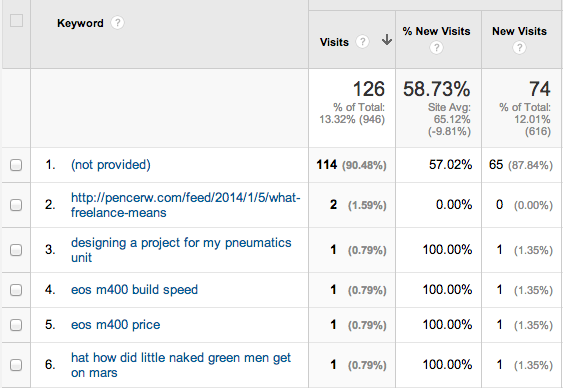
This is one of my favorite things about my website in the past month: someone dropped here by googling "hat how did little naked green men get on mars". Wow. 

Screen Shot 2014-02-20 at 3.07.52 PM.png

Incidentally, this is the page that they landed on - one of my favorite quotes, by Tom Wolfe, about the power of *not* fitting in.

Hugh Fiennes

Added on by Spencer Wright.

Electric Imp CEO Hugo Fiennes, paraphrased:

Root cause every. Single. Problem. 

When you ship 200 units and you get two back, it's just two units. But when you ship 200,000, that's 2000 back, and when you ship 200 million... you do the math.

Failures scale. You *need* to understand them.

Preproduction

Added on by Spencer Wright.

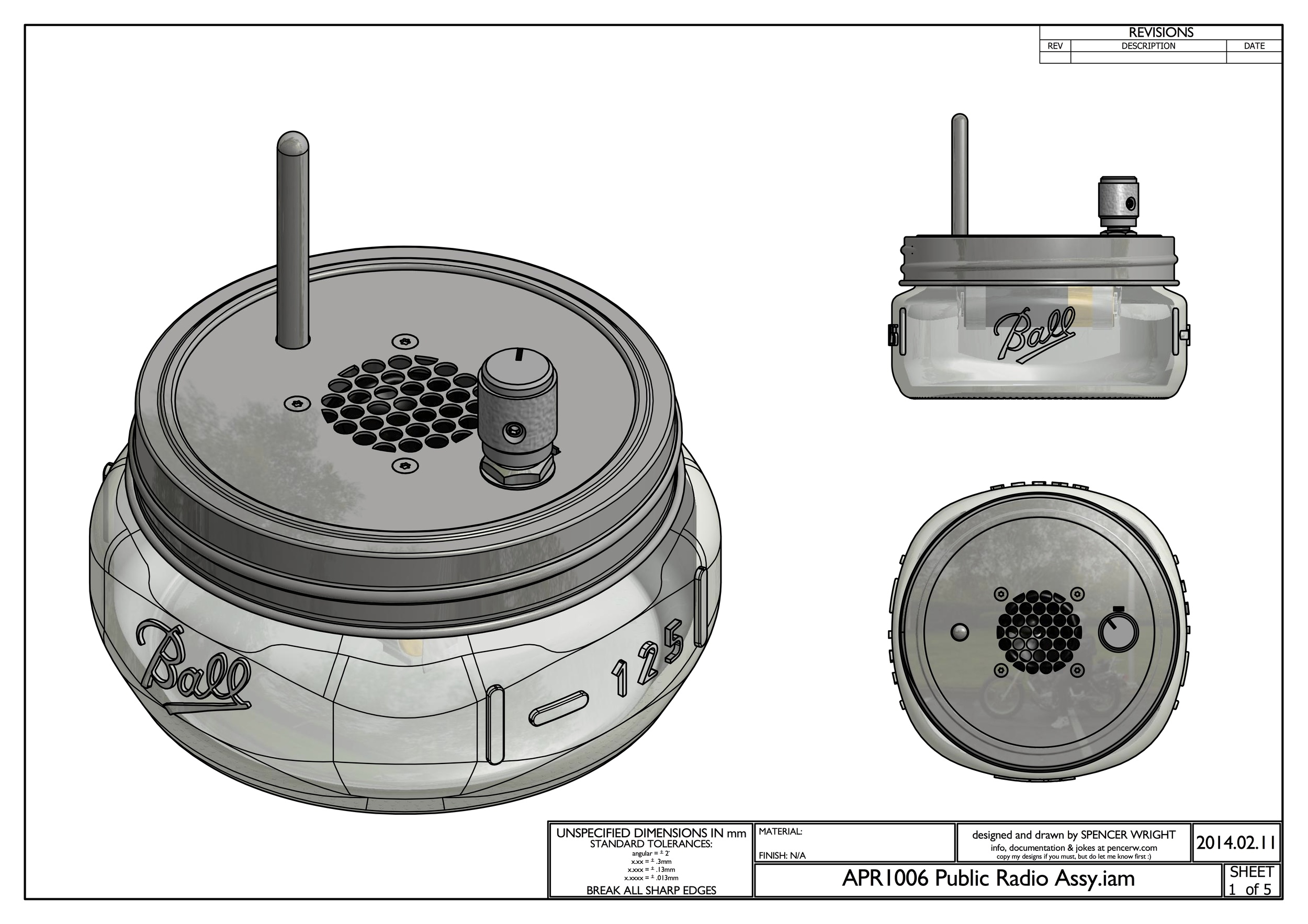
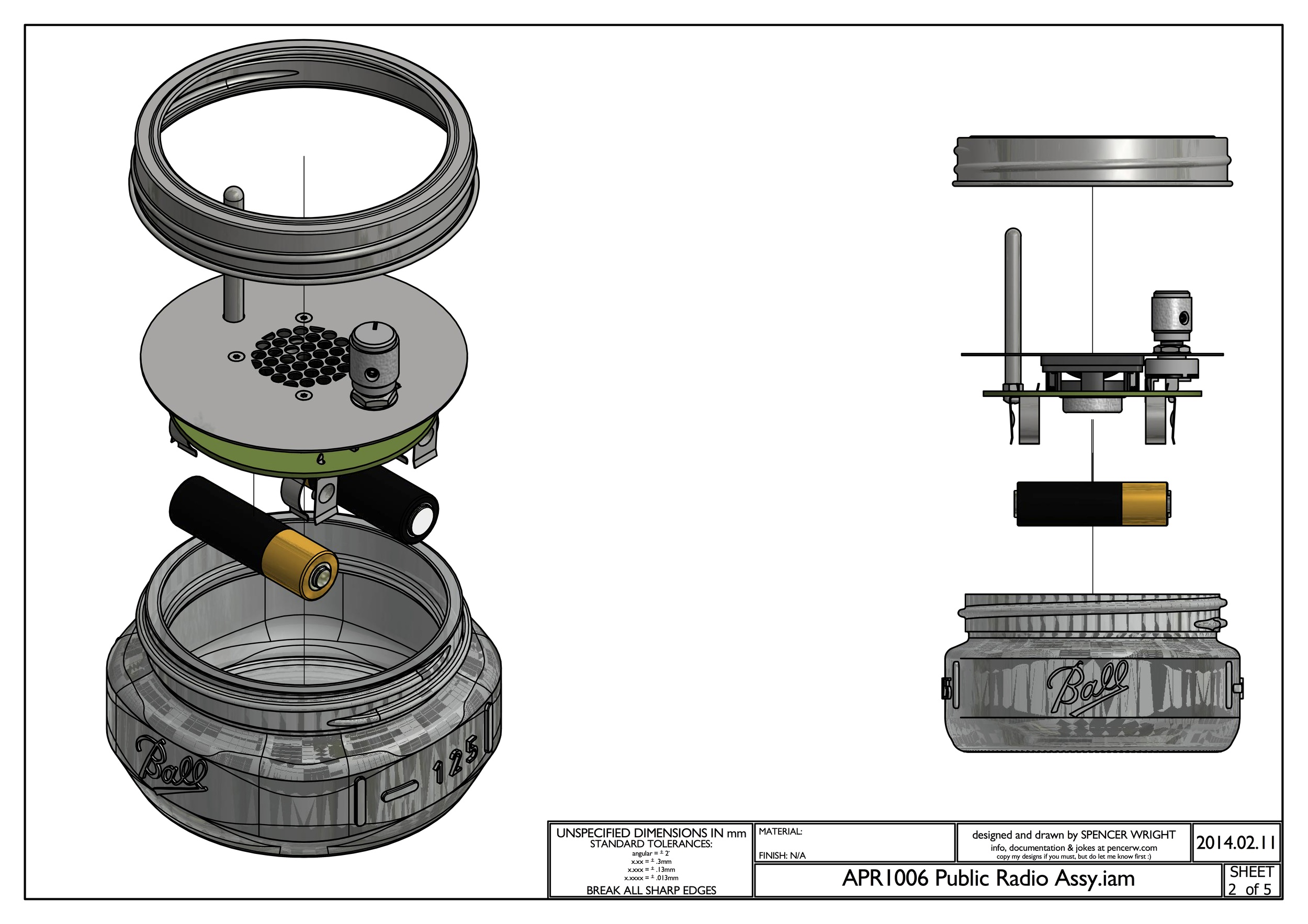
The Public Radio is getting close.

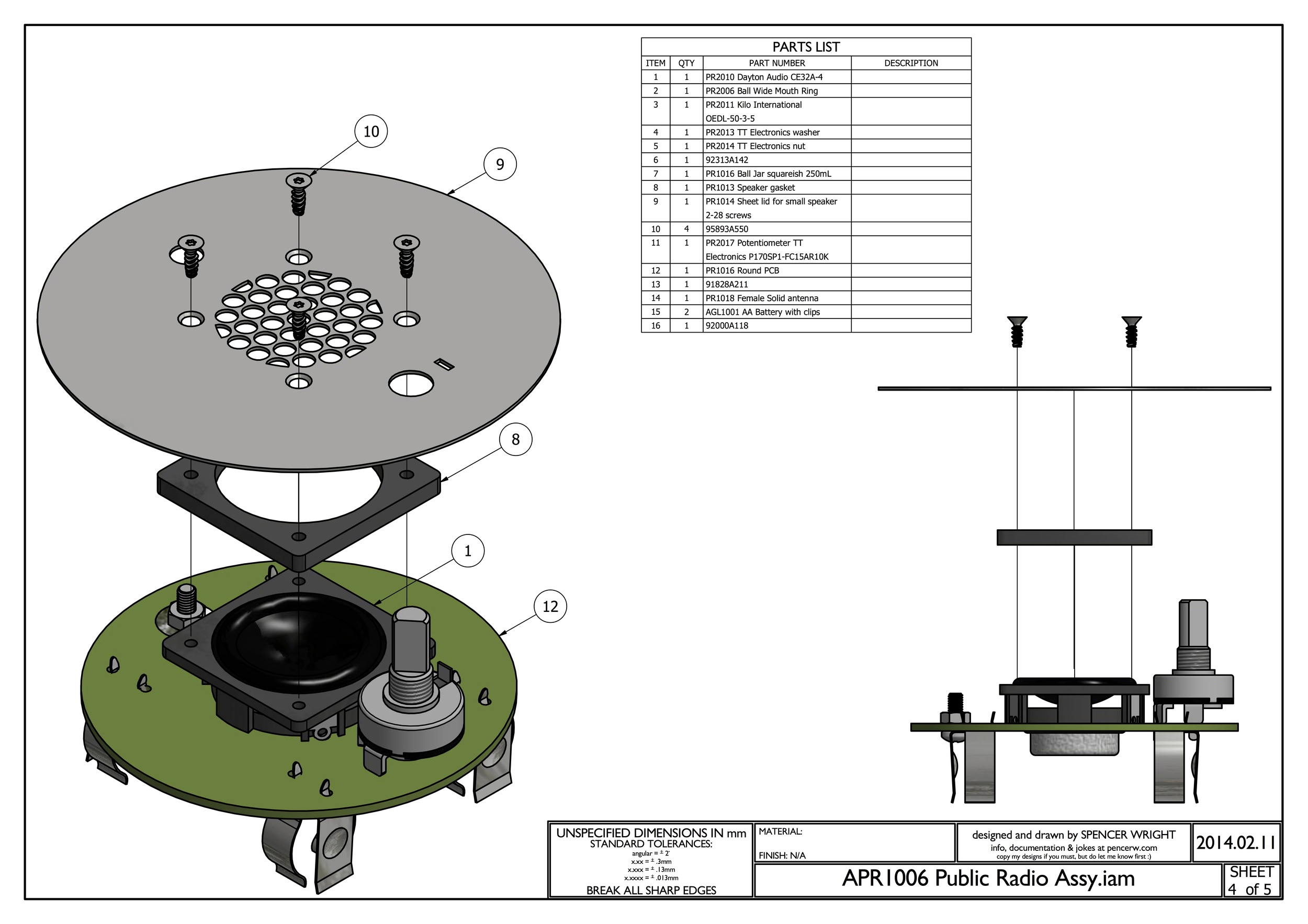
Yesterday I ordered parts for a 50-piece beta run. Our PCBs should ship in the next few days, and we've got speakers, potentiometers, and all our electronic components on the way too. I should pull the trigger on laser-cut stainless steel lids today, and will do knobs and antennas soon as well. The one thing that isn't fully secured is the antenna. We're planning on doing two different antennas - one telescopic, which will be made in Shenzhen to our specifications - and one solid, which will be Swiss turned. I should probably just pull the trigger on the telescopic version, but it requires a large order size and I've never dealt with this supplier before. The solid one we'll probably make by hand for this beta run, and will then order a larger quantity after it's fully tested.

The cost of all of this won't make or break anyone, but it's nothing to scoff at either. This beta run will cost us something on the order of $2k, and there will likely be a few snags along the way that'll require additional time, effort and money. 

This is a fun time. I really get a kick out of dealing with suppliers, and I (clearly) really enjoy learning about new manufacturing processes. And the rush of committing $500 to a run of potentiometers that you're almost certain will work is undeniable. 

The best - and the most potentially frustrating, too - part comes in the next week or so. I've planned our procurement fairly well, and most of our mission critical parts will be arriving within a few days of each other. But I'm sure I'm forgetting something, and even if I hadn't there are always times when you *really* want to start assembling parts but you're waiting on one little screw. 

Anyway. Fun stuff. Updates soon.

"A traditionally cast frame."

Added on by Spencer Wright.

Who knew: Tell people you're designing 3D printed bike parts, and *everyone* will send you some variation on this article. Which is great - it's a totally awesome project, and I think Empire and Renishaw are working on absolutely the right thing. 

But I have a little nit to pick, and it's with the specific wording of the following paragraph (ephasis is mine): 

By using additive manufacturing the MX6 saw a marked decrease in weight. In fact, while the original bike frame weighed 2.1 kg, its 3D printed cousin was slimmed down to 1.4kg - a 33% reduction. What’s more, because Empire’s frame was 3D printed analysis showed it to be denser and stronger than a traditionally cast frame.

Here's the thing: frames aren't traditionally cast. Empire Cycles makes awesome stuff - totally crazytown bikes - but there's very little that's traditional about them. In fact, they're almost specifically atraditional - they use alternative methods of manufacturing partly as an exercise in design and manufacturing prowess. 

Okay. Rant over.

I should be clear: I think this bike is awesome. I especially like the photo of the build platform, which must have been a pain to engineer - even after they'd engineered the assembled product. I think Renishaw and Empire are totally onto something here. I'm just being a punk about the details :/

The Viral Self

Added on by Spencer Wright.

Rob Horning, writing in The New Inquiry about virality. Emphasis mine:

Virality, unlike celebrity, isn’t about exclusivity or personal talent; it’s about moving information continually. Wanting to go viral is not the same as wanting to become famous. Whereas a famous person has become a someone, a viral self is always in process of becoming, always proving itself. But it needs only to be circulating; it doesn’t need to climb.

And later, on a different note:

In a consumer society, we aspire to be as popular as the products we are expected to crave.

That last part is brilliant. 

Exactly the right tool

Added on by Spencer Wright.

Ian Frazier, writing about his experience developing a tool to remove plastic bags from trees: 

From that point, in a small but real way, my life changed. Having the exact right tool for a particular job is always satisfying, but when the tool (and, indeed, the job) never existed before, the satisfaction is multiplied. Plus, what we were doing, in addition to being fun, actually was benecial to society. In an over-full urban environment, we had found our niche, one we had all to ourselves. Nobody else in New York City, or in the world, was taking plastic bags out of trees. 

And later:

Now I understood, a bit, how people felt who had worked on the construction of some major public landmark like the Empire State Building.

The fun part about developing a useful tool is that it doesn't really matter what it's used for. The fact that it is used, and that it was never used before, is plenty.

Kern schmern

Added on by Spencer Wright.

I'm mostly just posting this to give Jonathan Bobrow, who created the kernel of The Public Radio's logo, a shout out. Anything I've done on top of his original work is, I'm sure, to our detriment. 

Anyway, I spent a little while kerning today. Cause hey, someone's gotta do it.

Coined Countersinks

Added on by Spencer Wright.

This blew my mind! 

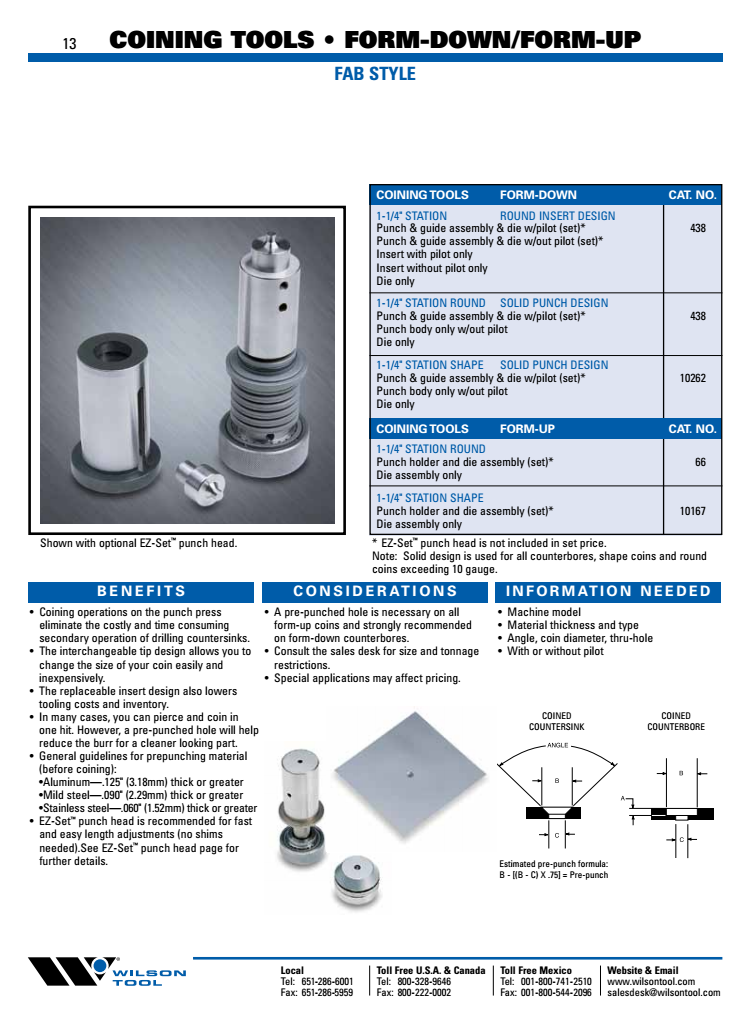
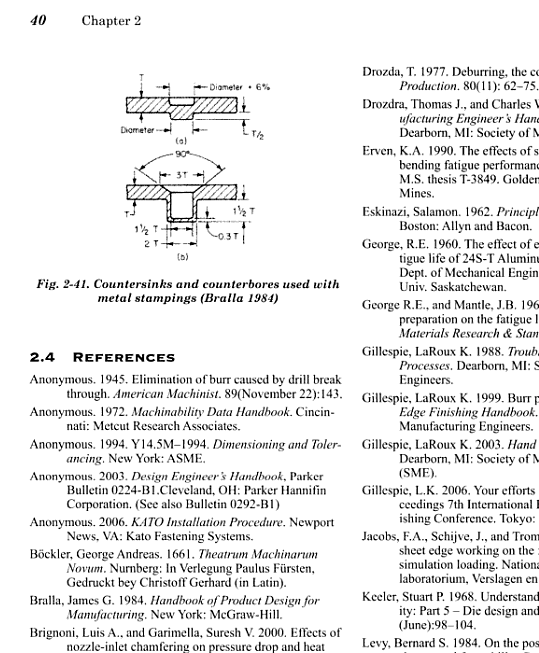
A supplier of The Public Radio's stamped lid sent me a catalog of stamping tools, and I took a little while looking though it. This page set me on a google wormhole:

Screen Shot 2014-02-15 at 1.16.27.png

They're talking here about cold working countersink features in sheet metal. The hole is pre-punched and then worked with a tool that moves material around to create a countersink.

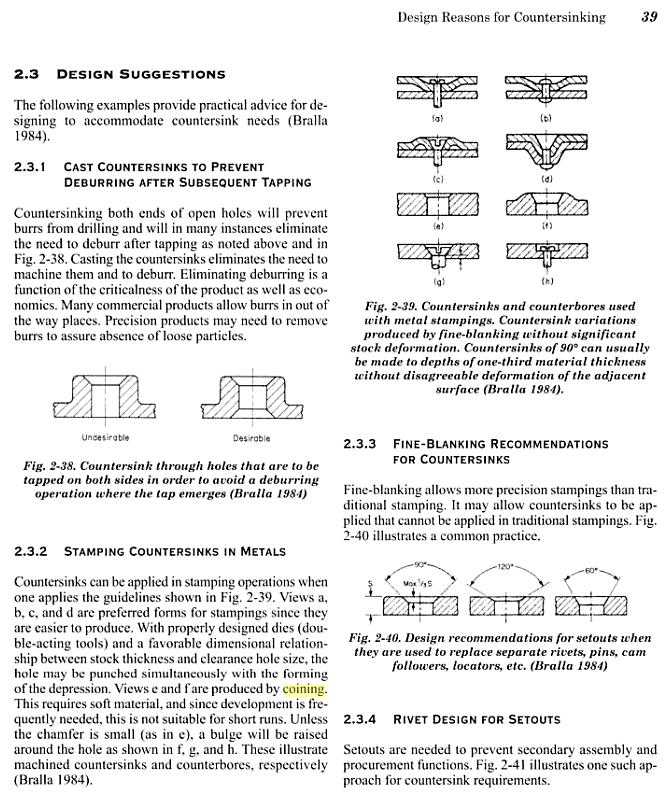
This process probably isn't right for The Public Radio - it requires thicker material than we're using - but it's really cool. I googled around a bit and found a textbook on countersinks, which describes a bunch of sheet metal features that I was unaware of:

Screen Shot 2014-02-15 at 1.13.56.png
Screen Shot 2014-02-15 at 1.14.11.png

It would be really fun to explore these. Stamping is really economical at scale, and knowing all the ways it can be used is super interesting.

I wish I still had this mockup

Added on by Spencer Wright.

From mid 2010:

kln handle-1.jpg

This looks simple but there's a lot going on. 

The handle itself is 7 or 8 pieces; this mockup shows it mounted to an assembly of extrusions (all of which I designed, and clad in blackened mahogany) which together make up the stile of a 2000lb swinging door. In the close corner you can actually see the inflatable pneumatic seal (I can't stress how cool this is) that keeps the door weatherproof from the exterior.

The handle has a couple of stainless steel mounting brackets which are hidden inside the stile. Then there are the horizontal parts, which are drilled internally to allow a bundle of wires to be routed from the stile into the handle itself. The vertical part of the handle is actually split along its long dimension, though you can't see it in the photo. The part on the right is solid, but the part on the left (towards the stile) rides on a couple of shafts and actuates about 1/16". When you grab the handle, the moving part clicks in just a little bit and closes a pair of tactile switches, which tell the door's brain (a custom ATMega board) that someone wants to be let out. That in turn deflates the pneumatic seal and releases a couple of electromagnets, unlocking the door.

If you followed any of that, kudos. 

Anyway it's fucking cool. Too bad it never got built - it took me months to design & prototype. 

Sure was a fun project, though.

From the Archives: Carl Andre

Added on by Spencer Wright.

I drew this in 2006, when I visited MoMA; the text is a word for word copy of the placard accompanying "144 Lead Square". I still feel deeply conflicted about MoMA & Andre's description of the intent of the work, especially vis a vis the last sentence.

But I do rather enjoy my transcription & doodle as meta-art :/

Graphs that go "like this: /"

Added on by Spencer Wright.

Well, it's official: The Public Radio soft-launched yesterday. And we even did it with a clever domain name (I think): 

thepublicrad.io

It's not as if I've got a ton of direct experience performing any of the tasks that Zach and I have managed over the past six months, but there's been something striking to me about the past two days. It's this:

Screen Shot 2014-02-13 at 23.12.50.png

This is a fairly big deal to me. The overall numbers are small relative to what can happen when web startups launch, but the quick jump in viewership of our product - this fucking *thing* that we've been working on for so long - is real a kick. In the past, my web presence has taken a much longer time to develop. TCD spent years in the dark corners of the internet, and this site has bumped along as well, growing slowly over time. But The Public Radio is a product that a certain type of person just gets, and we've stumbled upon a handful of those people.

The best part has been seeing the Mailchimp roster grow, and noticing "@npr.org" pop up way more than we had expected. It makes sense, of course - we got a few public radio folks checking us out, and they must have shared it with colleagues - but it's still a bit of a trip to see it actually happen

This next few weeks should be fun. We've got PCBs showing up from China in about two weeks, and I'll probably order prototype quantities of antennae ( :/ ) and lids tomorrow too. Our BOM is basically complete, and the majority of our engineering work is done, and so now is the time to really work on understanding our customers & suppliers.

On that note: We're actively pursuing partnerships with NPR and affiliate stations for The Public Radio. We think it would be a great fund drive gift for any station, and would love to be put in touch with anyone working in FM radio, public or private. If you're reading this and know someone in radio, I'd love an intro

We're also looking around for advance press coverage, so send me your ideas on those as well. And feel free to share! We love the attention :)

February is shaping up to be fun :)
Old Glue.

Added on by Spencer Wright.

This was a long time ago, when I ordered an in-depth investigation of what adhesives to use to bond mahogany to anodized aluminum. This entrant was not the winner.

PR5006 -> PCBCart

Added on by Spencer Wright.

We pulled the trigger on this today.

Screen Shot 2014-02-10 at 2.49.45 AM.png

There are a lot of small-to-medium changes here, even from the last photos I posted. 

Screen Shot 2014-02-10 at 2.52.11 AM.png

On the top edge of the board:

  • Station tune LED circuit moved to the right. 
  • Cap on the tune circuit changed to thru-hole.
  • Trimpot package changed, moved outboard.
  • Tune circuit moved up and out, to get farther from the antenna trace.
  • Big thru-hole coupling capacitor on the battery, in the middle of the right side.
Screen Shot 2014-02-10 at 2.52.23 AM.png

On the bottom edge of the board:

  • Speaker traces reversed. I had originally routed negative and vise versa, but apparently that's not cool :/ Oh well.
  • Power routed along the perimeter of the board - no longer needs a via to get under the speaker traces.
  • Audio in was turned up and to the right for shorter traces & less interference with power.

We should have boards back in roughly two weeks. In the meantime we'll be hustling in like twenty ways so that we can be totally ready. Should be fun :)