Ben Bajarin on twitter:
I hear x sport is boring too often by smart people. If strategy interests you, you should be able to appreciate every sport.
Fucking yes.
Ben Bajarin on twitter:
I hear x sport is boring too often by smart people. If strategy interests you, you should be able to appreciate every sport.
Fucking yes.
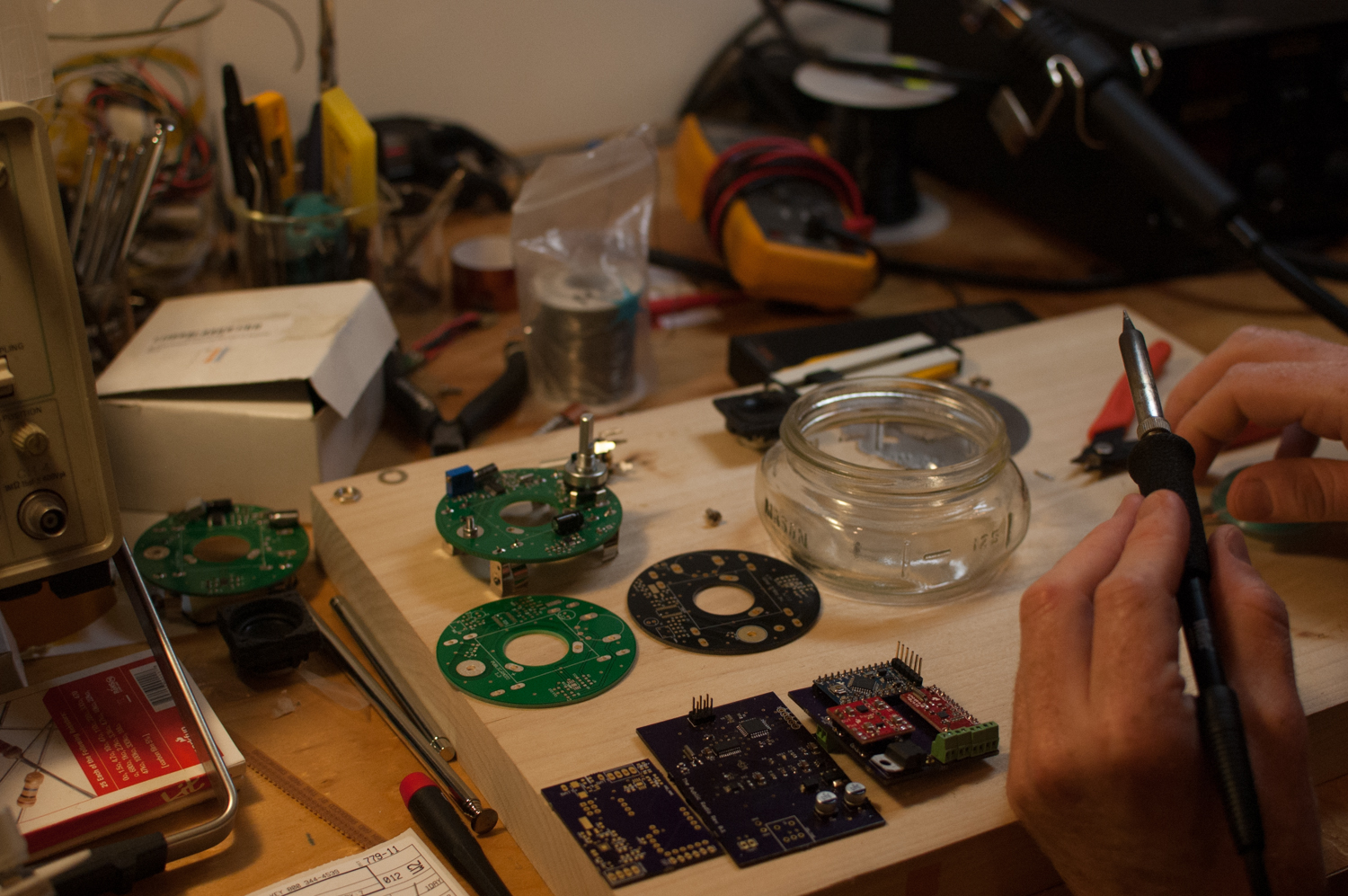
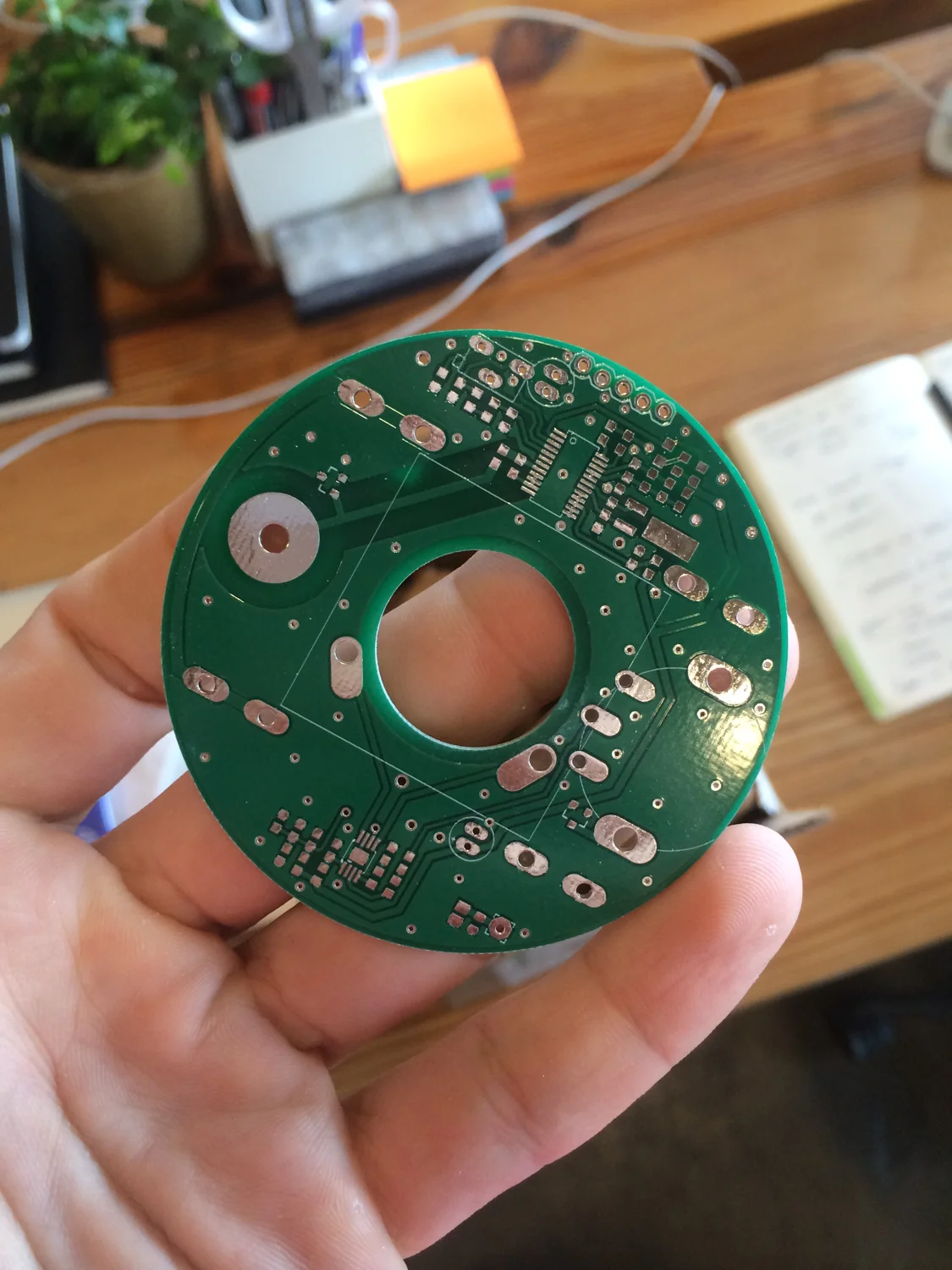
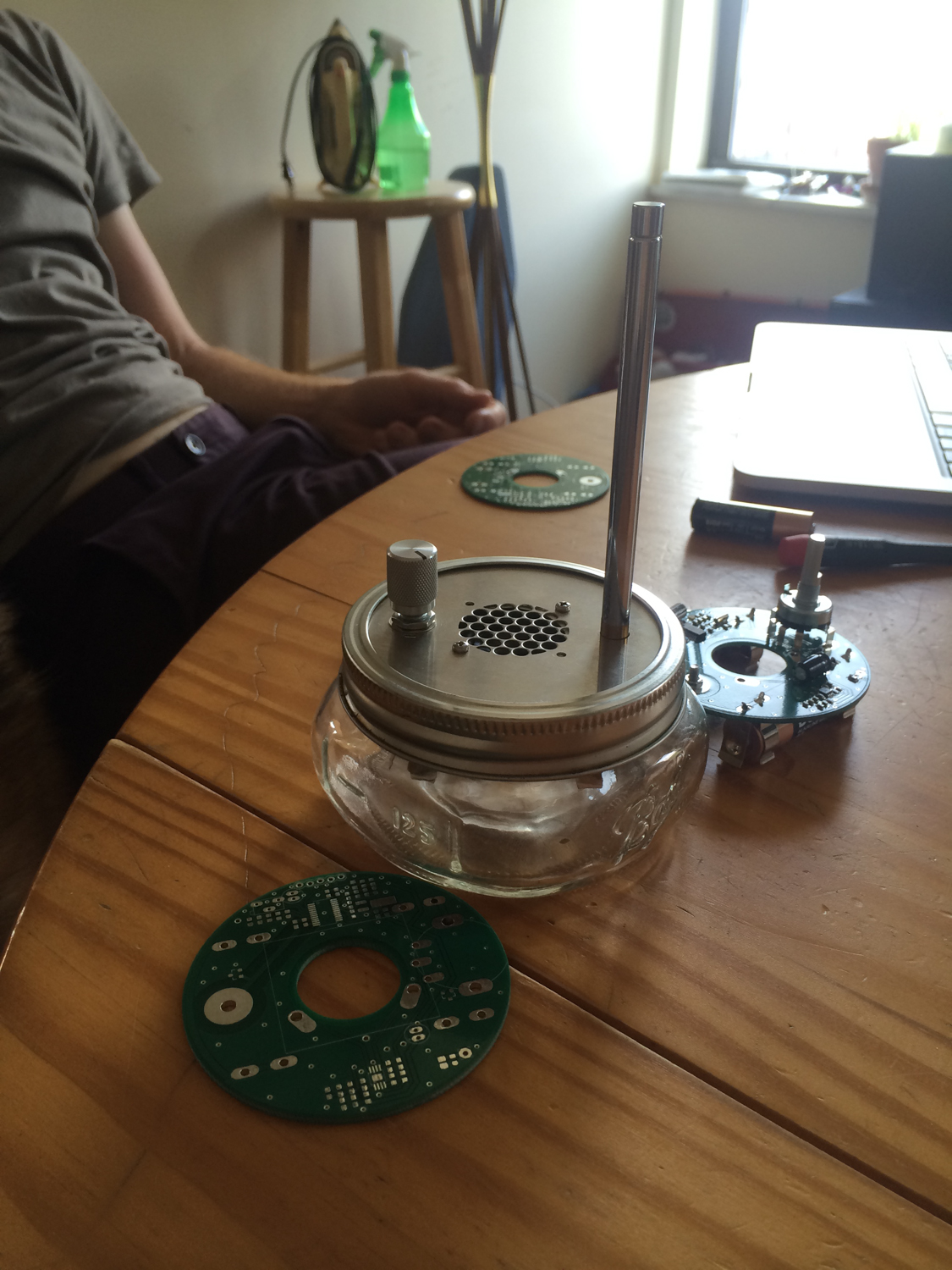
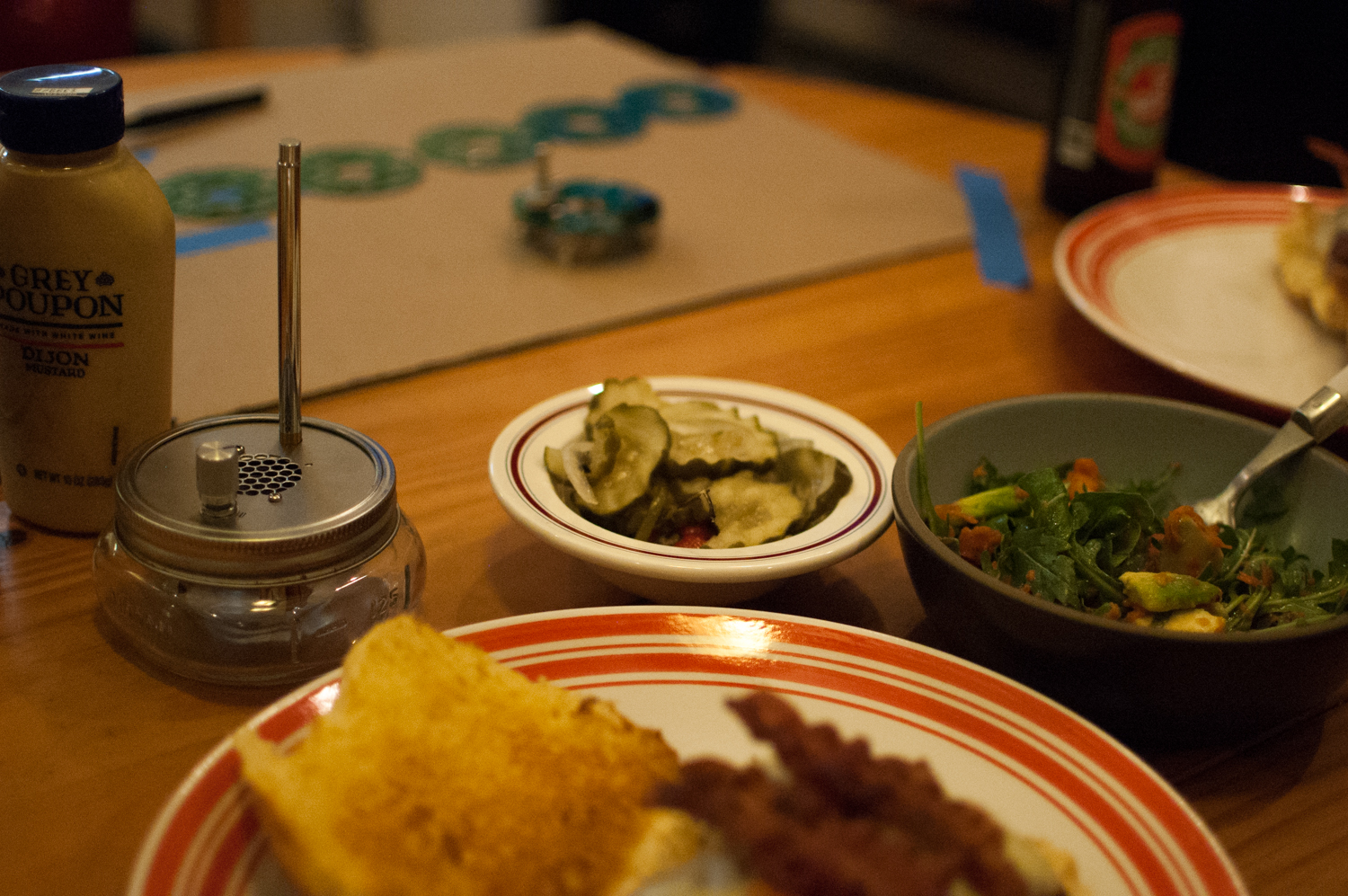
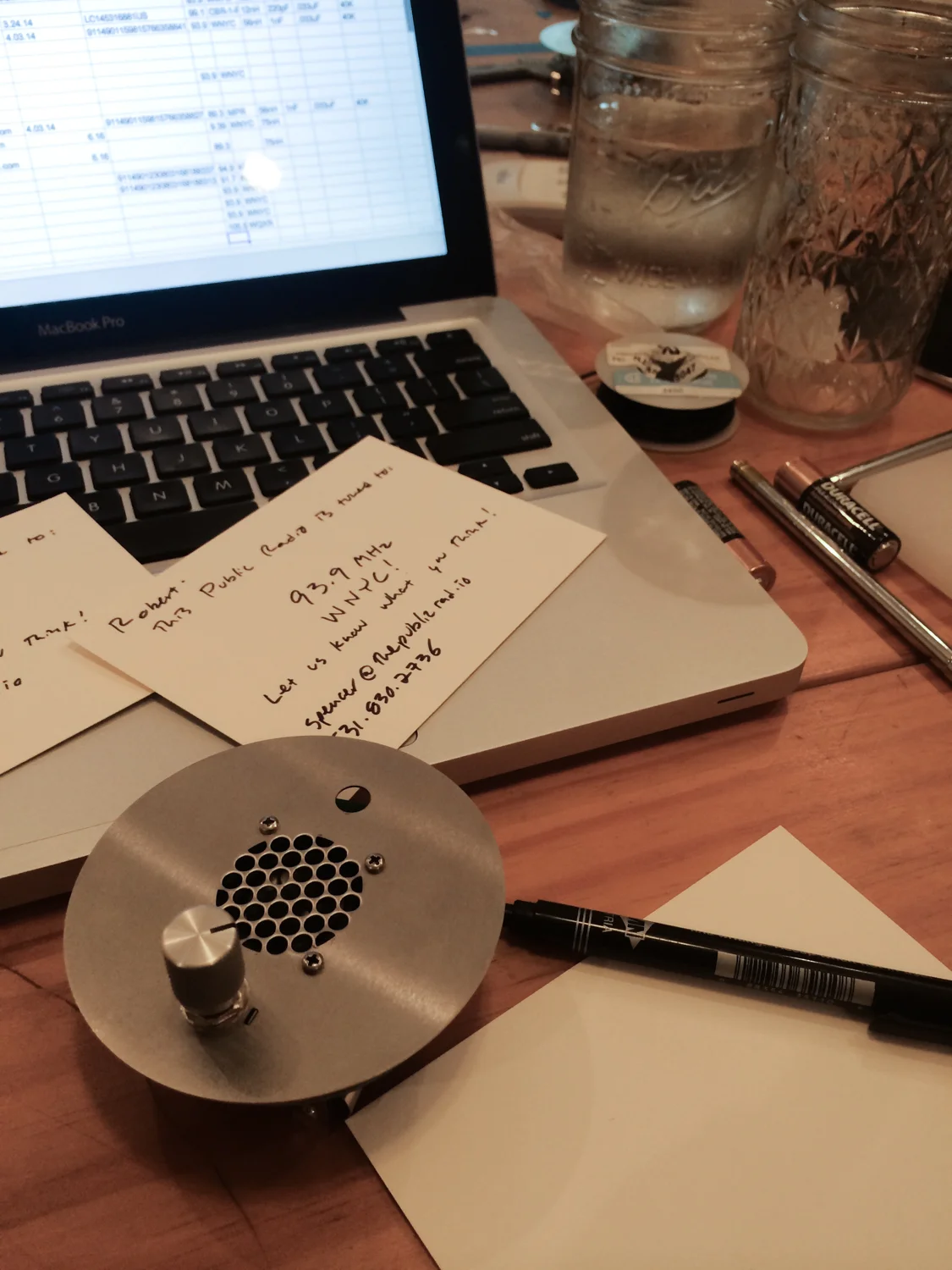
The Public Radio is coming along. Photos from the field:
From an old Paul Graham essay about essays:
In a real essay, you don't take a position and defend it. You notice a door that's ajar, and you open it and walk in to see what's inside.
To XOXO. Because why not apply, and why not post the application here?
i'm some sort of a hardware guy. i grew up in construction, studied linguistics in college, and started my own business building custom bicycle frames. i eventually quit that in order to do 3d design and product management for a company building robot sliding doors.
now i live in nyc and work at a strategic agency, and do a bunch of scrappy projects on the side.
- a single-channel fm radio that's housed in a mason jar. it's a cute consumer product with a bit of (hazy) decision theory behind it.
- laser sintered titanium bike parts. the technology (DMLS) and supporting logistics aren't quite market ready for consumer products, but they're getting there.
- digital strategy for fortune ~100 companies. i mostly like the b2b stuff.
- the nyc outpost of the Bay Area Infrastructure Observatory (we'll lose the "Bay Area" part).
- other stuff.
whooo...
i spent two years after college doing a full gut renovation of a midcentury modern ski condo in northern california. it was really hard - i didn't know anyone there, didn't have a social OR professional network, and was in way over my head on both technical and management skills.
but the end result was really nice. most of the structure of the building was damaged by 50 years of renovations and a healthy dose of rot. i was almost crushed by a beam once, and had a high pressure water line explode a few feed from my face, and had to engineer a bunch of retrofits to problems that i didn't have easy solutions for. but i paid attention to the details that mattered and ignored the rest, and in the end it came together.
it's a far way from what i've ended up doing for the rest of my career. i mean, i spent a bunch of time literally chipping up concrete during those years, and now i mostly think about advanced manufacturing and business models. it's hard to talk about the one in the context of the other.
but i'm proud of it. and most of the people i meet day-to-day don't have anything like that kind of experience.
The main site.
As a B2B ecommerce research mini-project, I spent a few minutes on the Tektronix website yesterday to evaluate their customer service and ecommerce integration. Both are excellent; here's a quick rundown.
For a company with a diverse, highly customizable product line - and an annual revenue (as of 2006, when they were acquired by Danaher) of $1B - Tek's willingness to let me get on the phone with someone ASAP is really commendable. They've got an 800 number right at the top of every page, and their (pretty decent) automated phone system picks up in one ring. The *first* option on their phone tree is to speak with a representative, and I was connected to an actual person just 3 rings later - a totally reasonable wait time.
The main product page.
Like a lot of B2B sites, Tek does *not* provide live pricing on some of their product line. But for a wide range of product categories, they display the base list price, and a link to configure the product, right on the product page. This may not seem significant, but a shocking number of B2B sites still don't do this. Kudos to Tek for taking the lead.
A few additional product page features that I like:
Quote generation page.
Tek's "configure and quote" page is pretty good. It shows the base price right at the top, and allows me to add items listed below via checkboxes. Unfortunately, the total price is *not* displayed in real time, but I give them a pass on that.
My only real criticism is that the options aren't hyperlinked to give more context, info, or supporting documents for those items.
Quote request page.
The design here is a bit uninspired, but that's okay. I can add comments to my quote request and confirm the quantity and details of the parts that I want a quote for. There's also (still) a prominently featured 800 number in case I need more help.
I'm a little concerned that I'm not going to get a quote quickly when I hit that "submit" button, but the overall layout and experience gives me enough confidence to go ahead anyway.
This is *really* encouraging. The confirmation page is almost exactly the same as the request page, except that Tek is now telling me that I'll be getting a quote by email within 15 minutes. I am a very happy person at this point.
I can't emphasize enough how great this is. I've asked them to tell me how much this equipment costs, and expect the bill to be well into five figures. I probably won't decide to go elsewhere within a quarter hour; nor am I likely to call/email/yell at them to follow up with my quote request. (I have literally done this in the past in similar circumstances. Some companies dump quote requests into black holes, and a followup call is necessary to move forward.)
Tek emailed me three minutes after I hit "submit quote."
The email itself reiterates all the products I requested a quote for, which is really useful for searching my inbox later.
Inside, there's a PDF of my quote, with a grand total just under $40k.
I've got three quibbles here: First, I prefer to have a human being attached to my quote (all it says is buy@tek.com). Second, the payment terms field is blank - at the least, they should tell me to call them to talk about the options. Third, it's unclear what the shipping cost and terms are. They do show lead times on all the parts, but I'd love to know whether they're going to add on S&H at the end.
I got a call from a Tektronix customer care rep (who was *super* helpful) about a half hour after submitting the quote. This is *excellent* followup, and I genuinely appreciated her demeanor and helpfulness - even after I told her that I was mostly doing research :)
To represent the world as systems of interdependent logics we need not elevate those logics to the level of myth, nor focus on the logics of our myths. Instead, we would have to meditate on the logics in everything, to see the world as one built of weird, rusty machines whose gears squeal as they grind against one another, rather than as stories into which we might write ourselves as possible characters.
From a very crazy, very good article about Star Trek, language, and meaning.
The Public Radio has moved a little slowly over the past few months. Zach has been busy, and I've got too much on my plate, and scheduling has been tricky. But we *have* made progress, and I'm here to tell you about it.
After the last hardware round, we spent an hour and developed a feature wishlist. It included:
All of these (plus a few more technical ones - see our GitHub repository for the current designs) have been completed. A few stragglers have yet to be implemented:
I like the way the new design looks. Eagle is *not* my favorite piece of design software, but board layout is fun - and I'm really proud of our current design.
On Sunday evening, we ordered a batch of 10 of these from Advanced Circuits. Advanced is expensive, but they turn the parts around quickly; ours should ship today. Meanwhile, our custom antennas departed (two or three weeks late, but whatever) Hong Kong yesterday. With any luck, the antennas will show up within a day or two of the boards - giving us time to assemble a few PCBs and then quickly put the radios into service.
In the meantime, Zach hacked an awesome way to tune the radios using an Arduino. It should save us a lot of time, and will be *key* when we're shipping these things across the country.
So. Movement. Happening.
Photos from life, because you (presumably) care.
One of the most striking things about McMaster-Carr's website is the nearly nonexistent top level navigation. I thought I'd compare it with some similar sites for context.
McMaster's top level navigation has six primary items:
The Search bar has a dropdown that autopopulates results as the user enters text. The Contact, Bookmarks, Order History and Build Order links are just that - links. No dropdown/flyout, nothing.
The unauthenticated site has a small "Log in" dropdown at the top right that takes an email address. The authenticated site's account link drops down to show a "Log out" and a "Settings" link.
MSC has too much top level navigation to describe in detail here, but a few takeaways:
My main beef with Amazon is their "Your Account" dropdown menu. Why do I - a visitor to the Amazon home page - need to know that "Manage Your Content and Devices" used to be called "Manage your Kindle"?
Elsewhere, the "Shop by Department" dropdown has seventeen items in it - each with a flyout containing images and as many as nineteen sub-items.
Uline's homepage is straightforward and visually consistent. But they insist on separating their dropdown menus by "Products" (containing 34 subcategories) and "Uline Products," (26 subcategories) which as a customer seems totally arbitrary.
Also, free offers? Really?
My rule: If it's okay that your flyout/dropdown menu obscures a large block of content, then it probably isn't relevant.
Grainger's site is uniquely complicated by the space devoted to its retail stores, but that's no excuse. Just take the top row. They've separated out "Sign in" and "Register now" (two mutually exclusive use cases), and have their marketing email signup (which I don't see why I'd want) right there too.
I find this to be an endless opportunity for iteration and refinement. It can always be shorter, quicker, closer together.
More Public Radio updates tomorrow, or check the GitHub repo here.
I've spent some time over the past few weeks thinking about my favorite B2B ecommerce sites. Here are my current faves (in no particular order), and why.
Box's "Business" page is an easy-access portal to a complete set of product features & use cases. While I tend to recoil a bit at talk of "product features and use cases," the way they display them here is attractive and convenient.
Considering the breadth of Cat's product line, their main site is an exercise in simplicity. My primary complaint is their browse feature, which uses multi-layered dropdown menus.
Olympus NDT's video gallery gives one-stop access to hours of content - covering the lion's share of their product line. Considering that many of these devices run into (and past) the tens of thousands of dollars, being able to see them in action is a nice feature.
(I know they're primarily b2c, but whatever - *tons* of businesses buy tools on Amazon)
Amazon's "Improve Your Recommendations" helps users tailor the products that the site recommends them. For small businesses in particular, this feature can be really helpful in separating personal from business purchases.
I know the term "eutectic" from brazing, where the chemical composition of your filler rod changes over heat/cool cycles. It comes up every once in a while, and I always reference something about cheese, and how it changes when it melts & cools (i.e. is non-eutectic).
I had never fact checked this until yesterday, when Vlad called me on my random claim. So I did a quick search and came up with this:
So, I *think* I'm right for most cheeses. But as this points out, mozzarella (and low-moisture mozzarella in particular) seems to buck that guideline.
Anyway. The more you know.
A problem I've had in real life: I made an order from a supplier, and I know the day that it's going to arrive, but I won't be at the actual delivery location when it shows up. This could be because I'm on a jobsite, or there's a dedicated delivery location where I'm working, or maybe the UPS guy just always leaves things at my neighbor's house.
Well, McMaster-Carr seems to have noticed this, and they're now integrating their carriers' shipping & delivery info into their own delivery notification system. It's a great feature, and I got the chance to try it out the other day.
In this case, Zach was picking the package up in Southampton, and I was going to be in the city when it was delivered. He had asked for the tracking number from me but I (being lazy) never got it to him.
But I *had* put my cell phone number in the checkout dialog, and I got this great text message - which includes info on the parts I ordered - when it showed up. A quick screenshot & text to Zach, and he was able to grab it without any problem.
This is a really, really great feature. By giving their customers access to delivery data on their own terms, McMaster makes the entire procurement process a lot easier.
Paul Graham, in an old essay:
Obscurity is like health food—unpleasant, perhaps, but good for you. Whereas fame tends to be like the alcohol produced by fermentation. When it reaches a certain concentration, it kills off the yeast that produced it.
These are parts for my wallet design, which I'm working on with Christy Holzer. On the bottom left is my personal wallet, which I carry daily. On the top left are natural, vegetable-tanned leather parts. On the right are those same parts after being tanned (naturally, in the sun) and lightly oiled with Neatsfoot oil.
The tanned & oiled parts will be sewn up (by hand, by yours truly) tomorrow. I may switch over to one of these (be your own beta tester; eat your own dogfood), and will give the second to a friend.
Then I'll be tanning, oiling & sewing a small batch (with Christy) and hope to be putting them up for sale (and/or crowdfunding) soon.
Kane & my Sony A7 thumbrest finally got tested the other day:
The verdict: it needs to be shifted back somewhat, so that your thumb can reach it a bit easier.
Iteration to come!
This is what an order of 1000 Taiwanese potentiometers looks like:
These are for the upcoming production run of The Public Radio. We're probably doing a design revision on the boards in the next week, and will be assembling a small batch in-house before we send the rest out to a PCB assembly house.
FYI, these are a non-stock part from Taiwan Alpha Electronics. They were very easy to deal with and shipped (on time) for delivery in Brooklyn just 32 business days after payment.
There's more on our potentiometer requirements in an older post, here.
+1 for breakfast with a smart friend. Always good for taking a step back & seeing a bit of perspective.
I like mass market products a lot. But I want to really love the things that I make, and that's hard to do if you're trying to appeal to a mass audience. Compromises need to be made when you're designing for a diverse customer base; when the market is smaller, it allows the product developer to be a bit more choosy.
I'm excited that making short-run products is getting easier - but there's still a lot to be done. These are a couple of the things that have been bothering me.
As a designer of traditionally manufactured parts, features are specified according to more or less knowable tool properties. When I place a drilled hole, the results will be predictable, regardless of my supplier's equipment or process.
The same is not the case with additive manufacturing, where build orientation and support structures matter a lot. As a designer of these parts, I want to be able to simulate varying configurations myself, so that I can specify the build procedure to my suppliers. Simplifying the CAD/CAM toolchain - ideally with solid/NURBS, T-Splines, topology optimization *and* build plate prep all in one application - will be crucial to lowering the barrier of entry to AM.
When designing a part - especially those used in assemblies - surface finish is often critical. With additive manufacturing, surface finish may vary widely, depending on build orientation and support structures. In some cases it may be possible to reorient a part in order to improve finish.
But today, these determinations are preformed by machine operators whose knowledge of the process is experiential and not publicly available - making it difficult for designers to know precisely what they'll get. Machine manufacturers and job shops should work together to develop design guidelines and detailed surface finish specs, alleviating this uncertainty.
I love Shapeways. But they *need* to offer secondary services, i.e. tapping and tolerancing.
Again, I love Shapeways. But they *need* to offer assembly, and custom packaging, and small parts that are traditionally manufactured (i.e. bolts).
3D printing is a cool technology. But so is stamping, and you don't see sheet metal shops selling useful products directly to consumers. Without a supply chain management offering, I believe that Shapeways will be confined to just selling parts - not products.
I love McMaster-Carr. But they need an API that can talk to both my e-commerce and the API of my manufacturer. When my customers purchase an assembly from me, my supply chain manager (whether it's Shapeways or somebody else) would automatically place orders through McMaster-Carr and my manufacturing partner(s) - with all parts being shipped to the SCM and assembled just-in-time for shipment.
I'm all for services that provide me access to a wide range of manufacturers. But it is critical to the design process that that service be completely transparent. Like it or not, most designers are *not* manufacturing agnostic, and speaking directly to a manufacturer - and preferably to the machine operator who will actually be setting up & running your part - is key to producing successful designs.
Too much effort is being spent trying to disrupt procurement in ways that adds an opaque layer between me and my supplier, and the end result is that I learn little from the process. All I want is for you to put suppliers in front of me and then get out of the way.
Why aren't these people talking about their processes? Why aren't they sharing the non-NDA work they've done? Why aren't they showing me the capabilities of the new machines they have? I would gladly pay a premium for a shop that's actively showing me the engineering feats they're accomplishing. Get bloggy - the openness is quite becoming.
I hope it is, at least :)
From a talk called The Value of Science. Emphasis mine.
But I would like not to underestimate the value of the world view which is the results of scientific effort. We have been led to imagine all sorts of things infinitely more marvelous than the imaginings of poets and dreamers of the past. It shows that the imagination of nature is far, far greater than the imagination of man. For instance, how much more remarkable it is for us all to be stuck - half of us upside down - by a mysterious attraction to a spinning ball that has been swinging in space for billions of years than to be carried on the back of an elephant supported on a tortoise swimming in a bottomless sea.
From an old essay:
A lot of startups worry "what if Google builds something like us?" Actually big companies are not the ones you have to worry about-- not even Google. The people at Google are smart, but no smarter than you; they're not as motivated, because Google is not going to go out of business if this one product fails.
I think that being smart barely enters the equation. Motivation, though, counts.


