Manufacturing guy-at-large.

Old

Added on by Spencer Wright.

From February, 2010:

What I wrote about this part then:

This is part of a drawbar for my Steinel horizontal mill.  I decided to make it in two pieces - a 3/8" rod, threaded on one end, which slips into a cap that was turned from 1" rod.  This is that cap.  It took a few steps to make - little while in the lathe, a few minutes in the mill, little while back in the lathe.  It's not quite finished - I gotta TIG the two parts together tomorrow - but jeez, I'm finally close to getting this machine set up.

McMaster-Carr and the Future of Parts

Added on by Spencer Wright.

Last year, I wrote a post describing my feature requirements for a modern parts management system. Re-reading it today, I realize that it doesn't really say what the user interaction would feel like - or how it would work at all. I hope to provide some of that here.

The key is this: Integrate small parts inventory management into the product design, prototyping, and maintenance, repair & operations processes. I'll treat these as three separate use cases, though they're all part of the same product lifecycle.

The reader will note that I believe McMaster-Carr to be the strongest positioned organization to take on these tasks. As a longtime fan of McMaster and a student of their intense customer focus, beautiful interface design, and impressive supply chain management, I hope that they seriously consider these recommendations - as I'm sure that their competitors will be soon.

Note: I diagrammed an early version of this idea in a flowchart here.

My current "system," during prototyping on The Public Radio.

My current "system," during prototyping on The Public Radio.

During Design

As a hardware product designer, I want my suppliers' parts catalogs integrated into my design environment, so that I can seamlessly browse for new parts and view part data directly from my modeling software.

Autodesk Inventor is my go-to design software, and McMaster-Carr is my go-to parts supplier. I'm constantly browsing McM for a part, then adding it to an open order, then downloading the STEP file and importing that into my model. I consider this a luxury: McM's decision to include STEPs for the vast majority of their mechanical parts makes my job a ton easier. But the process is convoluted, and a lot of part data is lost. On parts like socket cap screws, for instance, McM tracks the following data:

  • Thread size
  • Length
  • Thread length
  • Material
  • Package quantity
  • Package price

But their STEP files contain none of that; all that's included is the part number and the material, which is often stripped of a lot of useful data (parts described as "Type 316 Stainless Steel" on McMaster's site often show up as either "Stainless" - or worse, "Generic" - in the STEP file).

For McMaster-Carr to become more fully integrated into my design and procurement process, they should include comprehensive part data in all of their STEP files. 

Moreover, there's a larger opportunity for McMaster to integrate their catalog directly into my design environment. If their catalog were available as a plugin for Inventor/Solidworks, designers could browse, design, and purchase all from one seamless interface - which I believe they will demand in the near future. Look at Plethora and Sunstone Circuits (and in web development, Squarespace) - across the hardware world, the movement is towards integrating design & supply chain management. McMaster-Carr is perfectly positioned to become a powerful player in the field. 

During Prototyping

As a prototyping mechanic, I want real-time internet enabled inventory management, so that I can understand what parts I have on hand & prepare for shortages before they happen.

Small parts management sucks. With their lightning-quick delivery and vast catalog, McMaster is the cornerstone of most prototyping shops' parts management system. But that solution is awkward at best, and often requires simply ordering more parts, even if we have some (somewhere) on hand. 

Small scale inventory management has historically been extremely difficult, but today it's increasingly easy. For instance, Quirky has shown us that it's not that hard to keep track of the number of eggs you have in your fridge, and Tesla's iOS app shows the charge state of your car's battery. It's only a matter of time before the same is the case with things throughout our physical lives, and McMaster-Carr is uniquely positioned to take small parts management on.

I envision a small parts cabinet full of sensors (some combination of force, optical, or proximity), which would periodically update an online database as to the quantity of parts inside each bin. But you needn't even start there. An easy MVP would be an iOS app that allowed the user to snap a photo of a small parts cabinet and tag each bin with a part number & quantity. The photos would be collected and stored online, and would be linked to the customer's McM order history. 

Then, when a mechanic takes a handful of bolts out of a drawer, all he needs to do is update the inventory count from his app. By tapping around a set of linked photos in the app, he's directed to the bin that he's physically looking at - and he can confirm visually that the parts are what they appear to be. By tapping on an "info" tab, he brings up the inventory data (including links to a 3D part file, technical data, order dates, and a list of mating parts/assemblies that the part has been used in - culled from the Inventor plugin described above) and assign a piece count to a job & edit quantity on hand in moments.

McMaster-Carr should build this system - starting with an iOS app that offers basic inventory management. Doing so would give them a view into their customers' usage data, and would help users streamline their restocking process. The days of bins labeled with bits of paper are numbered, and users will soon demand personalized (and internet-enabled) inventory management systems. McMaster is in a unique position in the marketplace, and has the opportunity - if they work now - to strengthen their foothold in small parts management.

For MRO

As a maintenance, repair & operations engineer, I want a single process that incorporates machine data, relevant spare parts, and procurement, so that I can get my facility back online more quickly.

A large part of McMaster-Carr's business is in supporting maintenance, repair & operations (MRO) professionals. These customers have unique needs; their ability to get the right part, right now, can have huge impacts on their company's ability to recover from unplanned downtime due to a broken machine.

In many cases, MRO engineers will find themselves with a broken part and will need to replace it immediately. Doing so will require careful measurement to determine the part's specifications, a process that can be difficult and imprecise - especially if the broken part has been mangled and/or lost.

McMaster should work to establish a system of folksonomy - user contributed data - that would allow MRO customers to tag parts with information about how and where they can be used. For instance, a particular serpentine belt might be commonly used as a replacement spindle drive belt on an old lathe. Instead of finding this data on the web - and then cross referencing part numbers back to the McMaster-Carr catalog - a tag could be submitted to the relevant part directly in the McM database. Subsequent users could then find the information they need right in the McM website/app.

Such a system would be complicated, for sure. It would require a significant effort on McM's part to hire and train community managers, who would monitor and vet user submitted data on a daily basis. But doing so would allow McMaster to leverage the huge - and growing - network of hardware professionals and enthusiasts. This community is sorely lacking a single go-to reference, and McMaster is in many ways the strongest candidate (with its enormous existing database of part, material & process data) to do so.


In order to pull off these tasks, I believe McMaster-Carr will need to become more transparent about their processes and inventory data. This will be a difficult process - I myself struggle with transparency - but I believe the payoff will be well worth it. A new generation of hardware professionals & hackers have come of age in a new information paradigm, and they are increasingly responsible for purchasing decisions in small and large companies alike. These people have grown up reading Amazon's shareholder letters and following the official Google tech blog. They expect to be part of a company's product development process, and will contribute their own time, energy, and expertise to projects that historically would have been developed in private. McMaster-Carr - with its huge network of enthusiastic users - should leverage that collective energy, and work with its customers to bring parts management into the 21st century.

Paul Graham

Added on by Spencer Wright.

From a 2005 essay titled "What Business Can Learn from Open Source":

Those in the print media who dismiss the writing online because of its low average quality are missing an important point: no one reads the average blog. In the old world of channels, it meant something to talk about average quality, because that's what you were getting whether you liked it or not. But now you can read any writer you want. So the average quality of writing online isn't what the print media are competing against. They're competing against the best writing online.

Cold and Mechanical

Added on by Spencer Wright.

Jonathan Sterne, in a piece about the meaning of analog and digital. Emphasis mine.

In both Kittler and Massumi we find an odd historical proposition-that analog machines are somehow both closer to the way the human senses work, and to the operations of reality itself, than the technologies that preceded or succeeded them. Viewed with a bit of historiographic distance, this is at once an unsurprising and fascinating claim...The claim is fascinating because it proposes a truly radical periodization, where there is an approximately 100-year period in human history-roughly from the last quarter of the 19th century to the last quarter of the 20th-where the senses and the world were somehow in harmonious alignment with media...When critics use some permutation of analog to apply a hermeneutic of suspicion to the digital, they are making an argument about 100 golden years in human history.

This reading of the analog is, of course, retrospective. In [their] time, technologies that we now describe as analog (usually after the fact) were more likely to be understood as jarring or artificial: think of Bergson on film, Freud on the phonograph, or Gunther Anders on television.  Sonic or visual characteristics now affectionately described as warm and organic were described as cold and mechanical...In other words, the idea that analog media are more like the senses or more accurately limn the world’s workings are themselves a kind of retrospective imagination...

We should return some specificity to the analog as a particular technocultural sphere.  That is to say that reality is just as analog as it is digital; and conversely, that it is just as not-digital as it is not-analog.  Ultimately this goes back to an old argument, one made well by the last generation of technology scholars, ranging across methodological and political orientations, including Kittler and Massumi at other points in their writings: technology is part of the domain of human existence, not something outside it. The meanings we commonly attribute to the word analog did not even fully exist in the so-called analog era. Restoring some specificity to the term will help stimulate our technological imaginations (Balsamo 2011), and free us from the burden of a history that was only recently invented.

Hindsight

Added on by Spencer Wright.

Roelof Botha, a member of the board of Square, talking with Fortune about Square's (costly) partnership with Starbucks:

It's dangerous to look at things with the benefit of hindsight.

This is hard for me to wrap my head around. I *think* that Botha is suggesting that one needs to be careful not to confuse correlation with causation, but I find the wording... problematic.

A smart thing that McMaster-Carr does really well

Added on by Spencer Wright.

Commoditization of everything.

Tool selection is often a difficult process. Manufacturers are keyed on branding, and often use brand terminology to describe what may (or may not) be useful product features. As a customer, a lot of my efforts are spent trying to interpret this information, and cut through the terminology to get to a head-to-head comparison.

Most retailers repeat brand product descriptions verbatim, but McMaster-Carr does customers the service of stripping brand copy and providing only the relevant product features. They even go a step further, formatting those features consistently across product lines.

See the Amazon results for "nailer":

Amazon's results show four products. Customers can see the brand name, a large color photo, pricing, consumer (star) ratings, shipping availability, and one product feature/description.

McMaster, on the other hand, shows eight products (plus two accessories). Each product has nine features, a price, and a detailed description - including a wide range of associated products (mostly nails, in this case).

Amazon seems to think that what I really care about is the color of the tool and when it's available. McMaster gives me real product data, and their global shipping policies (which are a worth a thousand words unto themselves) give me all the information I need to make a timely decision. While Amazon focuses on brand language - both the manufacturers' (who needs the 9-digit alphanumeric part numbers?) and Amazon's ("Prime"; "#1 Best Seller"; "More Buying Choices") - McMaster focuses on what the tool actually does.

As a consumer, I want to comparison shop by technical product features, so that I can quickly find the right tool for the job.

Brands are beside the point. McMaster commoditizes products, reducing them to the features & methods they use to solve my problems.

Haven't changed

Added on by Spencer Wright.

John Tighe (a designer of airplane interiors), quoted in a New Yorker piece about the details of first class accommodations: 

“A good seat doesn’t show you everything it’s got in the first ten minutes,” he said. “It surprises you during the flight, and lets you discover things you weren’t expecting.” Such features can pay off in unexpected ways: passengers who like their seats tend to give higher ratings to everything on their flight, including movie selections that haven’t changed.

Just impress people. They'll like you more.

How do I make money?

Added on by Spencer Wright.

Ben Thompson, writing about F8:

One of the key lessons I learned working with developers is that, at the end of the day, everything pales in comparison to the question: “How do I make money?” Developer tools are important, languages are important, exposure is important, but if there isn’t money to be made – or if more money can be made elsewhere – then you’re not going to get very far in getting developers on your platform.

Don't even try

Added on by Spencer Wright.

Paul Graham:

Don't even try to build startups. That's premature optimization. Just build things that seem interesting. The average undergraduate hacker is more likely to discover good startup ideas that way than by making a conscious effort to work on projects that are supposed to be startups.

Power switches

Added on by Spencer Wright.

From Business Insider's good, long profile of Larry Page:

In 1999, for instance, the method by which large Web companies such as eBay, Yahoo, and Google added server space had become fairly routine. They purchased servers and installed them in cages at giant warehouses owned by third-party vendors. The warehouse companies would pay for the power that kept the servers running and the air conditioning that kept them cool, and the website owners would pay for space by the square foot. Page figured if Google was going to pay per square foot, he was going to stuff as many servers into that space as he could. He took apart servers and began hunting for ways to shrink them. The first thing to go? All the off switches.

“Why would you ever want to turn a server off?” he reportedly asked.

Stripped of useless components and fitted with corkboard to keep wires from crossing, Google developed new super-slim servers. They looked ugly. But before long, Google would end up paying the same price to host 1,500 servers as early rival Inktomi paid to host 50. As a result, Google’s search ran a lot faster, and Inktomi, along with many of Google’s other search rivals, was left in the dust.

Topper progress

Added on by Spencer Wright.

This is still happening.

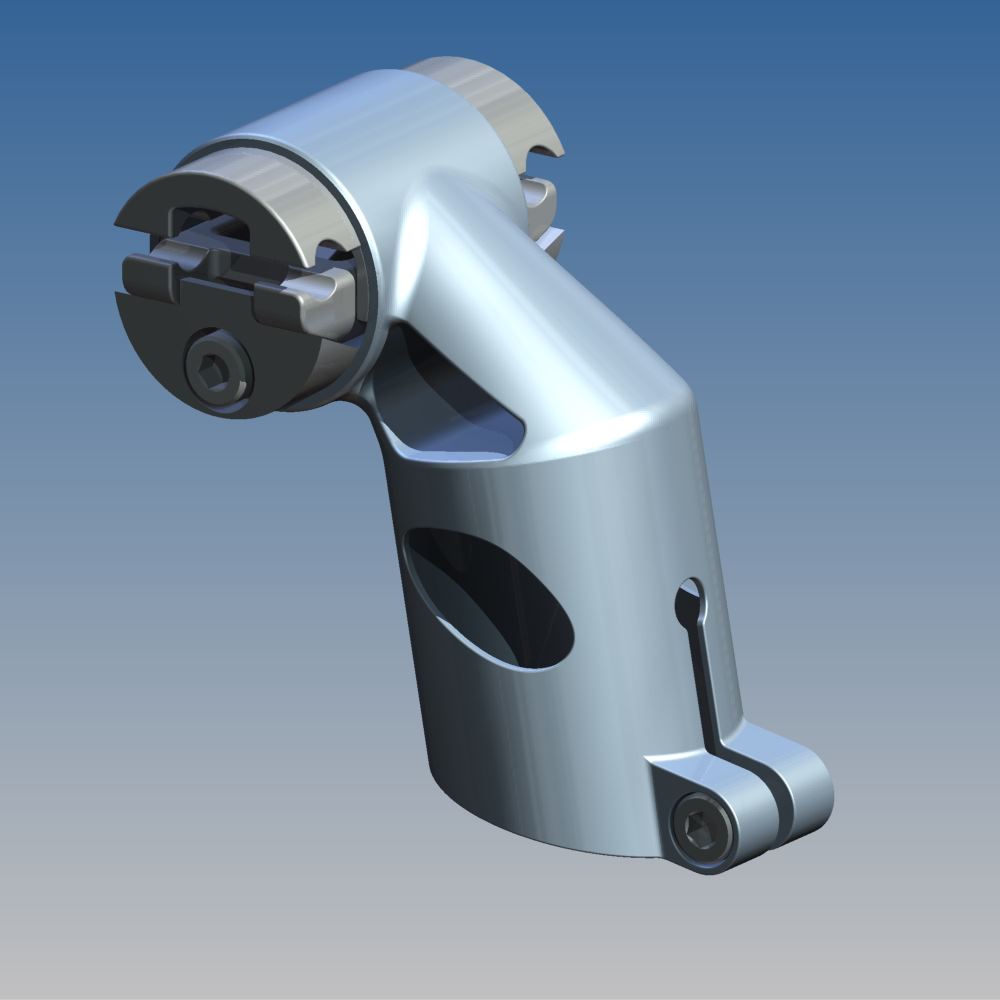
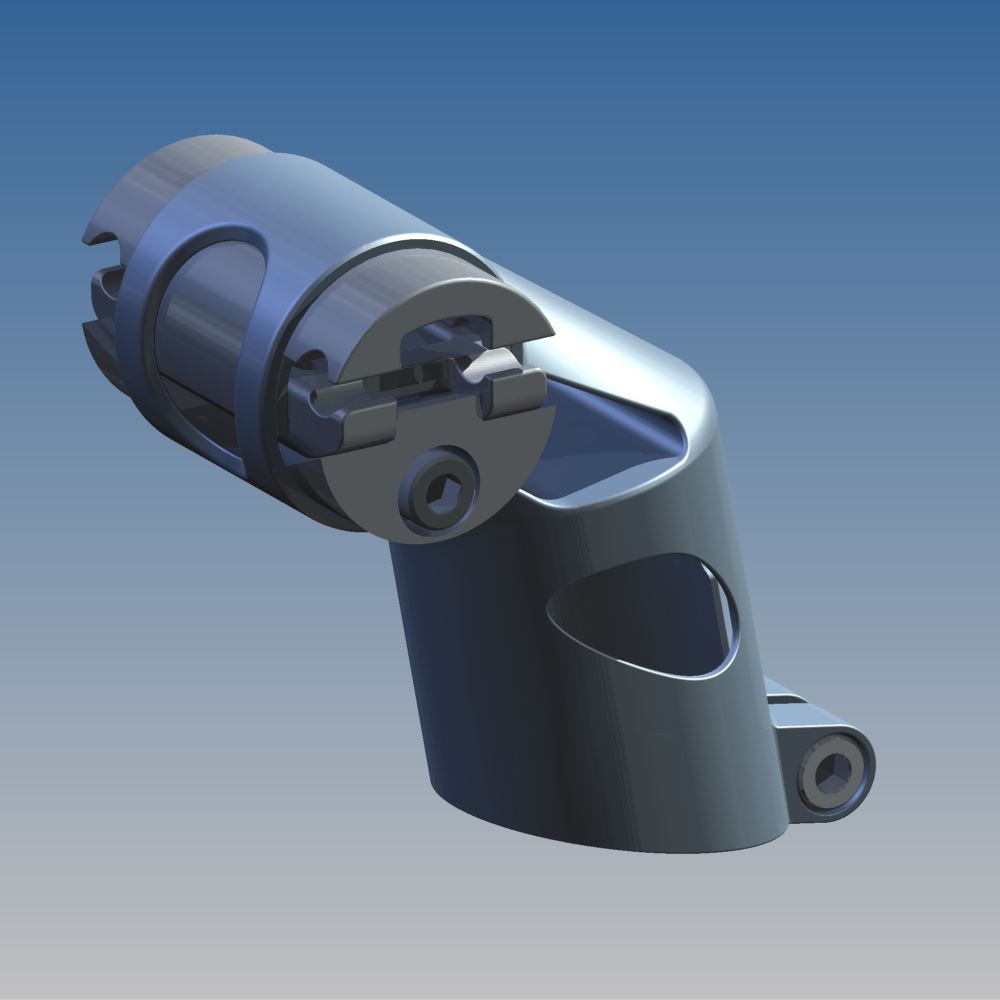
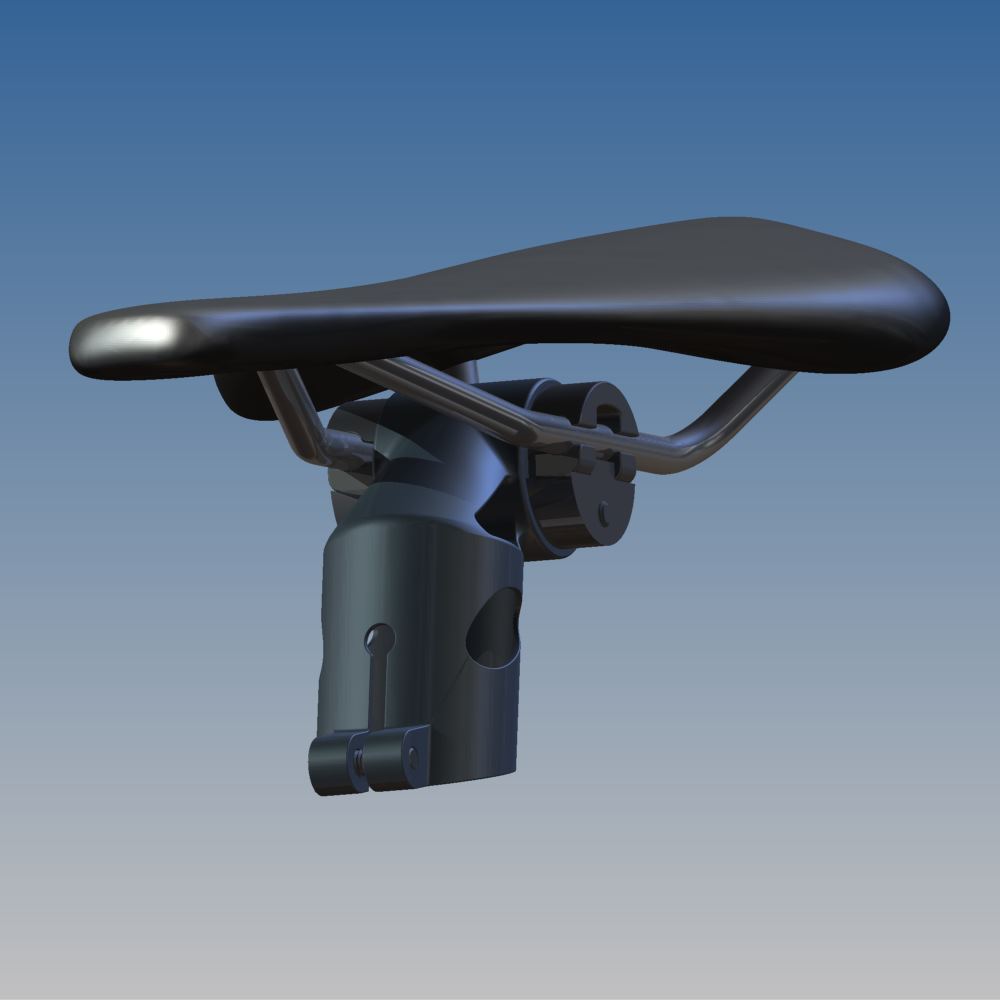
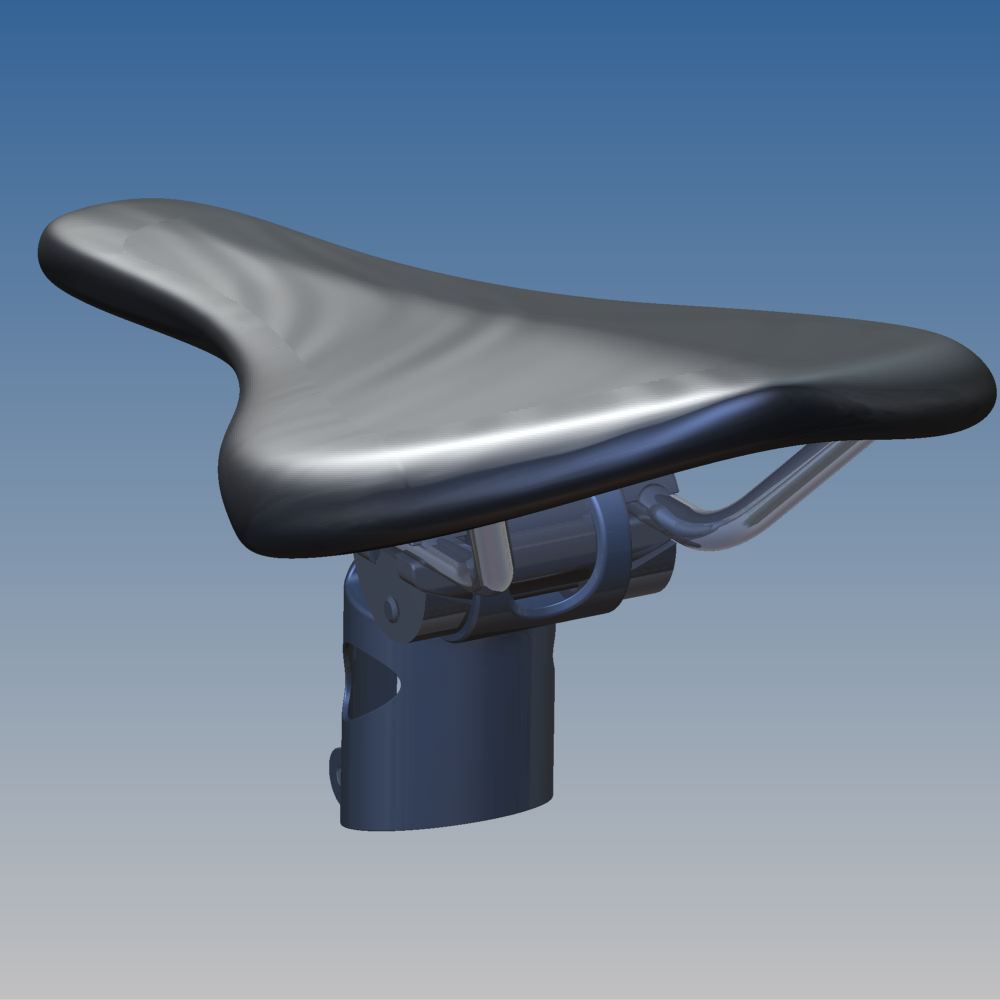
It's been slow, but my metal powder bed fusion (aka DMLS, LaserCUSING, selective laser sintering, etc.) seatmast topper is moving forward. With any luck, I'll have a part in production in a week's time.

I've made some small changes to the design. The biggest thing is the hole in the back of the part, which is meant to reduce mass. I also modeled the threads in the clamp, which will help my manufacturer print the threads.


Choosing a job shop for this has been interesting. Since my post on DMLS pricing, I've had a bit of interest on my project. My hope has been that I'd be seen as more of a partner than a customer,  but the extent of that remains to be seen. Selling a partnership is something I'm green at, and companies that deal mostly with corporate and institutional buyers don't necessarily think of investing time into a project that has an indirect upside.

Nonetheless, I think there's something to it. This project is partly product, partly experiment in advanced logistics. The information I'm learning on the subject is free for anyone to see, but the partners that I'll end up working with will develop unique experience working on a thin-wall, consumer facing part. There aren't a ton of people working on that kind of thing, but I expect that'll change in the near future. My hope would be that my partners would agree with me, and would see this project as an opportunity to develop additional capabilities at a relatively low expense. 

Nevertheless, I'm determined. And I'm looking forward to having a piece of laser sintered titanium in my hands, too :)

Tony Hsieh

Added on by Spencer Wright.

Zappos CEO Tony Hsieh, from a talk given to the Long Now Foundation: 

A company's culture and a company's brand are really just two sides of the same coin. The brand is just a lagging indicator of the culture. And with social media, and everyone being hyper connected, that brand is actually [lagging] less and less. So for example, if you ask a random person off the street "what do you think of the airline industry," you'll probably get back responses about bad customer service or apathetic employees and so on. And like it or not, that is the brand of the industry, even though no airline obviously set out for that to be their brand. 

Arbitrary and meaningless

Added on by Spencer Wright.

Squarespace CEO Anthony Casalena, talking with First Round Review about developing a high quality product:

We tend to see a lot of deadlines as arbitrary and meaningless. At their worst, they compromise design quality and burn people out so much that they stop having good, creative ideas. Sprinting is not our core differentiator.

Ahh, product life :)

But seriously: Remember that not all successful companies sprint. Develop products how you want to, and reflect on whether it's going well. 

Thumbrest

Added on by Spencer Wright.

Got this back from Shapeways a week or so ago. 

To recap, this is designed to be installed in the hotshoe of a Sony A7, in order to improve the grip stability & feel.

I still need to do some post-processing & try the part out. I'm excited to put it together.