Manufacturing guy-at-large.

Go out into nature

Added on by Spencer Wright.


Penelope Boston, in a long interview about her time researching weird life forms (in our world and others):

It’s just amazing what one’s human experience does. This is why I think engineers should be forced to go out into nature and see if the systems they are designing can actually work. It’s one of the best ways for them to challenge their assumptions, and even to change the types of questions they might be asking in the first place.

The Clothesline Paradox

Added on by Spencer Wright.


From a long essay on the depth and power of the internet:

Some of the disconnect between what institutions could do online and what they do do online can be attributed to the clothesline paradox, a term environmental pioneer Steve Baer coined to describe the phenomenon in which activity that can be measured easily (e.g., running a clothes dryer) is valued over equally important activity that eludes measurement (e.g., drying clothes outside.) The same can be said for the way in which institutions habitually value activity such as visits to museums or journal articles published by their scholars over equally meaningful but more difficult to measure activity such as the sharing of museum-related materials on social media sites or the creation of wikipedia pages.

I'd apply this to the high value so many people attribute to reading (or writing) a book, relative to the low value attributed to shorter and more fleeting - but no less powerful or important - forms of communication.


Tim Cook

Added on by Spencer Wright.

Via Horace Dediu; emphasis mine:


We believe that we need to own and control the primary technologies behind the products we make, and participate only in markets where we can make a significant contribution.

That last part - participating only where you can make a significant contribution - is important to me. Selling stuff that isn't somehow different, unique, or specific to my outlook and worldview is not where I want to focus my efforts.

Entrepreneurs are limited by their weakest skill

Added on by Spencer Wright.

From an interesting study which links entrepreneurship with not specializing during college:

Those who work for others can specialize in one skill, but entrepreneurs are limited by their weakest skill. Let there be two skills, x1 and x2. To make this concrete, albeit extreme, let income of specialists be given by
(1) income of specialists = max[x1, x2]

and

(2) income of entrepreneurs = λ min [x1, x2] 

where λ is a market determined parameter that sets the price of entrepreneurial talent so as to equate supply and demand. This formulation captures the point that entrepreneurs must be good at a number of different skills to put a business together.


Productivity data I want to track

Added on by Spencer Wright.

A quick brainstorm, based on recent use of boxplot.io and conversations with Emmett @ Gin Lane:

  • Basic physical activity monitoring (I use Moves)
  • Inbox monitoring (boxplot)
  • Calendar monitoring - how much free time do I have on my schedule?
  • Space usage in an office - especially one with shared space like Undercurrent has
  • Number of Chrome windows open
  • Number of Chrome tabs open
  • Number of/which native desktop applications open
  • Number of/which native iOS applications open
  • Desktop screen time per unit time
  • iOS screen time per unit time

More Arup

Added on by Spencer Wright.

A few quotes from a good article on Arup. Emphasis throughout is mine.

Problem-solving in the Arup fashion, it turns out, means not being afraid to cause a few problems along the way. “It’s that ability to believe that chaos in a way resolves itself—it doesn’t matter if it’s overly complicated to begin with,” Carfrae says. “Just keep talking, and at some point, it’ll become clear.

And:

A unique corporate ethos, one so totalizing as to amount almost to a sort of civic cult, pervades the firm, and it gives the engineers the impetus to go out on a limb the way they do: Organizationally, the firm is configured on the horizontal axis rather than the vertical, with a rotating set of board members and trustees who guide the direction of the company but are never far removed from its operations or shut off from the voices of workaday engineers. “Everybody in Arup feels totally empowered to have a view on everything,” says engineer Tristram Carfrae. As an Arup Fellow, Carfrae is part of that active, vocal culture, functioning as a free agent who can move from office to office and project to project, helping to counter the centralizing, sclerotic tendency that sometimes besets large companies like Arup. Most importantly, Arup is wholly owned by its employees, with profits shared equitably by all of its offices. If, say, the firm overall has a banner year but one of its affiliates stumbles, the chairman and employees of the latter won’t suffer for it financially. As a result, every engineer has the freedom to try something new without constantly fretting over the bottom line.

And:

In any case, after nearly seven decades and tens of thousands of structures big and small, Arup seems confident in its own singularity. “Every time we take advice from a management consultant, we take it as what not to do,” jokes Carfrae, adding, “We don’t want to become like the corporate mainstream.” To Raman, what makes the company unique isn’t a matter of looking back to a set of antiquated commandments, but of finding practical ways to apply them to today’s problems. Arup’s heritage isn’t “a mantra that’s out there,” says the chairman. “Don’t refer to it. Bloody live the thing.” The proof, after all, is in the projects, and whatever indirections Arup’s process might entail, its engineers seem to be finding their way just fine.
Generalists > Experts

Added on by Spencer Wright.

From an old HBR article on generalists:

Professor Phillip Tetlock conducted a 20+ year study of 284 professional forecasters. He asked them to predict the probability of various occurrences both within and outside of their areas of expertise. Analysis of the 80,000+ forecasts found that experts are less accurate predictors than non-experts in their area of expertise. Tetlock’s conclusion: when seeking accuracy of predictions, it is better to turn to those like “Berlin’s prototypical fox, those who know many little things, draw from an eclectic array of traditions, and accept ambiguity and contradictions.” Ideological reliance on a single perspective appears detrimental to one’s ability to successfully navigate vague or poorly-defined situations (which are more prevalent today than ever before).

On generalists

Added on by Spencer Wright.

From an old piece by Meghan Casserly on generalists:

Environments with more competition breed more specialists. Rainforests, for example, are chock-o-block full of diversity and competition for survival, which results in hundreds of thousands of highly specialized species. Silicon Valley, New York City and most of the other highly-productive, highly-competitive business landscapes, operate similarly. Instead of countless species of spider, the modern workforce has become a highly specialized mass of MicroNuclear Physicists, Fiber Optics Engineers and Java Developers who all function brilliantly when conditions are perfect.

But what happens when the ecosystem shifts?

Despite the corporate world’s insistence on specialization, the workers most likely to come out on top are generalists—but not just because of their innate ability to adapt to new workplaces, job descriptions or cultural shifts. Instead, according to writer Carter Phipps, author of 2012’s Evolutionaries, generalists will thrive in a culture where it’s becoming increasingly valuable to know “a little bit about a lot.” Meaning that where you fall on the spectrum of specialist to generalist could be one of the most important aspects of your personality—and your survival in an ever-changing workplace....

Only by understanding the work within fields to the right and the left of your own can you understand the bigger picture, he says, whether you’re talking about a corporation (sales analysts understanding the supply chain as well as internal operations) or the world as a whole. “We’ve become so focused on specialization, but just as there are truths that can only be found as a specialist,” he says, “There are truths that can only be revealed by a generalist who can weave these ideas in the broader fabric of understanding.”


The tyranny of the remembering self

Added on by Spencer Wright.

From Thinking, Fast and Slow:

Confusing experience with the memory of it is a compelling cognitive illusion - and it is the substitution that makes us believe a past experience can be ruined. The experiencing self does not have a voice. The remembering self is sometimes wrong, but it is the one that keeps score and governs what we learn from living, and it is the one that makes decisions. What we learn from the past is to maximize the qualities of our future memories, not necessarily of our future experience. This is the tyranny of the remembering self.

This shit is crazy. What would you prefer? To enjoy a thing, or to remember enjoying it? 

Kahneman's work suggests that these two things are in many ways opposed. If you prefer to remember enjoying an experience, you should consider two factors: 

  • Peak-end rule: The global retrospective rating was well predicted by the average of the level of pain reported at the worst moment of the experience and at its end.
  • Duration Neglect: The duration of the procedure had no effect whatsoever on the ratings of total pain.

...All of which is totally different from how we think we experience life. In designing experiences themselves, we tend to maximize duration and neglect both the peaks and the ends.

I would like to think that I would be self aware enough to overcome these tendencies, but in truth I think all I can do is try to design the things I offer into the world such that they maximize my audience's memory of me.

Why it's troubling

Added on by Spencer Wright.

After posting (and tweeting) about The Presenter's Paradox yesterday, I spent a little time thinking about why I find it troubling. 

As a generalist, I accept that there are pieces of my skillset which will fall through the cracks. Not everything I do needs to add up to anything in particular, and I don't expect everyone I meet to appreciate each of my interests.

And yet I strongly believe that what others might think of as extracurricular activities are actually integral parts of what I offer. I feel that the breadth of my experience has a multiplying effect on the value of each component part. I have chosen not to specialize, and I consider my offering to be stronger as a result.

And so the Presenter's Paradox leaves me in an awkward position. If my value is estimated as an average of my levels of expertise, will I only ever be seen as an amateur? Or is it possible to present my breadth as an extraordinary skill in itself? What are the characteristics of the businesses best suited for generalists? Is giving in to self-direction (i.e. entrepreneurship, I suppose) the healthiest path?

I don't think these questions are intractable. But they are big. And they don't feel un-troubling to me.

The Presenter's Paradox

Added on by Spencer Wright.

This is shocking, troubling, and so obvious. Emphasis mine; I recommend reading the whole article on HBR.

Psychologists Kimberlee Weaver, Stephen Garcia, and Norbert Schwarz recently illustrated the Presenter’s Paradox in an elegant series of studies. For example, they showed that when buyers were presented with an iPod Touch package that contained either an iPod, cover, and one free song download, or just an iPod and cover, they were willing to pay an average of $177 for the package with the download, and $242 for the one without the download. So the addition of the low-value free song download brought down the perceived value of the package by a whopping $65! Perhaps most troubling, when a second set of participants were asked to play the role of marketer and choose which of the two packages they thought would be more attractive to buyers, 92% of them chose the package with the free download...

The same pattern emergences when you are creating deterrents or negative consequences to discourage bad behavior. In another study, participants were asked to choose between two punishments to give for littering: a $750 fine plus two hours of community service, or a $750 fine. 86% of participants felt that the fine plus community service would be the stronger deterrent. But they were wrong — in fact, a separate set of participants rated the $750 with the two hours of community service as significantly less severe than the fine alone. Once again, they reasoned that the overall punishment was on average less awful because two hours of community service isn’t so bad.


Sport

Added on by Spencer Wright.

Ben Bajarin on twitter:

I hear x sport is boring too often by smart people. If strategy interests you, you should be able to appreciate every sport.

Fucking yes.

An application

Added on by Spencer Wright.

To XOXO. Because why not apply, and why not post the application here?

What do you do?

i'm some sort of a hardware guy. i grew up in construction, studied linguistics in college, and started my own business building custom bicycle frames. i eventually quit that in order to do 3d design and product management for a company building robot sliding doors.

now i live in nyc and work at a strategic agency, and do a bunch of scrappy projects on the side.

What are you working on right now?

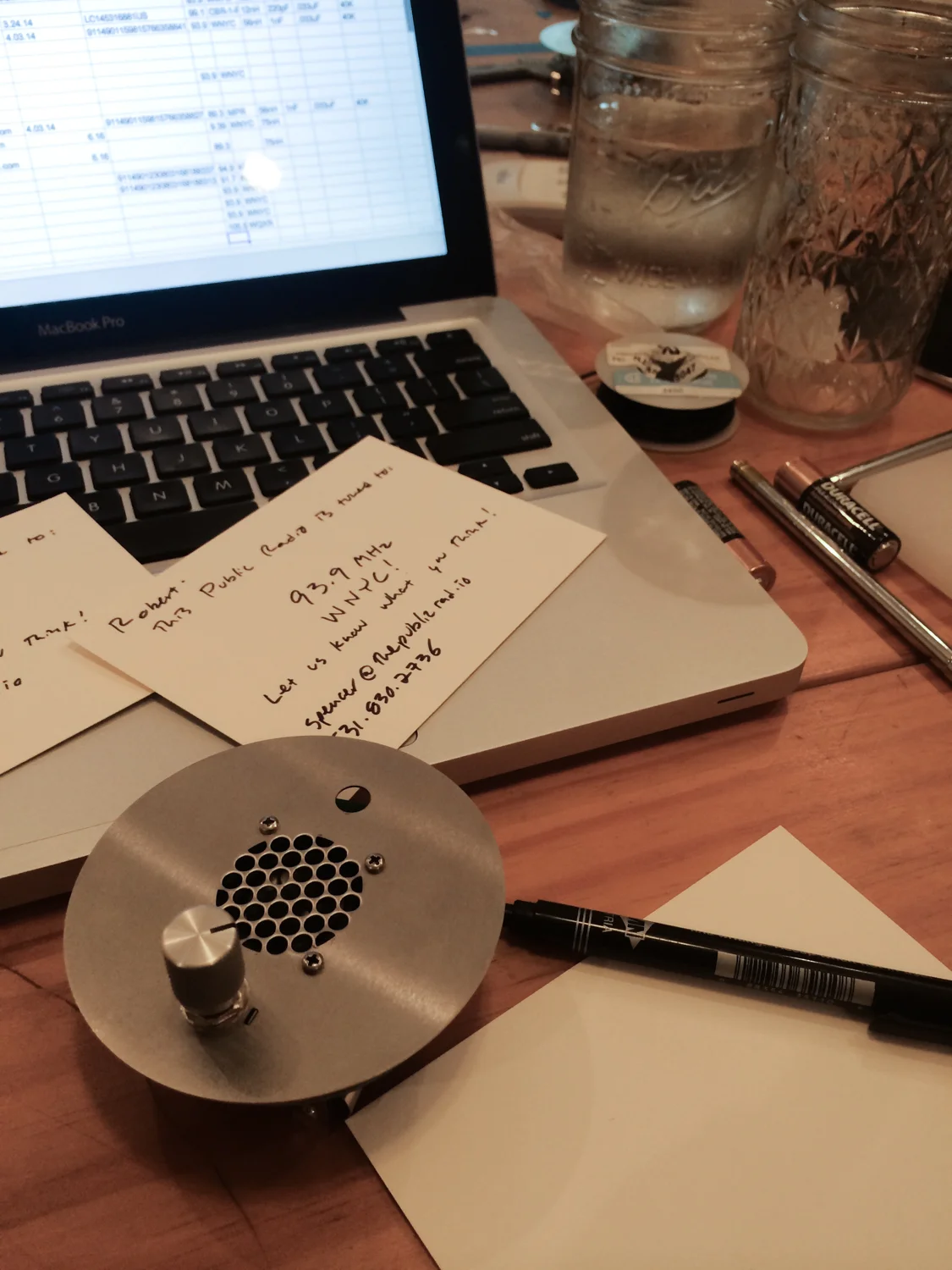
  1. a single-channel fm radio that's housed in a mason jar. it's a cute consumer product with a bit of (hazy) decision theory behind it. 
  2. laser sintered titanium bike parts. the technology (DMLS) and supporting logistics aren't quite market ready for consumer products, but they're getting there.
  3. digital strategy for fortune ~100 companies. i mostly like the b2b stuff.
  4. the nyc outpost of the Bay Area Infrastructure Observatory (we'll lose the "Bay Area" part).
  5. other stuff.

What's something that you've made that you're proud of?

whooo... 

i spent two years after college doing a full gut renovation of a midcentury modern ski condo in northern california. it was really hard - i didn't know anyone there, didn't have a social OR professional network, and was in way over my head on both technical and management skills.

but the end result was really nice. most of the structure of the building was damaged by 50 years of renovations and a healthy dose of rot. i was almost crushed by a beam once, and had a high pressure water line explode a few feed from my face, and had to engineer a bunch of retrofits to problems that i didn't have easy solutions for. but i paid attention to the details that mattered and ignored the rest, and in the end it came together.

it's a far way from what i've ended up doing for the rest of my career. i mean, i spent a bunch of time literally chipping up concrete during those years, and now i mostly think about advanced manufacturing and business models. it's hard to talk about the one in the context of the other.

but i'm proud of it. and most of the people i meet day-to-day don't have anything like that kind of experience.

Tektronix's excellent online quote process

Added on by Spencer Wright.
The main site.

The main site.

As a B2B ecommerce research mini-project, I spent a few minutes on the Tektronix website yesterday to evaluate their customer service and ecommerce integration. Both are excellent; here's a quick rundown.

Phone support

For a company with a diverse, highly customizable product line - and an annual revenue (as of 2006, when they were acquired by Danaher) of $1B - Tek's willingness to let me get on the phone with someone ASAP is really commendable. They've got an 800 number right at the top of every page, and their (pretty decent) automated phone system picks up in one ring. The *first* option on their phone tree is to speak with a representative, and I was connected to an actual person just 3 rings later - a totally reasonable wait time.

The main product page.

The main product page.

Product pages

Like a lot of B2B sites, Tek does *not* provide live pricing on some of their product line. But for a wide range of product categories, they display the base list price, and a link to configure the product, right on the product page. This may not seem significant, but a shocking number of B2B sites still don't do this. Kudos to Tek for taking the lead.

A few additional product page features that I like:

  • Datasheet and manual have big links in a prime location
  • Models in the product line are listed clearly and include base pricing variations
  • They break out product info into four tabs at the bottom of the page:
    • Overview has basic specs
    • Probes & Accessories shows related parts
    • Service shows available warranty plans, with links directly to the datasheets (!) for those service products
    • Library tab drills down to show a *ton* of additional content, including case studies, tech docs, and videos
  • The 360* view feature is kinda cool
  • It's *really* easy to request a quote, but I don't feel like I'm being bullied about it
  • They have an "Industry Comparisons" page that talks directly about how their products stack up against the competition. As someone who is inevitably shopping around, this is *really* nice.
Quote generation page.

Quote generation page.

Quote generation page

Tek's "configure and quote" page is pretty good. It shows the base price right at the top, and allows me to add items listed below via checkboxes. Unfortunately, the total price is *not* displayed in real time, but I give them a pass on that. 

My only real criticism is that the options aren't hyperlinked to give more context, info, or supporting documents for those items. 

Quote request page.

Quote request page.

Quote request page

The design here is a bit uninspired, but that's okay. I can add comments to my quote request and confirm the quantity and details of the parts that I want a quote for. There's also (still) a prominently featured 800 number in case I need more help.

I'm a little concerned that I'm not going to get a quote quickly when I hit that "submit" button, but the overall layout and experience gives me enough confidence to go ahead anyway.

Quote request confirmation page

Order request confirmation page detail.

This is *really* encouraging. The confirmation page is almost exactly the same as the request page, except that Tek is now telling me that I'll be getting a quote by email within 15 minutes. I am a very happy person at this point.

I can't emphasize enough how great this is. I've asked them to tell me how much this equipment costs, and expect the bill to be well into five figures. I probably won't decide to go elsewhere within a quarter hour; nor am I likely to call/email/yell at them to follow up with my quote request. (I have literally done this in the past in similar circumstances. Some companies dump quote requests into black holes, and a followup call is necessary to move forward.)

The content of the email.

The email

Tek emailed me three minutes after I hit "submit quote." 

The email itself reiterates all the products I requested a quote for, which is really useful for searching my inbox later. 

Inside, there's a PDF of my quote, with a grand total just under $40k. 

I've got three quibbles here: First, I prefer to have a human being attached to my quote (all it says is buy@tek.com). Second, the payment terms field is blank - at the least, they should tell me to call them to talk about the options. Third, it's unclear what the shipping cost and terms are. They do show lead times on all the parts, but I'd love to know whether they're going to add on S&H at the end.

The followup

I got a call from a Tektronix customer care rep (who was *super* helpful) about a half hour after submitting the quote. This is *excellent* followup, and I genuinely appreciated her demeanor and helpfulness - even after I told her that I was mostly doing research :)

Meditate on the logics in everything

Added on by Spencer Wright.


To represent the world as systems of interdependent logics we need not elevate those logics to the level of myth, nor focus on the logics of our myths. Instead, we would have to meditate on the logics in everything, to see the world as one built of weird, rusty machines whose gears squeal as they grind against one another, rather than as stories into which we might write ourselves as possible characters.

From a very crazy, very good article about Star Trek, language, and meaning.

Public Radio changes

Added on by Spencer Wright.

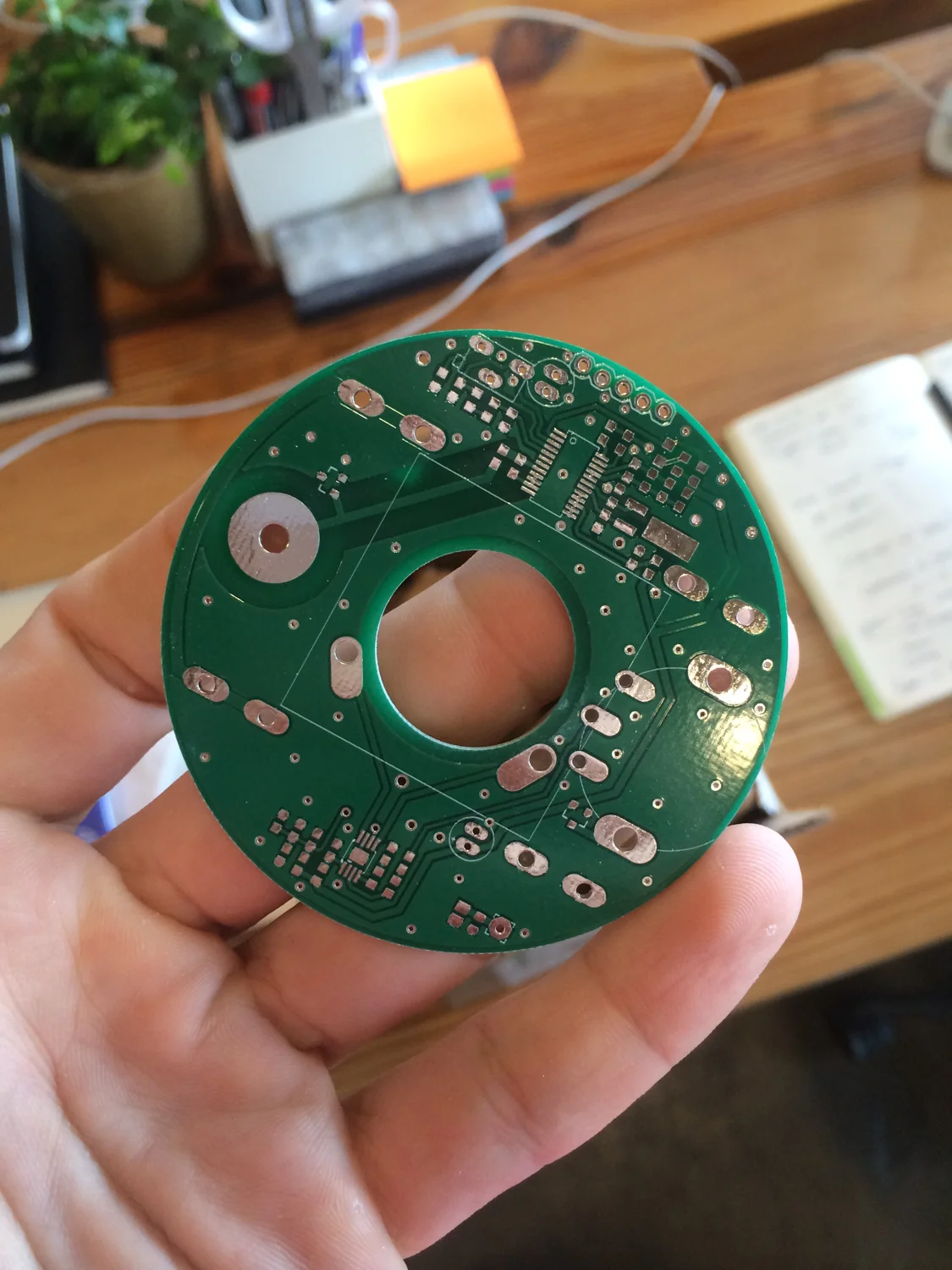
The Public Radio has moved a little slowly over the past few months. Zach has been busy, and I've got too much on my plate, and scheduling has been tricky. But we *have* made progress, and I'm here to tell you about it.

After the last hardware round, we spent an hour and developed a feature wishlist. It included:

  • No vias under battery clips
  • Larger thru hole pads & holes
  • Reverse polarity protection on the battery line
  • Schematic file is legible
  • Values on all parts are accurate
  • Redraw FM IC package to reflect accurate dimensions
  • Smaller lid ground wire hole
  • Speaker wires don't cross
  • Orient all SMT parts in the same direction
  • Reorient ESD
  • Add serial number & tuning frequency markings
  • BOM shows manufacturer part number only

All of these (plus a few more technical ones - see our GitHub repository for the current designs) have been completed. A few stragglers have yet to be implemented:

  • Boards have white solder mask & black legend
  • Schematic is 100% consistent with BOM

I like the way the new design looks. Eagle is *not* my favorite piece of design software, but board layout is fun - and I'm really proud of our current design.

On Sunday evening, we ordered a batch of 10 of these from Advanced Circuits. Advanced is expensive, but they turn the parts around quickly; ours should ship today. Meanwhile, our custom antennas departed (two or three weeks late, but whatever) Hong Kong yesterday. With any luck, the antennas will show up within a day or two of the boards - giving us time to assemble a few PCBs and then quickly put the radios into service. 

In the meantime, Zach hacked an awesome way to tune the radios using an Arduino. It should save us a lot of time, and will be *key* when we're shipping these things across the country.

So. Movement. Happening.